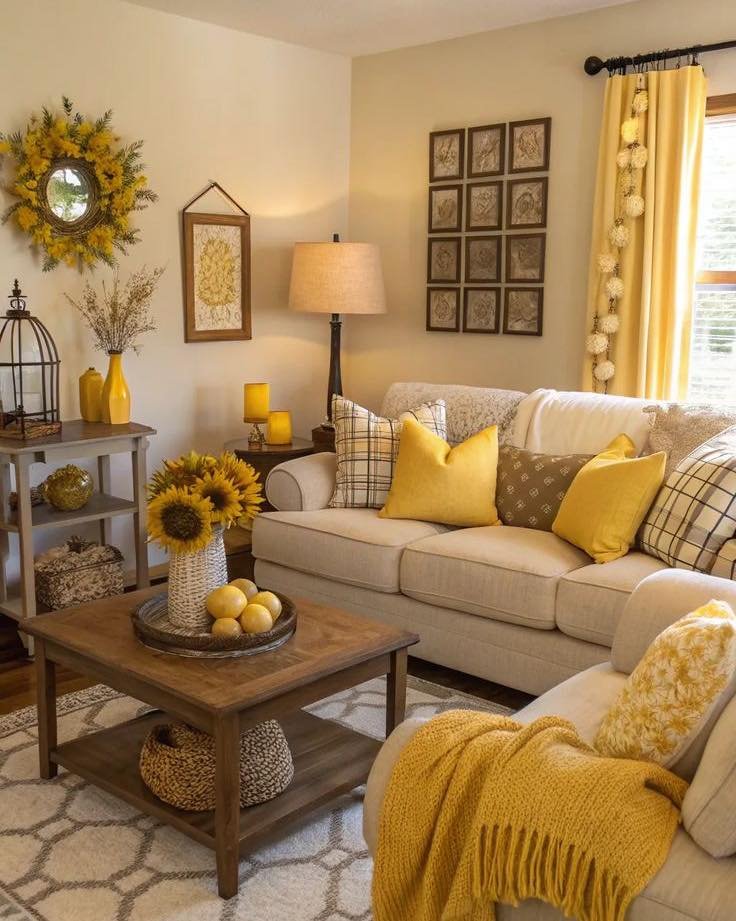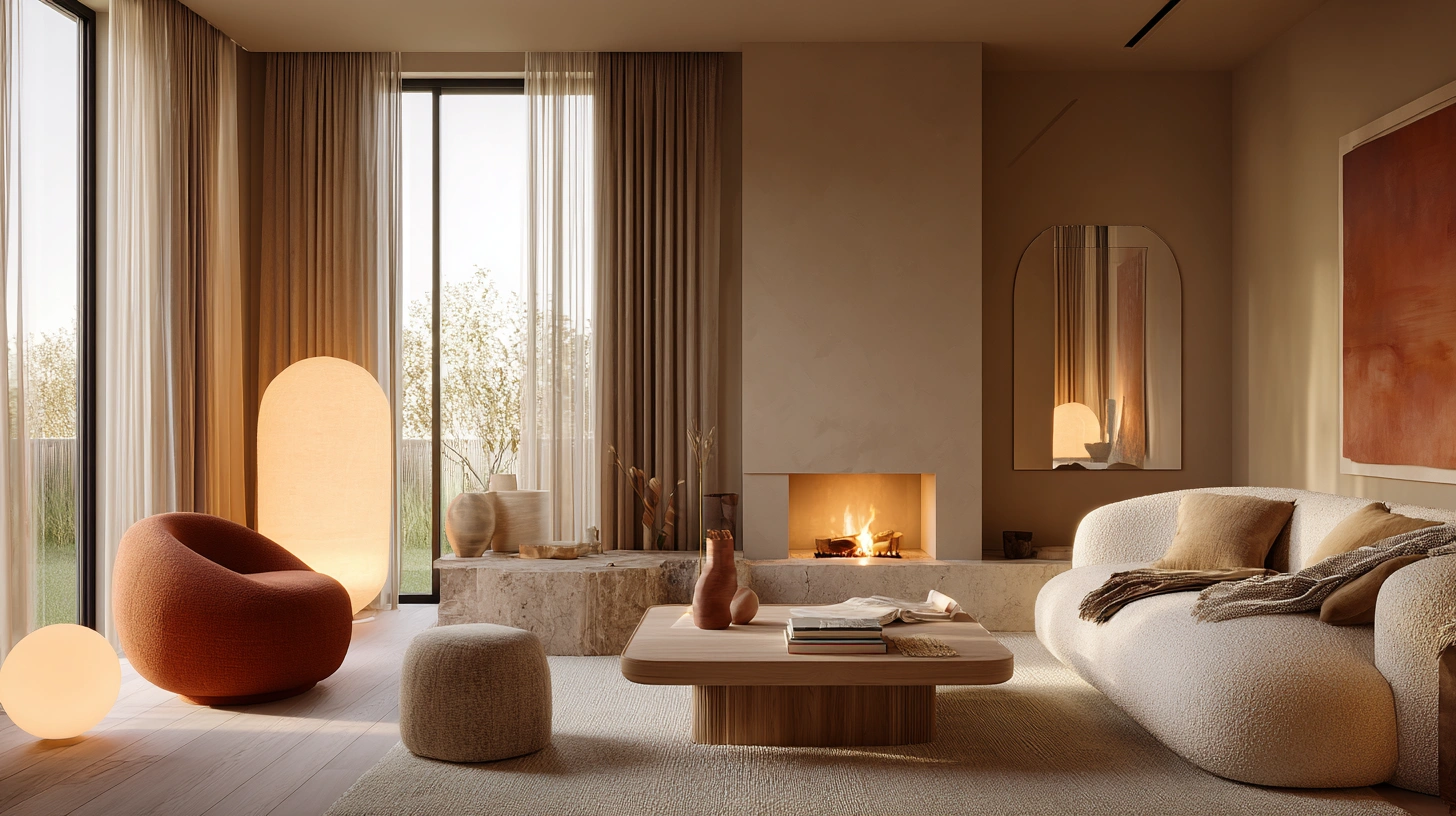
Warm, Considered, and Genuinely Lived In: 15 Cozy Living Room Decor Ideas for Every Style
There is a living room that looks comfortable in a photograph and a living room that actually is comfortable — and the difference between them is not always obvious until you sit in one and feel, within a few minutes, either that you could stay for hours or that something is slightly off and you cannot quite identify what. The cosy living room is the one you stay in. It is warm without being cluttered, layered without being chaotic, and personal without being self-conscious.
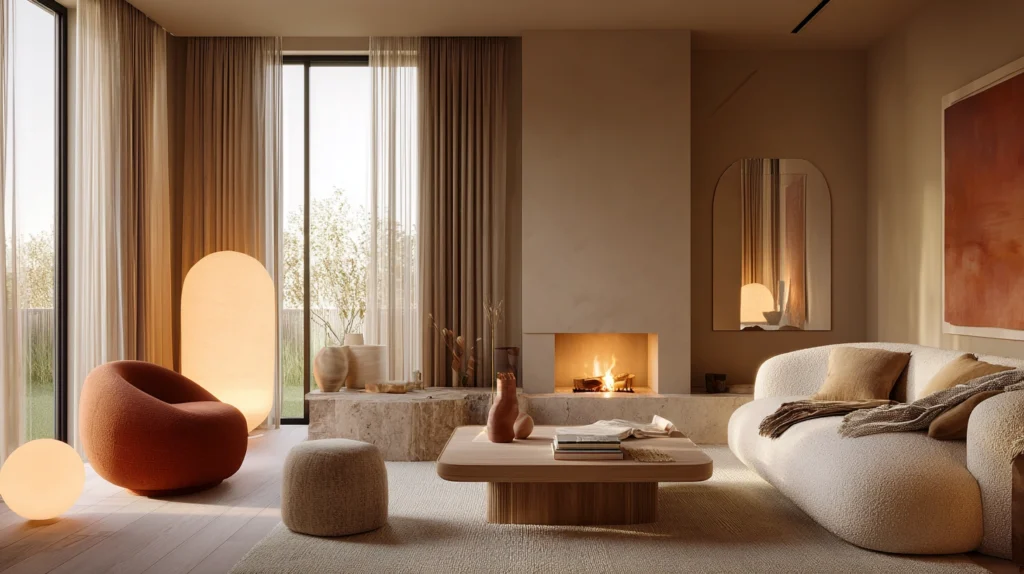
Cosiness is not a single aesthetic. It belongs to a Scandinavian interior of pale timber and sheepskin as much as it belongs to a maximalist Victorian room of velvet and bookshelves. What produces it is not a specific style but a specific set of decisions — about light, about texture, about warmth, and about the particular quality of a room that communicates that someone lives there and loves being there.
The fifteen ideas below cover every style and every budget, and each one is built on the principle that a cosy living room is made rather than purchased.
1. The Layered Textile Foundation
Budget: $60 – $400
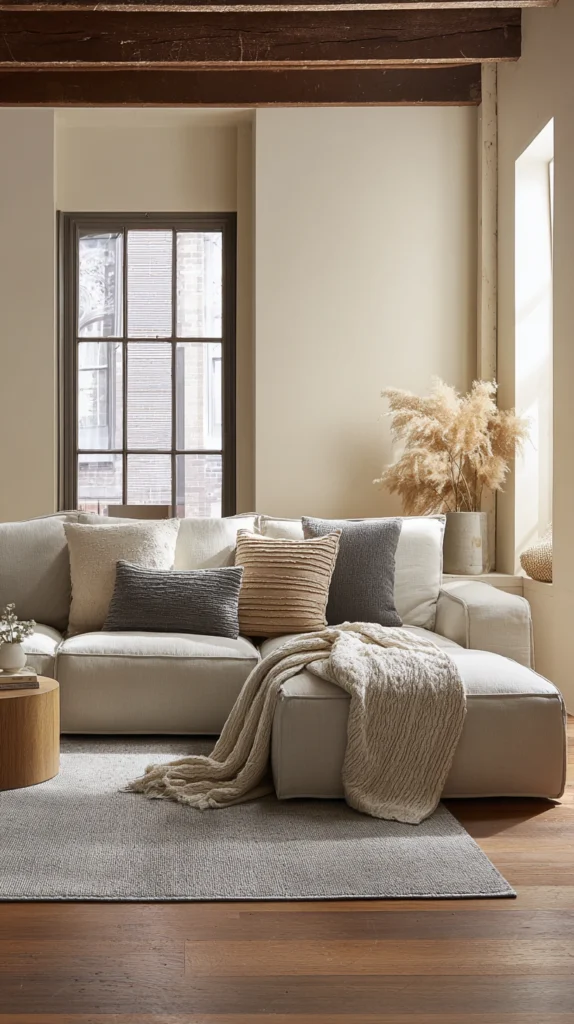
The cosy living room is defined by its textiles more than by any other single element. Cushions in varying sizes and textures, a throw draped over the sofa arm, a rug underfoot that is generous enough to anchor the full furniture arrangement — these are the layers that make a room feel inhabited and warm rather than furnished and functional.
A sofa dressed with five cushions in two or three complementary tones — a large linen, a medium velvet, and a small woven or embroidered cushion — costs $60 – $150 in cushion covers. A wool or cashmere-blend throw — $40 – $100. A large area rug extending at least 60 centimetres beyond the sofa legs — $80 – $250. The three together produce the textile foundation that every cosy living room is built on.
Decor tip: Choose cushion covers in at least three different fabric textures — smooth linen, deep velvet, and a woven or bouclé — within the same colour palette. Three different textures in the same tonal range produce a sofa that looks rich and layered. Three cushions in the same fabric and the same colour read as a matching set from a catalogue — which is a different and considerably less cosy impression.
2. The Warm Lighting System
Budget: $80 – $500
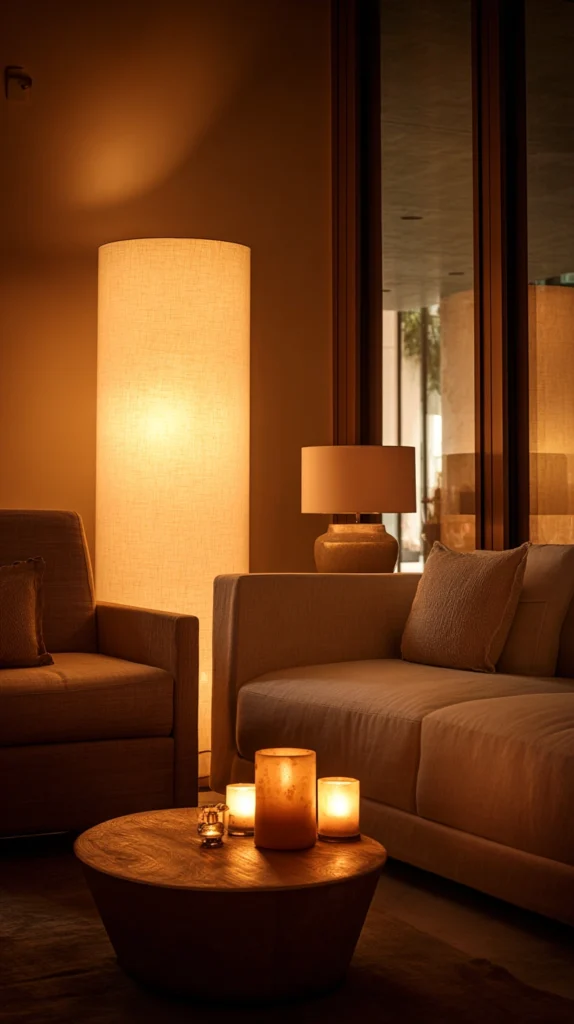
Nothing undermines cosiness faster than a single bright overhead light source, and nothing creates it more efficiently than a layered system of warm, low-level lighting — a table lamp at one end of the sofa, a floor lamp in the reading corner, a cluster of candles on the coffee table, and a dimmer switch on the overhead fitting that reduces it to a background glow rather than the room’s primary light source.
A quality table lamp with a warm linen or drum shade costs $40 – $120. A floor lamp with a reading arm — $60 – $150. A cluster of pillar candles in hurricane glass holders — $25 – $60. A dimmer switch on the overhead light — $15 – $30 installed. The full layered lighting system sits at $140 – $360 for a room transformation that is as immediate as switching on the new lamps and switching off the overhead.
Decor tip: Replace every bulb in the living room with a warm LED at 2700K before doing anything else to improve the room’s cosiness. The colour temperature of the light source is the single most impactful and least expensive cosiness upgrade available — more important than a new rug, a new cushion, or a new throw. Warm bulbs cost $5 – $15 each and transform the character of every lamp they are fitted into.
3. The Fireplace as Focal Point
Budget: $50 – $3000
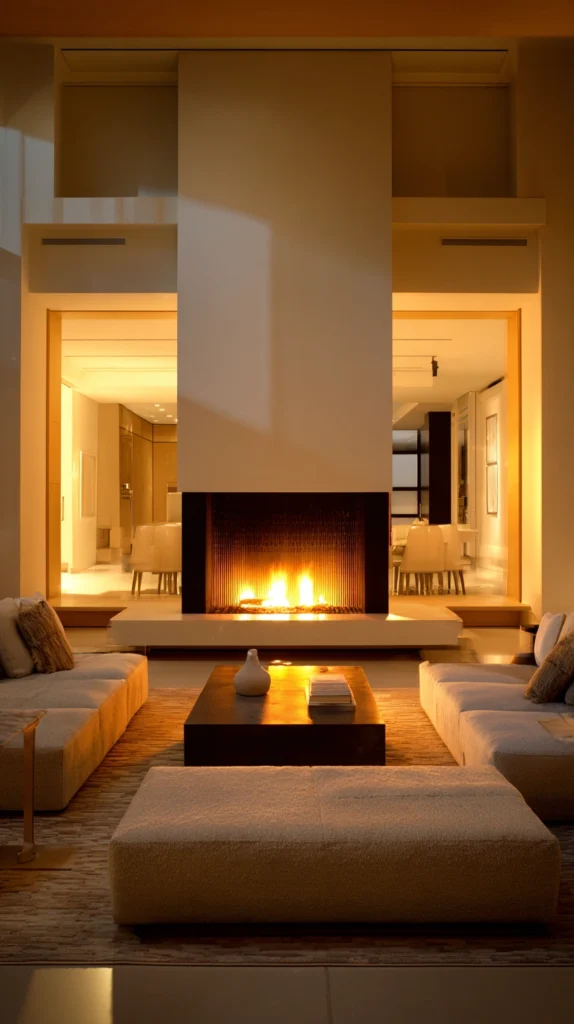
A fireplace — real, gas, or electric — is the cosy living room’s most ancient and most instinctively understood focal point. The furniture is arranged around it, the evening gravitates toward it, and the quality of a room with a functioning hearth is categorically different from the same room without one. Even a non-functional fireplace, dressed with candles and logs, communicates warmth through association alone.
A real wood-burning stove insert — $500 – $3000 installed. An electric log burner with a realistic flame effect — $100 – $400. A non-functional fireplace filled with a cluster of pillar candles at varying heights — $30 – $80 in candles and holders. A hearth stacked with real birch logs — $10 – $25 for a bag — beside any of the above options adds the tactile and visual warmth of real wood.
Decor tip: Arrange the room’s furniture so that the primary sofa faces the fireplace rather than the television. A room arranged around the fire communicates that warmth and conversation are the room’s primary purposes. A room arranged around the television communicates that passive entertainment is. The arrangement is the room’s most fundamental statement about what it values, and the cosy living room values the fire.
4. The Reading Corner
Budget: $100 – $600
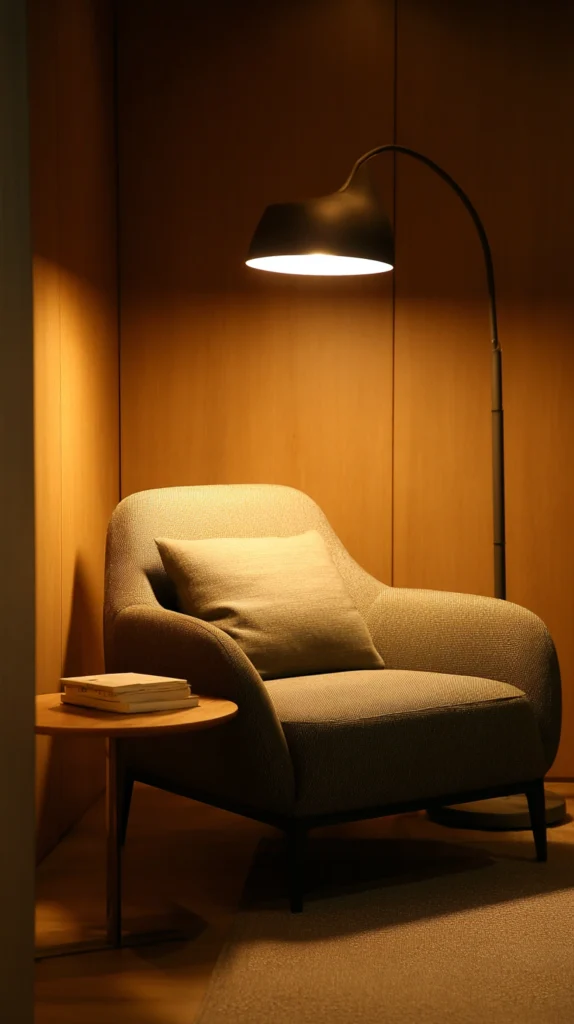
A dedicated reading corner — a comfortable armchair in a warm fabric, a floor lamp positioned over the left shoulder, a small side table at the correct height for a cup of tea, and a footstool — is the cosy living room’s most personal and most used element. It is the seat that is always occupied when a single person is in the room, and it defines the room as a place of genuine rest rather than social performance.
A quality armchair in a warm upholstery — wool, velvet, or a worn-looking leather — costs $200 – $600. A floor lamp with a reading arm — $60 – $150. A small side table at arm height — $30 – $80. A matching footstool — $60 – $150. The total reading corner investment sits at $350 – $980 for the room’s most genuinely used piece of furniture.
Decor tip: Choose an armchair that is wider than standard — at least 80 centimetres in seat width — for a reading corner application. A standard-width armchair provides sufficient room for sitting upright but insufficient room for the particular seated position that long reading sessions require — slightly sideways, one leg over the arm, the body arranged according to comfort rather than decorum. A wide chair accommodates every position. A narrow one accommodates only one.
5. The Bookshelf Wall
Budget: $100 – $1000
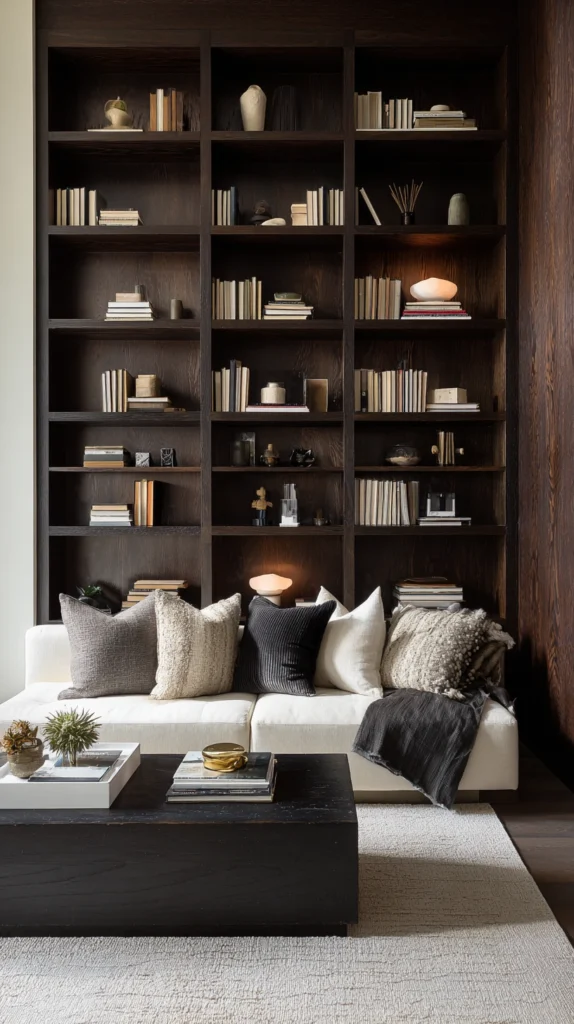
A wall of books — from floor to ceiling, covering the full width of the wall, styled with a combination of books and objects but with books clearly dominant — produces the cosy living room’s most immediately personal and most visually complex decorative surface. A room with a bookshelf wall is a room that belongs to a reader, and that belonging communicates something about the quality of the life lived there.
Floor-to-ceiling shelving in a painted or natural timber costs $100 – $500 in materials for a standard wall. A library ladder on a rail — $150 – $400 — adds the most joyful and most dramatic detail. Books already owned are free — the curation and arrangement of them is the creative act. Small objects placed between the book runs — a ceramic figure, a found stone, a candle — add personality for $20 – $60 in total.
Decor tip: Remove one third of the books from each shelf before arranging the final display. A shelf that is 70 percent full of books and 30 percent objects and space reads as curated. A shelf that is 100 percent full of books reads as storage. The objects between the book runs are not decorations supplementing the books — they are the moments of breath that make the books themselves readable as a collection rather than an accumulation.
6. The Warm Colour Palette
Budget: $30 – $300
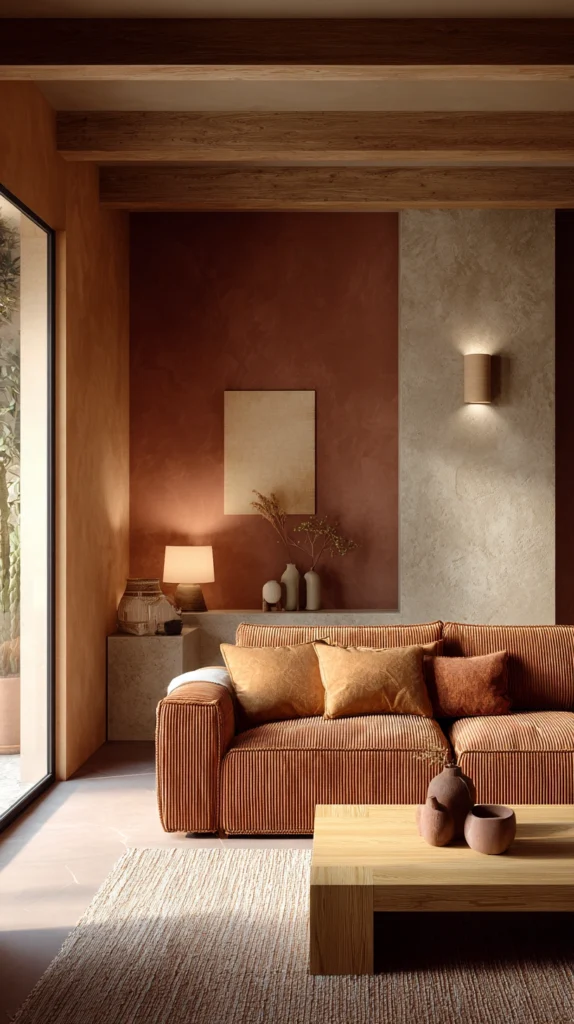
The cosy living room palette runs in warm tones — terracotta, ochre, burnt sienna, deep sage, warm rust, and the particular amber of candlelight and aged timber. It avoids cool greys, bright whites, and anything that reads as energising rather than settling. A single warm-toned feature wall, a warm-toned rug, or a warm-toned sofa is sufficient to shift the entire room’s atmosphere from cool and contemporary to warm and inviting.
A feature wall in a deep terracotta or warm ochre — $20 – $50 in paint for a single wall. A warm-toned sofa in a rust, ochre, or deep sage upholstery — $400 – $1500. A kilim or Moroccan rug in the warm earth palette — $60 – $200. Any one of these three decisions alone shifts the room’s colour temperature meaningfully. All three together produce a room that reads as warm from across the street.
Decor tip: Test warm paint colours in the living room at the time of day the room receives the least natural light — typically the morning for a west-facing room or the evening for an east-facing one. Warm colours that read as rich and beautiful in afternoon light can read as dark and heavy in the morning or the evening, and both readings should be acceptable before the full wall is committed.
7. The Coffee Table as Styled Surface
Budget: $30 – $200
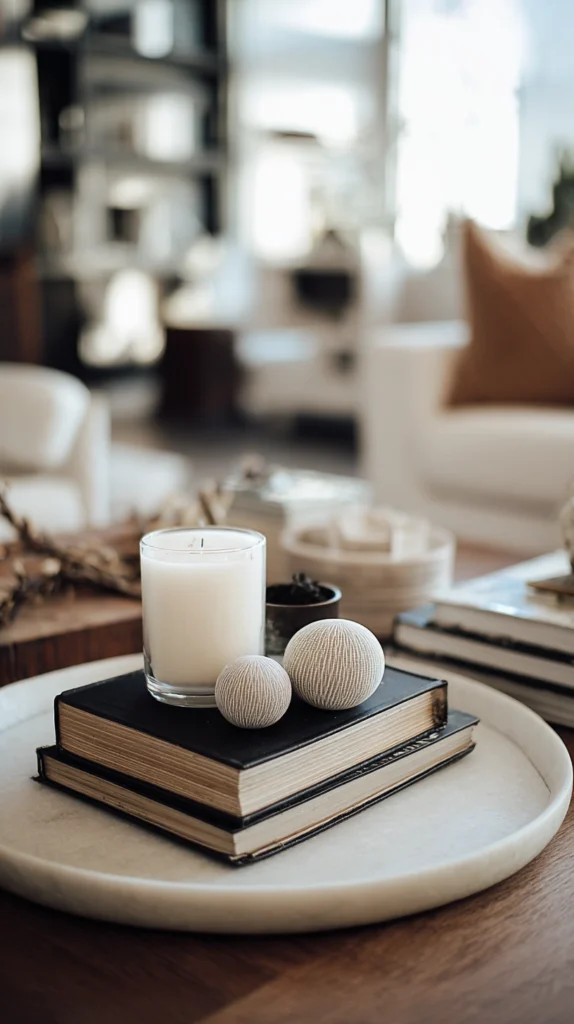
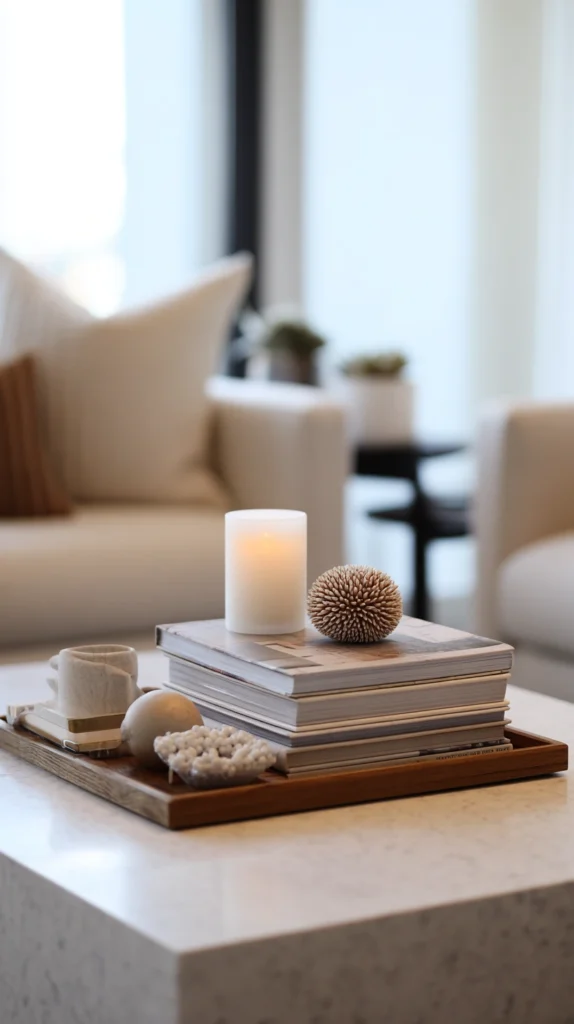
A coffee table styled with intention — a tray holding two or three objects, a stack of three books with complementary spines, a small plant or a fresh botanical, and one candle — transforms the room’s central surface from a place where things are put down into a genuine decorating moment. The coffee table is seen from every seat in the living room and deserves the same level of consideration as any shelf or mantelpiece.
A large wooden tray to anchor the display — $15 – $40. A small ceramic vase or object — $10 – $30. A stack of three books — free if already owned. A small plant or a stem of dried botanical — $5 – $20. A pillar candle in a holder — $8 – $20. Total coffee table styling investment: $38 – $110 for the room’s most consistently seen horizontal surface.
Decor tip: Limit the coffee table tray to five objects and resist the accumulation of additional items over time. A tray with five considered objects reads as styled. The same tray with eight objects — a remote control, a half-finished magazine, and three additional items placed temporarily — reads as a surface where things are put down rather than placed. The coffee table remains cosy only through the ongoing discipline of returning things to where they belong.
8. The Window Treatment Upgrade
Budget: $60 – $400
Floor-to-ceiling curtains in a warm fabric — a heavy linen, a velvet, or a wool-blend — hung from ceiling-height rods, are the cosy living room’s most dramatic and most practical textile upgrade. They control the light, insulate against cold, reduce noise from outside, and make the room feel considerably taller and more generously proportioned than it would with short curtains or bare windows.
Quality linen curtains in a warm neutral — $40 – $120 per pair. Velvet curtains in a deep jewel tone — $80 – $250 per pair. Thermal lining added to existing curtains — $20 – $50 per pair — improves the room’s warmth significantly without replacing the curtains themselves. Ceiling-height rods — $25 – $60 per window — are the installation decision that determines the apparent height of the room and the quality of the curtain’s fall.
Decor tip: Hang curtains with enough fullness to pleat generously when drawn back — a width of two and a half times the window width per pair produces full, generous pleats when open and complete coverage when closed. Curtains cut to the exact window width hang flat and thin when open and provide insufficient coverage when closed. The additional fabric costs $20 – $60 per pair and produces a curtain that reads as properly made rather than economically specified.
9. The Scent of the Cosy Room
Budget: $15 – $80
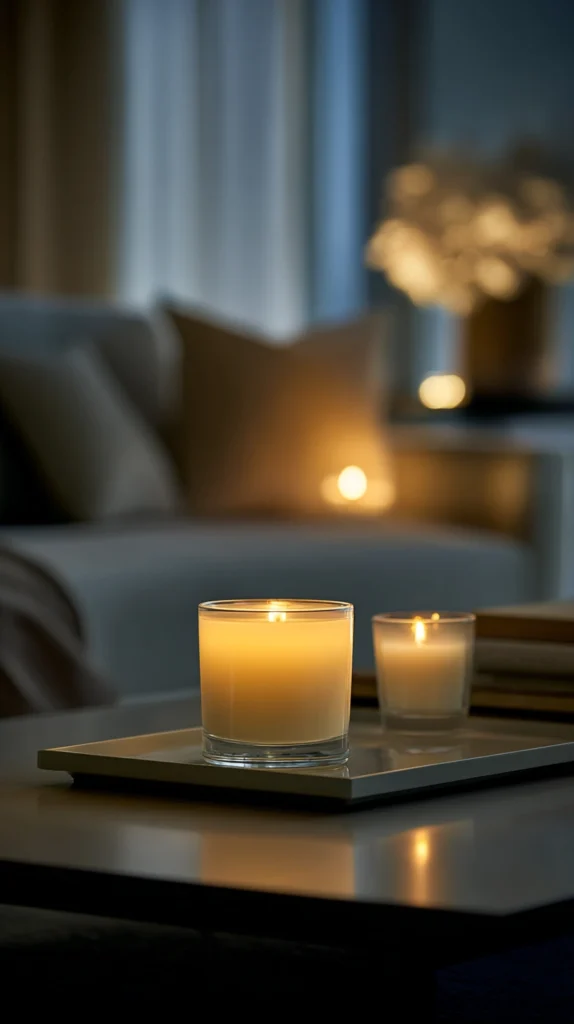
The cosy living room has a scent — a specific, consistent fragrance that belongs to that room and that produces an immediate sense of arrival and warmth in anyone who enters it. Woodsmoke, beeswax, vanilla, cedarwood, and warm spice are the olfactory language of cosiness, and a room that smells of these things communicates warmth before any visual impression has been registered.
A beeswax candle in a ceramic holder — $10 – $25 — produces the most authentic warm fragrance available. A reed diffuser in cedarwood or sandalwood — $20 – $50 — provides continuous background scent. A wax melt warmer with a winter spice blend — $15 – $30 for the warmer plus $5 – $10 per melt pack — produces a stronger fragrance throw than a candle for rooms that require a more powerful scent presence.
Decor tip: Light a candle or turn on the diffuser twenty to thirty minutes before spending time in the living room rather than at the moment of sitting down. A fragrance source that has been running for twenty minutes produces a room that smells fully and consistently of its chosen scent throughout. A fragrance source activated at the moment of sitting down produces a room that smells different at one end than at the other for the first fifteen minutes — which is the olfactory equivalent of a room half decorated.
10. The Gallery of Personal Photographs
Budget: $30 – $200
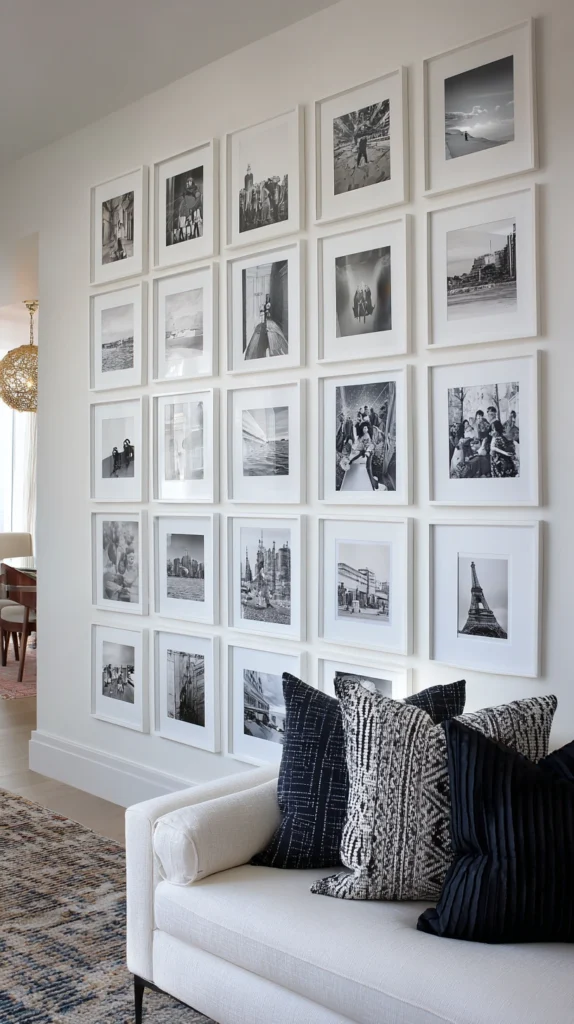
A gallery of personal photographs — framed simply, arranged thoughtfully on a wall or a shelf, showing the people and the places that matter — is the cosy living room’s most irreplaceable personalising element. It communicates that the room belongs to specific people with a specific history, and that communication is the quality that separates a cosy home from a cosy hotel lobby.
Frames in a consistent finish — all black, all natural timber, or all warm gold — cost $5 – $20 each. A collection of eight to twelve photographs printed and framed sits at $40 – $180 in total. The photographs themselves are free — the selection of them is the creative act, and the selection should prioritise genuine moments over posed portraits.
Decor tip: Print photographs in black and white rather than colour for a gallery wall that includes images from different decades and different cameras. Black and white creates a visual consistency across images that were taken in different light conditions, with different cameras, and at different times — making a gallery of forty years of family photographs read as a coherent collection rather than a timeline of changing photographic technology.
11. The Natural Material Layer
Budget: $40 – $300
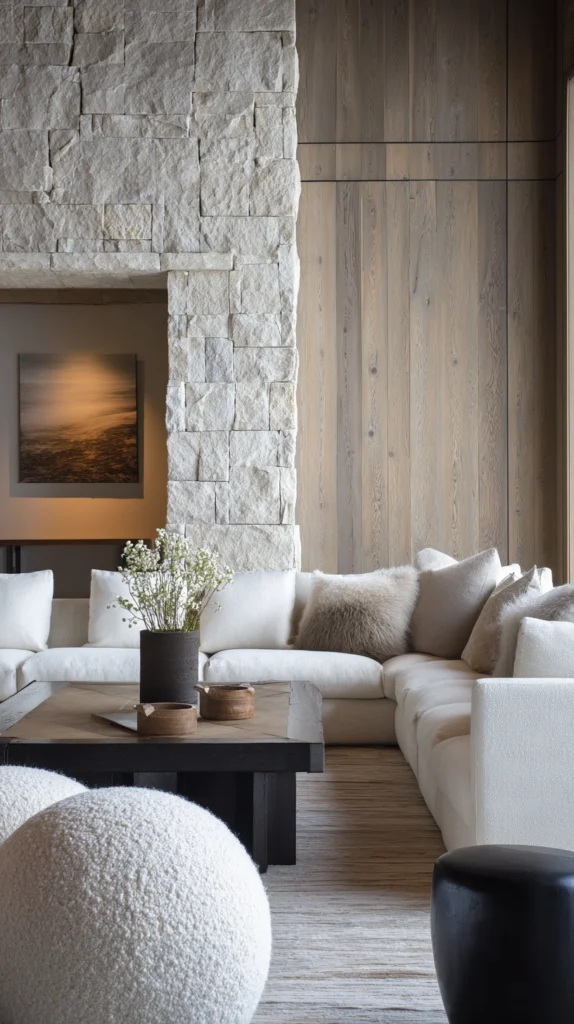
Natural materials — timber, stone, linen, wool, leather, and rattan — produce the tactile warmth that synthetic equivalents do not approach regardless of how well they replicate the visual appearance. A cosy living room built predominantly on natural materials feels different from one built on synthetic alternatives, and that difference is felt through touch rather than seen through the eye.
A natural jute or wool rug — $60 – $200. A rattan side table or basket — $20 – $60. A linen or wool throw — $40 – $100. A wooden bowl on the coffee table — $25 – $80. The natural material layer is built gradually and accumulates authenticity over time — each additional natural material object deepening the room’s honest, warm quality rather than simply adding another decorative piece.
Decor tip: Introduce natural materials through small, tactile objects — the wooden bowl, the rattan basket, the linen cushion cover — before investing in large-scale natural material furniture. The small objects are touched, handled, and appreciated daily in a way that a large rattan sofa might not be, and their accumulated presence builds the natural material atmosphere of the room more gradually and more genuinely than a single large purchase.
12. The Houseplant Collection
Budget: $30 – $200
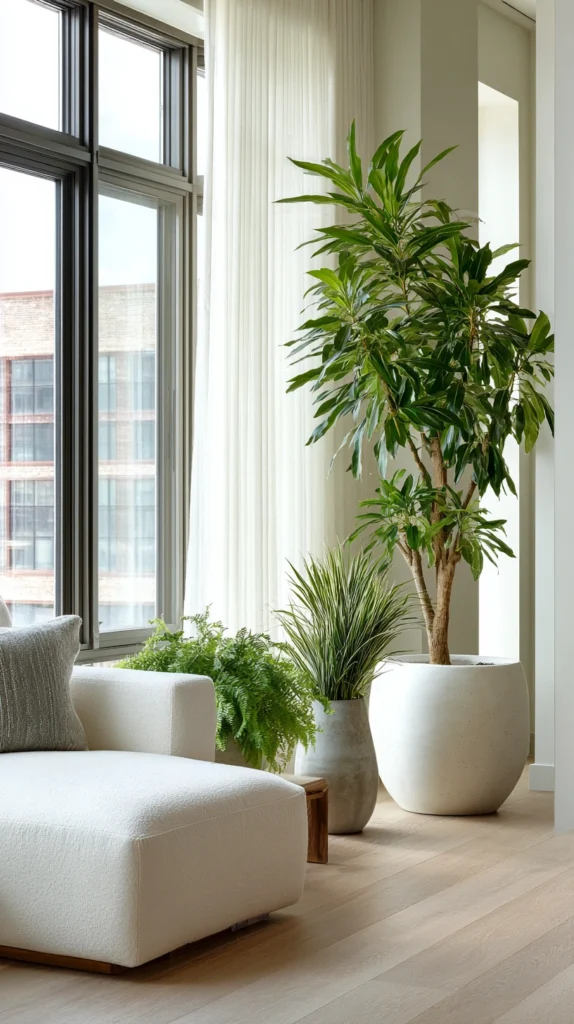
A living room with plants — genuinely healthy plants in considered positions, in beautiful pots, cared for consistently — is a living room that feels alive in the most literal sense. Plants reduce the formality of a room, improve its air quality, and communicate that the person who lives there is paying attention to living things rather than only to objects.
A large fiddle leaf fig or monstera in a statement pot — $40 – $100. A trailing pothos on a high shelf — $8 – $20. A small succulent collection on a low table — $15 – $30 for three to four plants. A ceramic or terracotta pot for each — $3 – $15 each. Total plant investment for a well-planted living room: $66 – $170 for a collection that improves every week it remains in the room.
Decor tip: Position plants in the living room according to their light requirements rather than according to where a plant would look best decoratively. A plant placed in the correct light grows, improves, and contributes more to the room with every passing month. A plant placed decoratively in insufficient light declines within a season regardless of how carefully it was watered — and a declining plant communicates the opposite of the care and life that a healthy plant brings to the room.
13. The Mantelpiece as Seasonal Gallery
Budget: $20 – $150
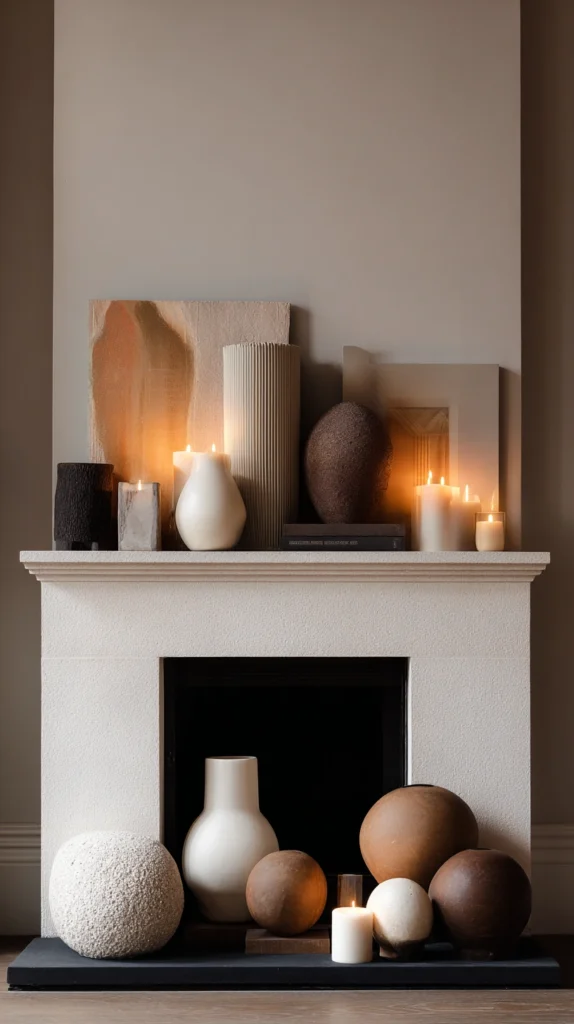
A mantelpiece styled as a seasonal gallery — a rotating arrangement of candles, botanicals, ceramics, and one or two framed pieces that changes with the season and with the mood — is the cosy living room’s most dynamic surface and the one that communicates most directly that the room is tended rather than simply maintained. A mantelpiece that never changes is a mantelpiece that has stopped being noticed.
A summer mantelpiece of dried botanicals, pale ceramics, and a single artwork costs $20 – $60 in seasonal objects. The same mantelpiece in autumn with dried seed heads, amber candles, and warm copper objects reads as entirely different for a comparable investment. The permanent objects — the mantelpiece clock, the mirror above, the candlesticks — stay. The seasonal layer changes four times a year for $20 – $60 per transition.
Decor tip: Change the mantelpiece at the equinox or the solstice rather than in response to the retail calendar. A mantelpiece refreshed at the astronomical turning points of the year responds to the actual season rather than to the commercial one, which produces a more honest and more considered seasonal display than one timed to coincide with what is currently available in garden centres and homeware shops.
14. The Cosy Corner Nook
Budget: $80 – $500
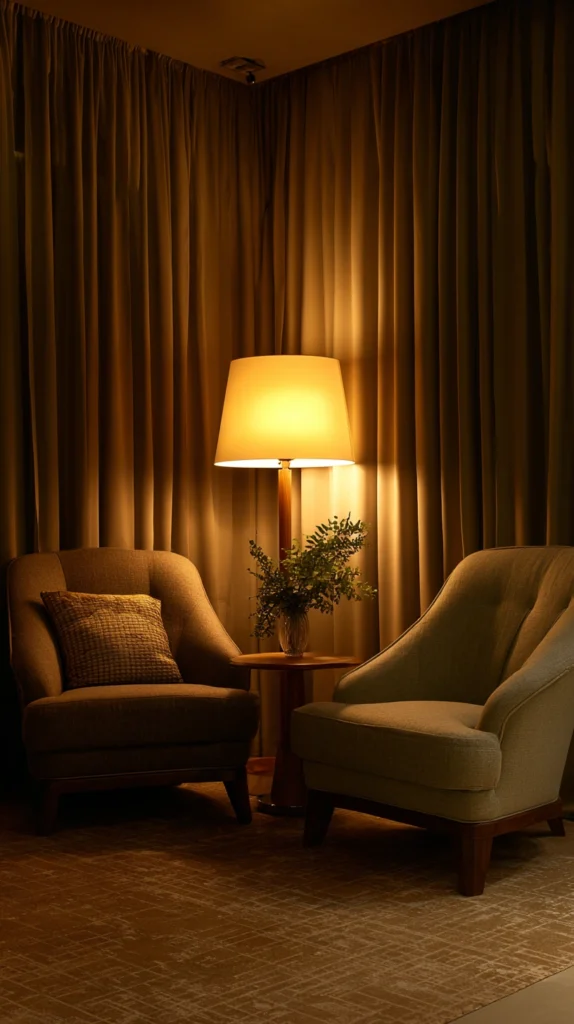
A dedicated corner of the living room given an identity of its own — a small sofa or a pair of armchairs facing each other, a low table between them, a floor lamp providing the only light, curtains or a bookshelf on either side creating partial enclosure — produces a room within a room that is the cosy living space’s most intimate and most sought-after zone.
A small two-seater sofa or two armchairs — $200 – $600 for the seating. A low side table — $30 – $80. A floor lamp — $60 – $150. The sense of enclosure — created by a bookshelf on one side and a heavy curtain panel on the other, or simply by the angle of the furniture relative to the room — costs almost nothing beyond the repositioning of existing pieces.
Decor tip: Reduce the overhead light to its dimmest setting or turn it off entirely when occupying the cosy corner nook, relying instead on the floor lamp as the sole light source for the corner. A corner lit only by a floor lamp, with the rest of the room in relative shadow, produces a quality of enclosure and warmth that is entirely different from the same corner lit by the overhead light along with the rest of the room. The light source defines the zone as much as the furniture does.
15. The Fully Cosy Living Room
Budget: $400 – $3000
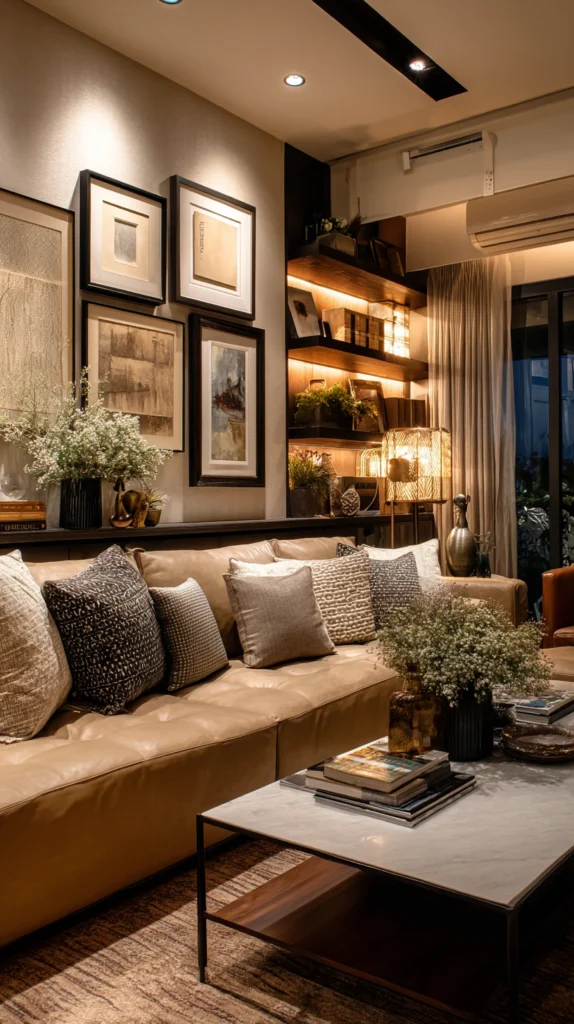
The fully cosy living room — warm paint or warm textiles on every surface, a layered lighting system on dimmers, a bookshelf wall, a reading corner with a proper armchair and a floor lamp, floor-to-ceiling curtains in a warm fabric, a coffee table styled with intention, a plant collection at varying heights, a scent source that is always running, a mantelpiece changed with the season, and personal photographs on one wall — is a room that produces a genuine, immediate, physiological sense of ease in anyone who enters it.
The individual investments: textiles $180 – $750, lighting $140 – $360, bookshelf $150 – $900, reading corner $350 – $980, curtains $120 – $500, coffee table styling $38 – $110, plants $66 – $170, scent $15 – $80, mantelpiece $20 – $150, photographs $40 – $200. Total fully cosy living room: $1119 – $4200 — the cost of a room that has been made rather than assembled.
Decor tip: Build the cosy living room from the inside out — starting with the furniture arrangement and the lighting system before adding textiles, plants, and personal objects — rather than from the outside in. A room with the correct furniture arrangement and the correct lighting already in place becomes cosy with the addition of a single throw and a candle. The same throw and candle in a room with poor furniture arrangement and harsh overhead lighting produce comfort for the object and none for the person sitting in the room.
The cosy living room is not a style to be achieved and then maintained unchanged. It is a room that is lived in, responded to, and tended — with a new plant added when the season calls for it, a different throw brought out when the temperature drops, a new photograph framed when a moment worth remembering has occurred.
It changes because the life lived in it changes. It stays warm because it is paid attention to consistently. And it becomes, over time, the room that every person in the house gravitates toward at the end of the day — not because it was designed to be that room, but because the care that went into it is exactly what makes it impossible to stay away from.