14 Above-Ground Pool Ideas for Your Backyard
An above-ground pool is one of those backyard investments that divides opinion right up until the moment it is filled with water on the first genuinely hot day of summer.
Then the opinion becomes unanimous. The practical case for an above-ground pool over an in-ground one is considerable — a fraction of the cost, no planning permission in most circumstances, no excavation, no months of construction, and a pool that can be taken down, relocated, or replaced without leaving a hole in the garden.
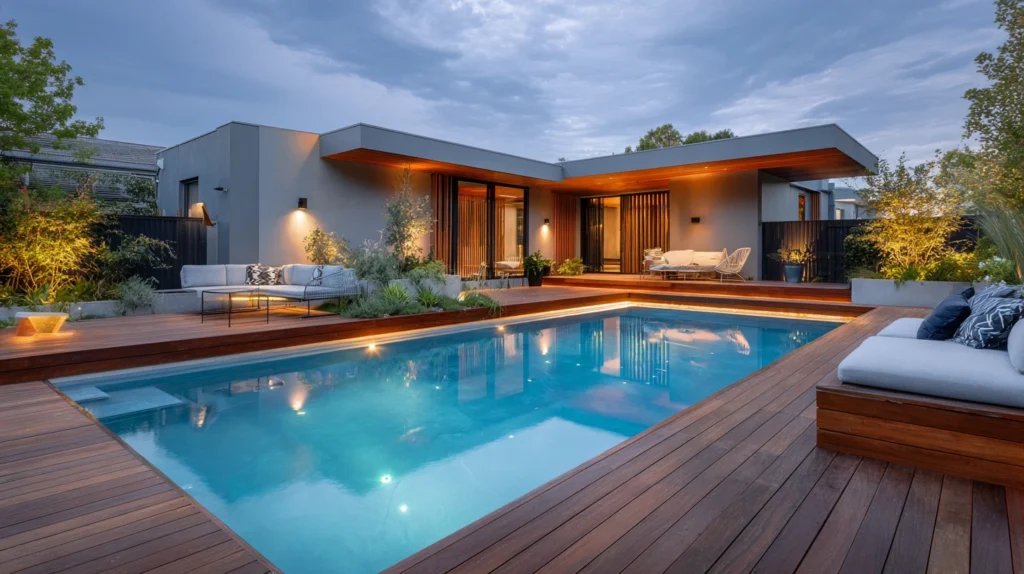
Done well, an above-ground pool does not look like a compromise. It looks like exactly what it is — a thoughtfully designed outdoor water space that makes summer substantially better.
The difference between an above-ground pool that looks considered and one that looks temporary comes down almost entirely to what surrounds it. The pool itself is the water — the deck, the landscaping, the shade structure, the lighting, and the privacy screening are what determine whether the whole installation reads as a permanent, beautiful backyard feature or as an inflatable temporarily parked on the lawn.
1. The Deck-Surrounded Pool
Budget: $500 – $3,000
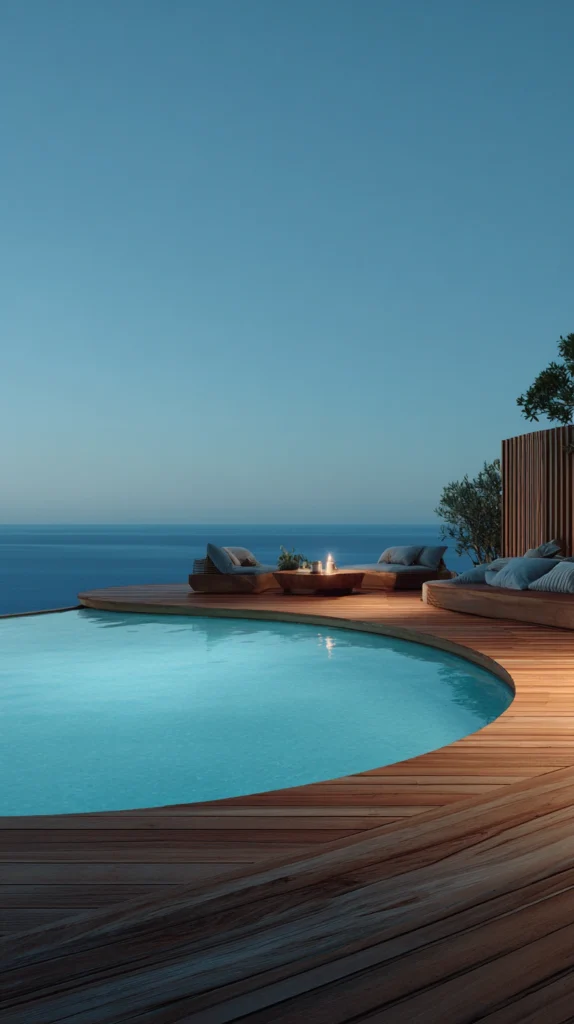
Building a timber deck that wraps around the full perimeter of an above-ground pool — bringing the deck surface level with the pool coping and creating a continuous horizontal plane of timber and water — is the single most transformative thing that can be done to an above-ground pool installation. The deck does several things simultaneously: it conceals the pool wall and its metal or resin exterior, it provides a generous lounging and entertaining surface immediately adjacent to the water, it creates level access to the pool without a ladder, and it makes the whole installation read as a single designed outdoor feature rather than a pool surrounded by lawn.
Pressure-treated softwood decking costs $8–$20 per square metre. Hardwood decking in ipe, teak, or cedar costs $25–$60 per square metre and weathers more beautifully and more durably. A full perimeter deck for a standard 4.5-metre circular pool requires approximately 25–35 square metres of decking material depending on the deck width — a modest material investment for a result that transforms the visual quality of the entire installation.
Garden tip: Install the deck boards with a slight gap between each board — 3–5 millimetres — rather than laying them tight together. The gaps allow rainwater and splash water to drain freely through the deck surface, prevent the boards from cupping as they absorb moisture, allow air to circulate beneath the deck to prevent rot in the structure below, and mean the deck surface dries quickly after rain rather than remaining wet and slippery for hours.
2. The Landscaped Pool Garden
Budget: $200 – $1,500
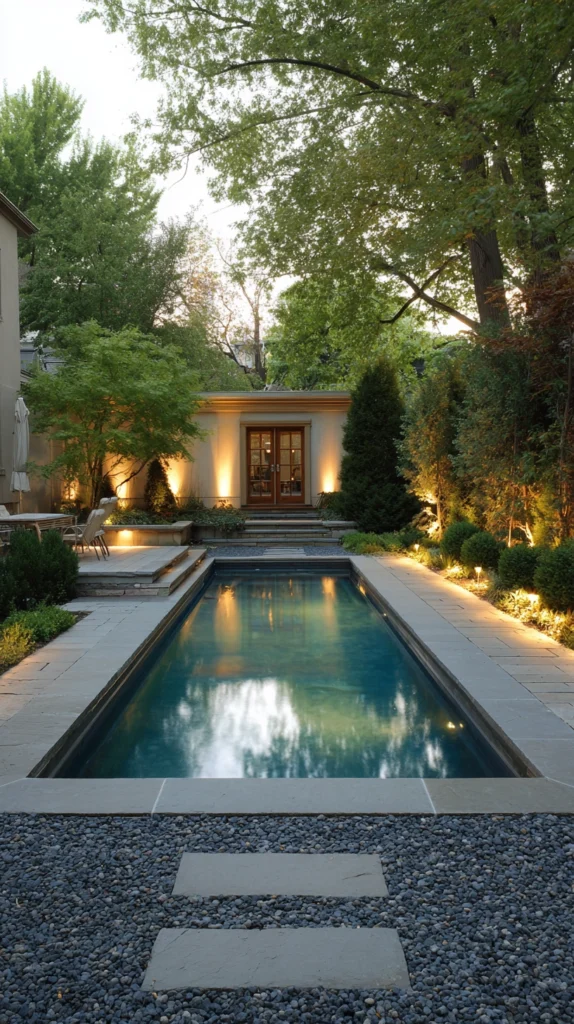
An above-ground pool surrounded by thoughtful landscaping — low planting beds, gravel pathways, potted plants, decorative boulders, and defined lawn areas — creates a pool garden that looks as though the pool was designed into the outdoor space rather than added to it afterward. The landscaping frames the pool, provides visual interest at ground level around its perimeter, and creates a sense of arrival and occasion as you approach the water that an unlandscaped pool installation entirely lacks.
Plant the areas immediately surrounding the pool with low-maintenance, non-invasive species that do not shed leaves, berries, or flowers into the water — ornamental grasses, agapanthus, lavender, sedums, and compact shrubs are all good choices. Avoid deciduous trees and heavy-flowering shrubs directly beside the pool — the maintenance burden of removing plant debris from the water is considerable, and some plant material can affect water chemistry.
Garden tip: Define the boundary between the pool area and the rest of the garden with a change of surface material — from lawn to gravel, from grass to paving, or from soil to a defined path — rather than leaving the transition ambiguous. A clear material boundary makes the pool area read as a designed zone within the garden rather than a feature that simply occupies whatever ground it was placed on. The definition costs almost nothing to create and significantly improves the visual coherence of the whole installation.
3. The Privacy Screened Pool Retreat
Budget: $150 – $800
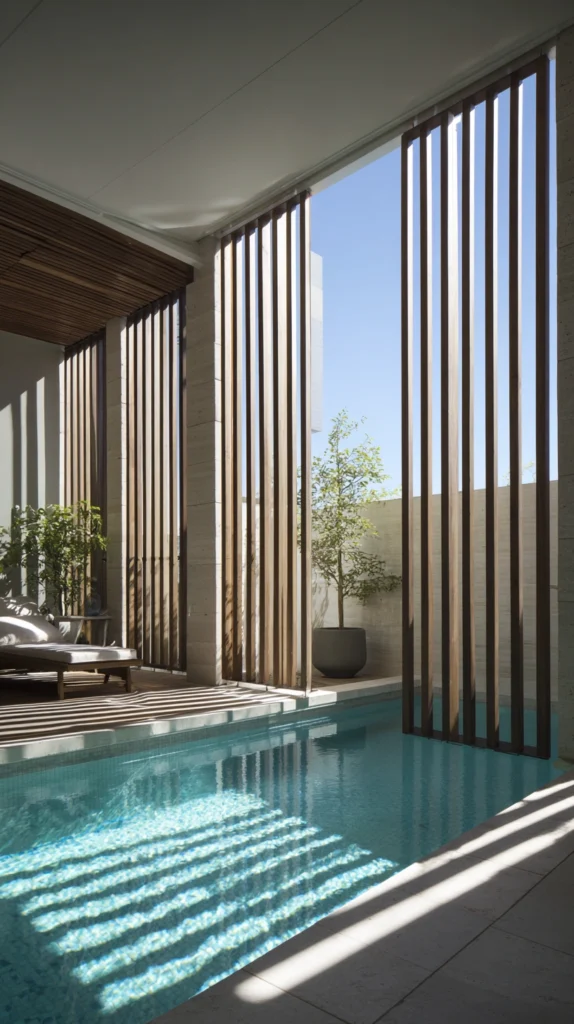
An above-ground pool without any privacy screening is an exposed, overlooked space that most people feel self-conscious using. Tall privacy screens — bamboo panel fencing, timber batten screens, planted trellis panels, tall ornamental grass hedging, or a combination of hard and planted screening — create an enclosed pool retreat that feels genuinely private and genuinely relaxing rather than an installation visible to every neighbour and passing pedestrian.
Position privacy screening on the prevailing wind side as well as the overlooked sides — a pool that is visually private but exposed to a persistent cool breeze is significantly less enjoyable than one that is sheltered from wind as well as from sightlines. Bamboo hedging provides both visual privacy and wind filtering within two to three seasons of planting. Timber batten screens provide immediate privacy from day one. Both at 1.8–2 metres height create a comfortable sense of enclosure without making the pool area feel confined.
Garden tip: Install the privacy screening before filling the pool rather than afterward. Working around a full pool to dig post holes, pour concrete footings, and erect screening panels is significantly more difficult and more disruptive than installing the screening into clear ground. The sequence — screening first, pool second — also allows you to adjust the screening position in response to the actual sightlines from neighbouring properties rather than working from an estimated plan.
4. The Saltwater Pool Upgrade
Budget: $400 – $1,200
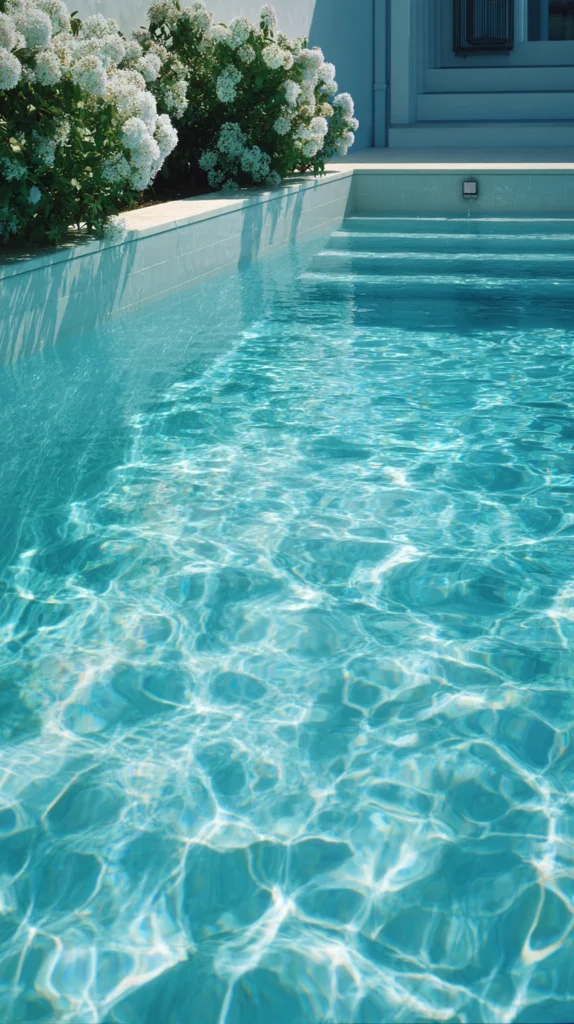
Converting an above-ground pool to a saltwater system — replacing the standard chlorine treatment with a salt chlorinator that generates chlorine from dissolved salt — creates a swimming experience that is significantly more comfortable than a conventionally chlorinated pool. The water feels softer and smoother against the skin, the characteristic chlorine smell is almost entirely absent, and the eye irritation that makes standard chlorinated pools uncomfortable for extended swimming is dramatically reduced. Saltwater pools are not chlorine-free — they generate their own chlorine — but the form the chlorine takes is gentler and more consistent than manually added chlorine treatments.
A salt chlorinator unit costs $200–$600 depending on the pool volume it is rated for. Pool-grade salt costs $15–$25 per 25-kilogram bag and is needed at the initial setup and periodically to maintain the correct salinity level. The ongoing chemical cost of a saltwater pool is typically lower than a conventionally chlorinated one — the salt is not consumed in the process, only the chlorine it generates, and top-ups are needed only to compensate for water that is splashed out or lost to evaporation.
Garden tip: Test the pool water weekly with a multi-parameter test strip that measures salt level, pH, free chlorine, total alkalinity, and stabiliser simultaneously rather than testing individual parameters separately. Saltwater pool chemistry is interdependent — pH affects chlorine efficacy, total alkalinity affects pH stability, and stabiliser affects how long generated chlorine remains active. Monitoring all parameters together gives a complete picture of the water chemistry and allows adjustments to be made before any single parameter drifts far enough out of range to cause problems.
5. The Poolside Shade Structure
Budget: $100 – $800
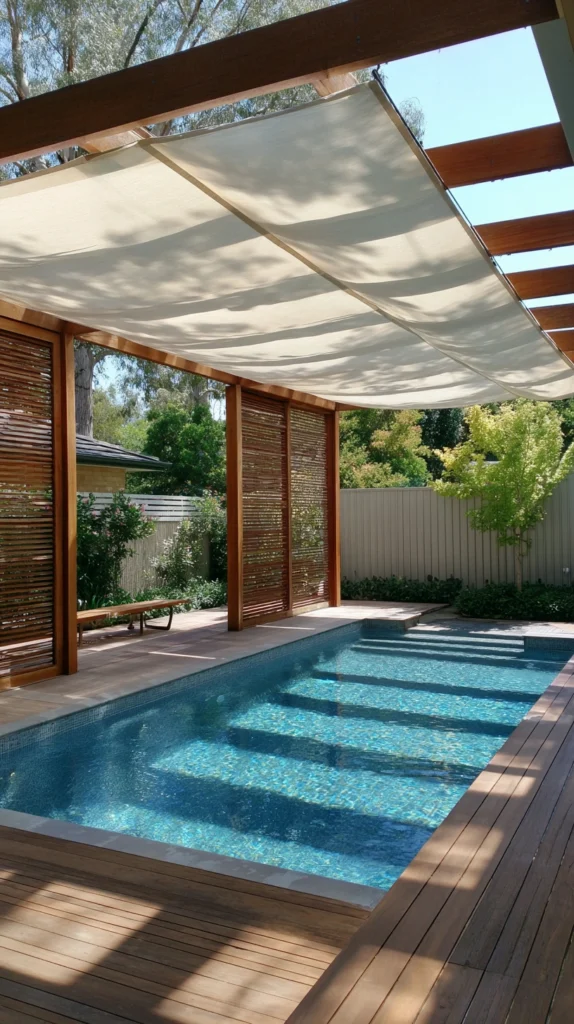
An above-ground pool without shade is a pool that can only be used comfortably for a limited portion of the day — during the morning and late afternoon when direct sun is bearable, but not during the peak midday hours when UV radiation and heat make prolonged sun exposure uncomfortable and dangerous. A shade structure beside or over part of the pool — a sail shade, a pergola, a timber gazebo, or a cantilevered parasol — extends the useful hours of the pool and creates a shaded seating and relaxation area that improves every aspect of pool use.
A sail shade covering part of the poolside deck or lawn area costs $40–$150 and is the most affordable and most immediately effective shade solution. Tension it between two posts and the wall of the house — or between four posts — at an angle so it sheds rainwater naturally. A pergola or timber gazebo beside the pool costs $300–$800 and creates a more permanent and more architectural shade structure that provides a defined outdoor room adjacent to the water.
Garden tip: Position the shade structure on the south or west side of the pool to provide shade during the hottest part of the day — from late morning through to late afternoon — rather than on the east side where it would shade the pool in the cooler morning hours when shade is least needed. Shade from the south and west blocks the sun when it is highest and most intense; shade from the east blocks it when it is low and relatively cool, which is the least useful position for a poolside shade structure.
6. The Poolside Outdoor Kitchen
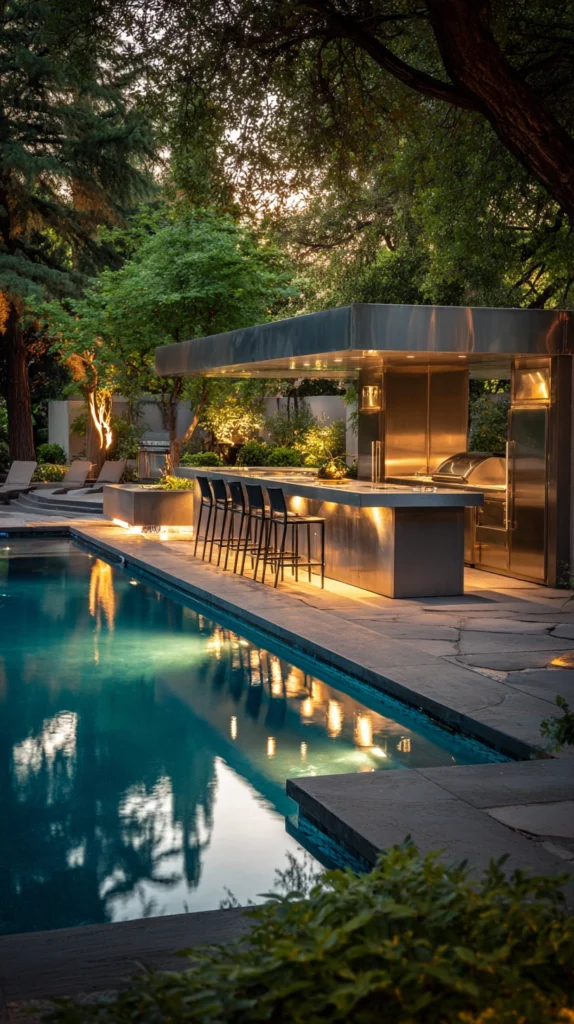
Budget: $300 – $2,000
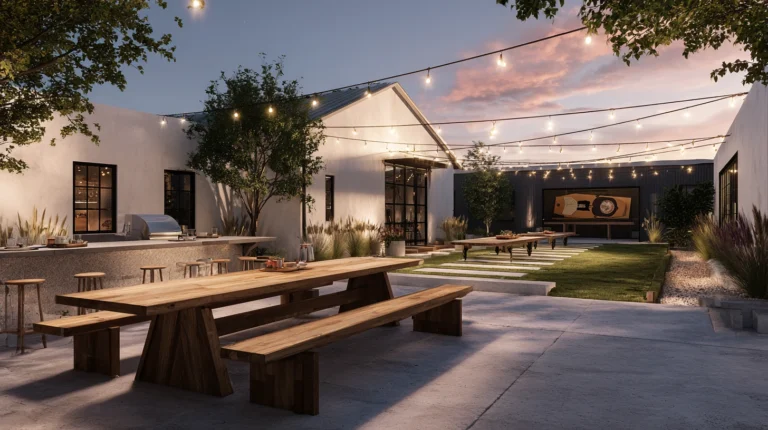
A dedicated outdoor kitchen beside an above-ground pool — a built-in barbecue, a prep surface, a mini refrigerator, a sink, and a storage cabinet — transforms the pool area from a single-purpose swimming space into the full-service outdoor living area that makes summer entertaining genuinely effortless. The proximity of the kitchen to the pool means food and drinks are available without requiring anyone to go back into the house, which keeps the social energy of the poolside gathering exactly where it belongs — beside the water.
A freestanding gas barbecue cart with a side prep surface costs $150–$400. A built-in outdoor kitchen with a permanent countertop, sink, and integrated appliances costs $800–$3,000 depending on specification. Even a modest poolside kitchen — a cart barbecue, a small weatherproof refrigerator, and a folding prep table — adds considerably more to the usability of the pool area than an equivalent spend on pool accessories or decorative elements.
Garden tip: Install a weatherproof outdoor socket adjacent to the kitchen area before positioning any permanent outdoor kitchen structure. Outdoor kitchen appliances — blenders, electric grills, lighting, refrigerators, speakers — all require power, and attempting to add electrical access after a permanent kitchen structure has been built involves significant additional disruption and expense. A properly installed outdoor socket on a dedicated circuit takes an electrician an afternoon to install and costs $100–$200 — a modest investment that makes the entire outdoor kitchen area infinitely more functional.
7. The Heated Pool Extension
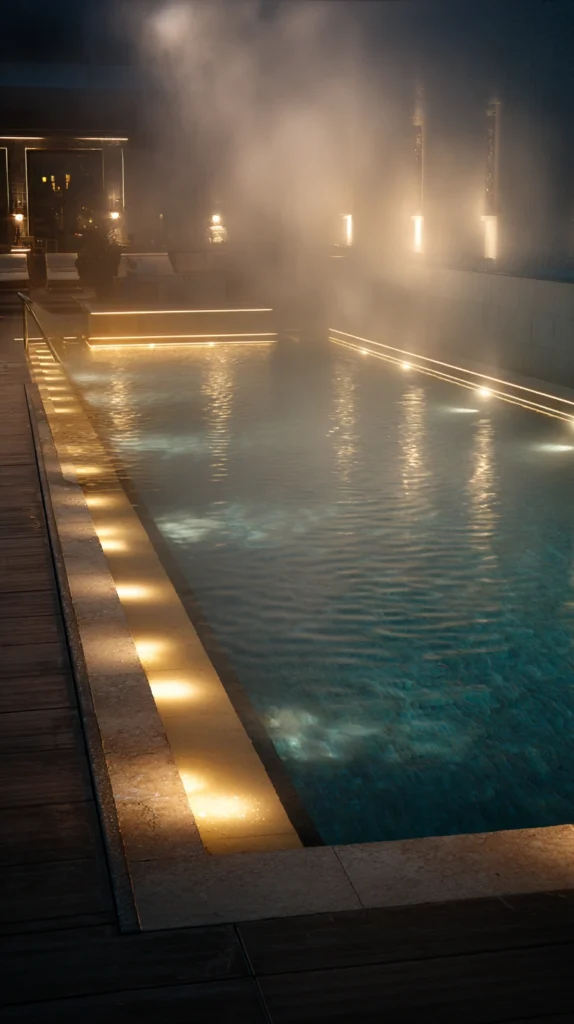
Budget: $200 – $1,500
An above-ground pool fitted with a heating system — a solar heating panel system, an electric heat pump, or a gas pool heater — extends the swimming season at both ends, from early spring through to late autumn, turning what would otherwise be a two-month amenity into a five or six month one. In climates where summer temperatures are inconsistent, a heated pool is the difference between a pool that is used on every warm day and one that is used only on the handful of genuinely hot days that an unpredictable summer provides.
Solar heating systems for above-ground pools cost $200–$600 and use the sun’s energy to warm the water through a coil of black tubing on the roof or a frame beside the pool. They are the lowest operating cost option but dependent on sunny weather. Electric heat pumps cost $400–$1,200 and provide consistent heating regardless of sunshine levels. Gas heaters heat pool water the fastest but have the highest operating cost.
Garden tip: Use a thermal pool cover whenever the pool is not in use — a good quality solar cover ($30–$80) retains the heat generated by the heating system and prevents up to 95 percent of the heat loss that occurs at the water surface through evaporation. Without a cover, a heated pool loses its temperature rapidly overnight and on cloudy days, requiring the heater to run continuously and expensively. A cover keeps the water at swimming temperature overnight and dramatically reduces heating costs across the season.
8. The Plunge Pool Conversion
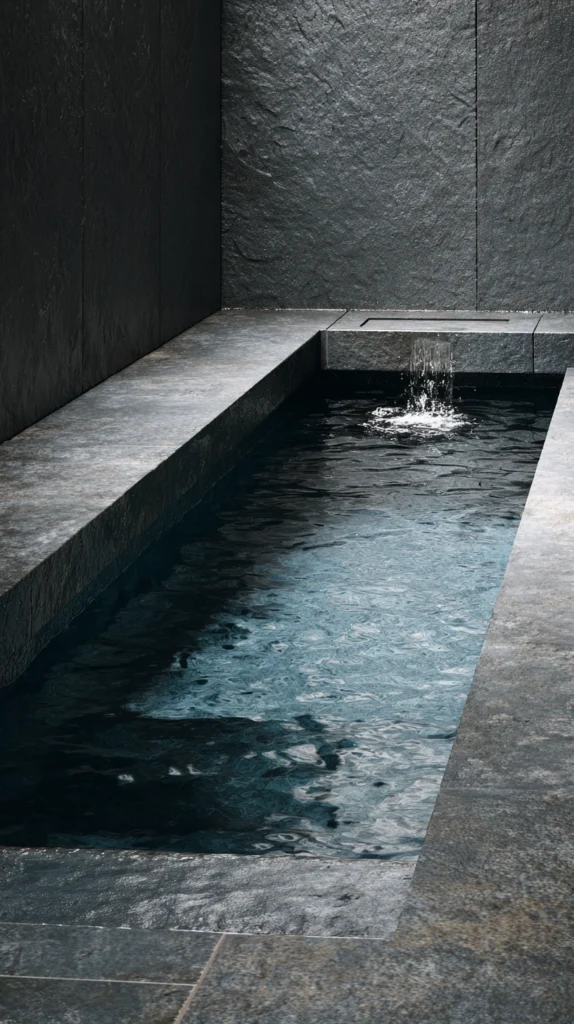
Budget: $100 – $400
A small above-ground pool — 2.5 to 3 metres in diameter — converted into a dedicated cold water plunge pool rather than a conventional swimming pool creates a wellness-focused water feature that requires significantly less maintenance, less chemical treatment, and less water than a full-size pool. The cold plunge has become one of the most enthusiastically adopted wellness practices of recent years, and a dedicated plunge pool in the backyard provides the same recovery and mood-boosting benefits as a professional spa cold plunge facility.
Keep the water at 10–15 degrees Celsius for the most effective cold therapy — at this temperature, three to five minutes of immersion produces the full physiological response of cold water therapy. A small pool at this temperature requires minimal filtration and less chemical treatment than a warm swimming pool — lower water temperature inhibits algae growth, and the shorter immersion times mean less organic matter is introduced to the water per use.
Garden tip: Position a cold plunge pool in partial shade rather than full sun. A plunge pool in direct summer sunlight heats the water rapidly — defeating the cold therapy purpose — and accelerates algae growth significantly. A partially shaded position keeps the water naturally cooler, reduces the chemical and maintenance demands of the pool, and creates a more pleasant environment for the brief, intense immersion that cold therapy involves.
9. The Poolside Fire Pit Combination
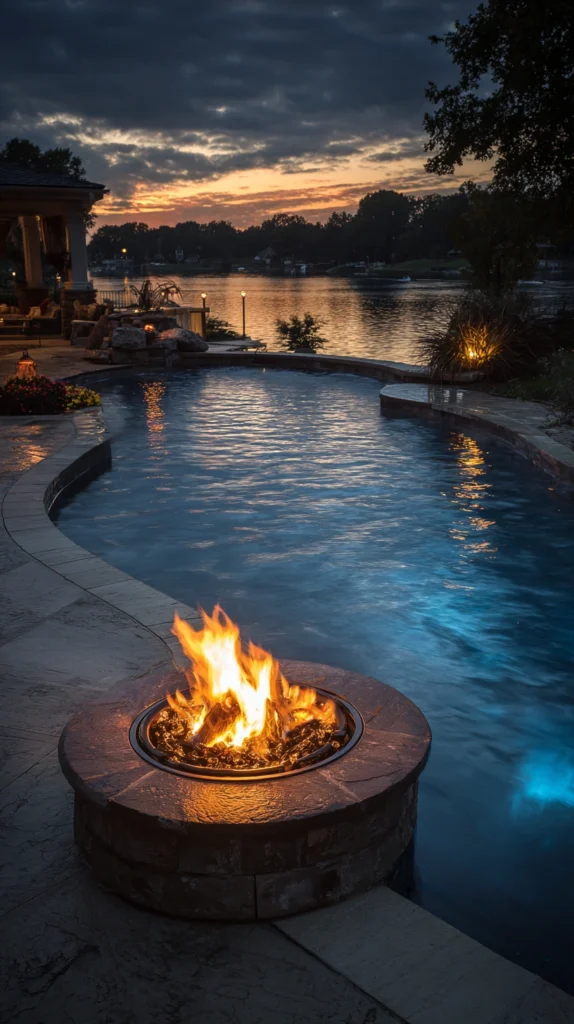
Budget: $200 – $800
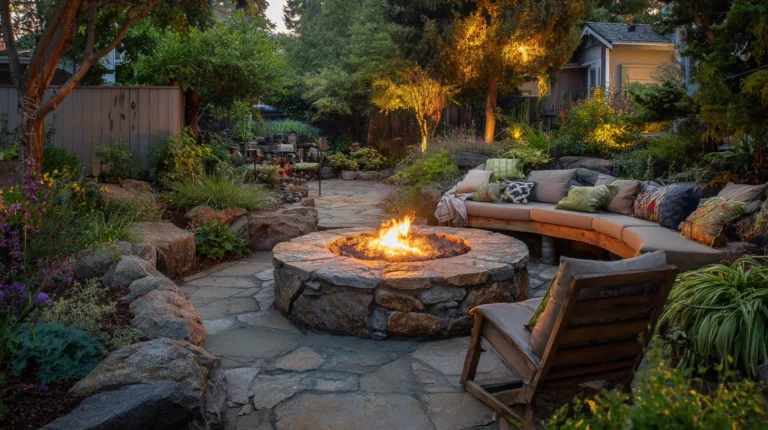
A fire pit positioned at a safe distance from the pool — on the far side of the poolside deck or at the edge of the pool garden — creates the most dramatically enjoyable outdoor combination available in any backyard. Swimming in warm pool water while a fire burns nearby, then moving from the pool to a chair beside the fire as the evening cools — the contrast between the water and the warmth is one of the most elemental and most pleasurable outdoor experiences a domestic garden can provide.
A portable steel fire pit costs $40–$80 and requires no installation. A built-in fire pit ring with surrounding seating costs $200–$600. Position the fire pit a minimum of 3 metres from the pool edge and 3 metres from any combustible structure including deck timber, privacy screening, and shade sails. Most above-ground pool manufacturers specify minimum clearances from heat sources in their installation guidelines — check these before deciding on the fire pit position.
Garden tip: Position the fire pit so that the prevailing wind direction carries smoke away from the pool and the poolside seating area rather than toward them. A fire that sends smoke consistently across the pool seating makes the entire installation unpleasant regardless of how beautiful it looks. Observe the wind direction on several evenings before fixing the fire pit position — an evening breeze that is consistent in direction will determine the optimal fire pit placement more reliably than any theoretical assessment of the garden layout.
10. The Night Swimming Setup
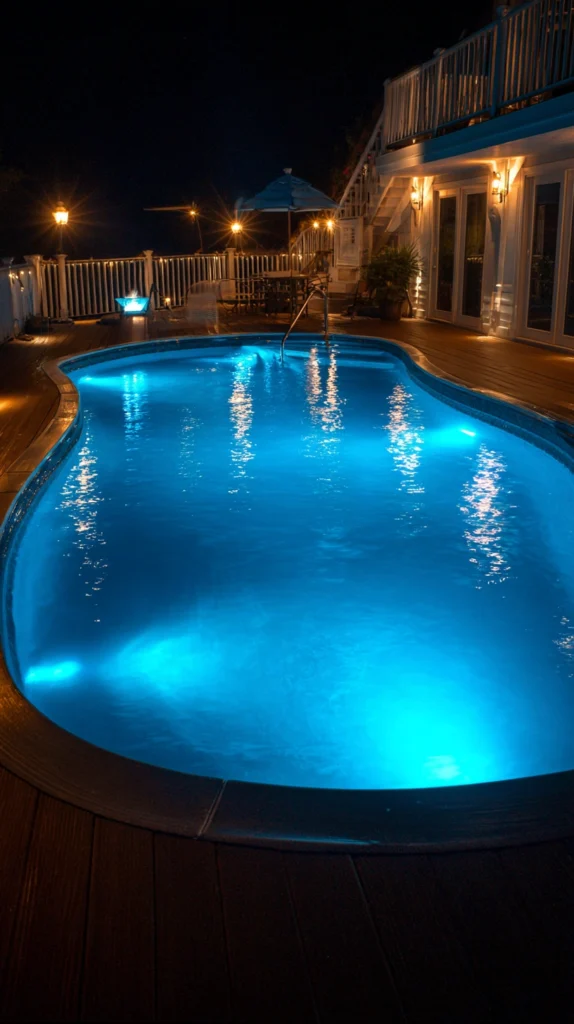
Budget: $100 – $500
An above-ground pool fitted with underwater LED lighting — and surrounded by thoughtful external lighting on the deck, the landscaping, and the privacy screening — creates a night swimming experience of extraordinary atmosphere. An illuminated pool on a warm summer evening, with the garden lit around it, is one of the most inviting and most genuinely beautiful outdoor environments a backyard can produce. Night swimming extends the usable hours of the pool well beyond sunset and creates a social atmosphere that daytime swimming cannot match.
Underwater LED lights designed for above-ground pool installation cost $30–$80 each and fix to the pool wall above the waterline with a suction cup or a clamp bracket. Colour-changing LED versions ($40–$100) allow the water colour to be adjusted between white, blue, green, and multi-colour modes. Two or three lights positioned at intervals around the pool perimeter create even underwater illumination with no dark spots.
Garden tip: Choose cool white or blue-white underwater LED lights rather than warm white for pool illumination. Warm white light in a pool creates a slightly murky, brownish water colour that is less visually appealing than the clear, bright blue that cool white and blue-toned LEDs produce. The colour temperature of the underwater light determines the colour of the water as seen from outside the pool — cool white creates the vivid, turquoise-blue water colour that makes a night-lit pool look as inviting as possible.
11. The Family-Focused Pool Setup
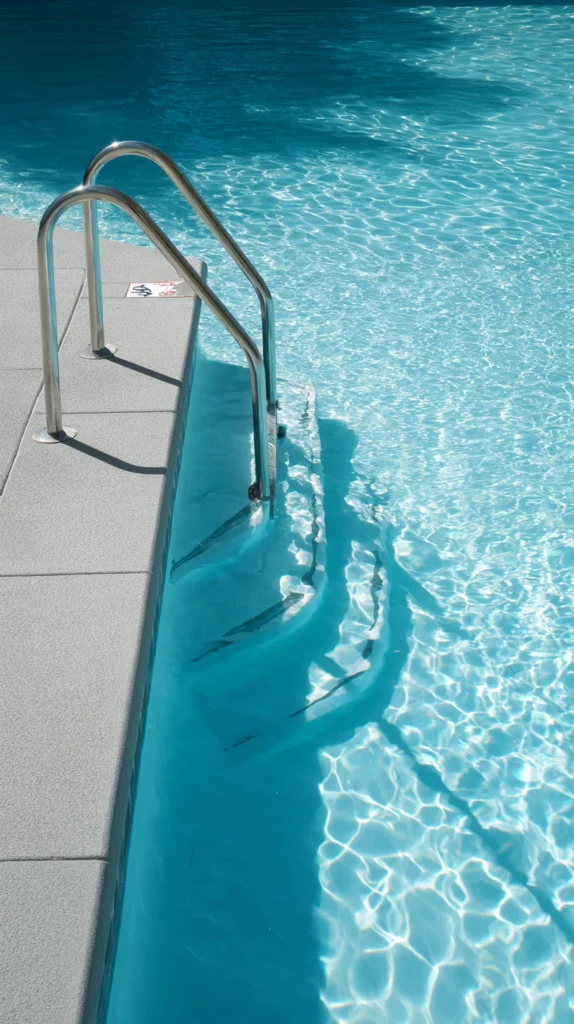
Budget: $150 – $600
An above-ground pool equipped and organised specifically for family use — with a fixed safety ladder with a lockable gate, a shallow wading zone created with a raised floor insert for younger children, poolside toy and equipment storage, a shaded seating area for supervising adults, and a non-slip surface on the surrounding deck — is a fundamentally safer and significantly more enjoyable installation than a pool set up without specific consideration of how children will use it.
A lockable safety ladder that can be raised to prevent unsupervised pool access costs $80–$150 and is the single most important safety investment in any family pool installation. Non-slip decking strips cost $15–$30 for a full deck and prevent the slipping accidents that occur on wet timber surfaces around pools. A waterproof storage box beside the pool ($40–$80) keeps floats, toys, and equipment organised and accessible without creating trip hazards on the deck surface.
Garden tip: Establish and enforce a clear set of pool rules from the first day the pool is used — no running on the deck, no diving in an above-ground pool, no swimming without adult supervision — and post these rules visibly beside the pool rather than relying on verbal reminders. Rules that are displayed consistently and applied consistently from the beginning become habits quickly. Rules introduced after an incident or applied inconsistently create confusion and resistance rather than safe, understood behaviour.
12. The Tropical Themed Pool
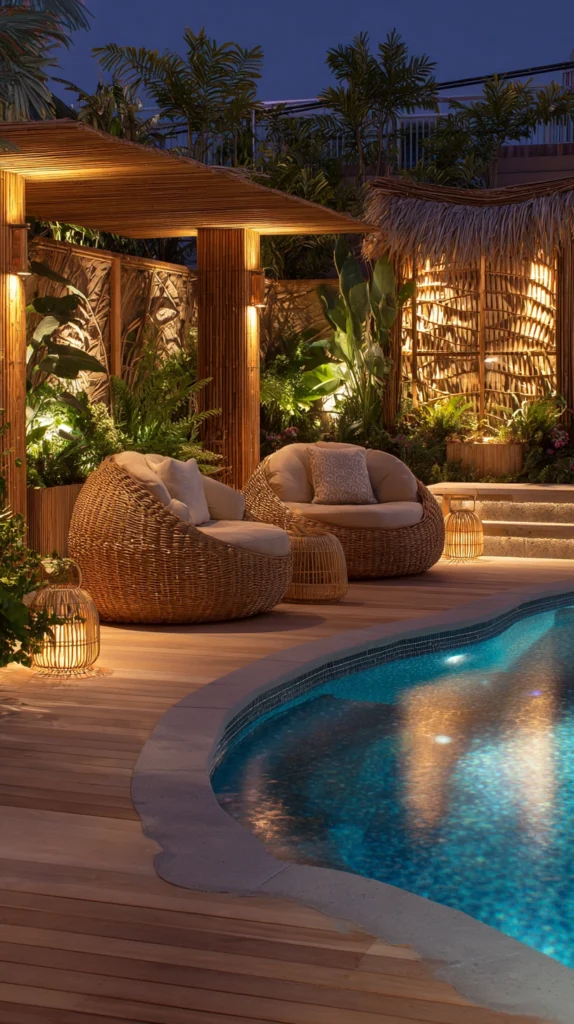
Budget: $200 – $1,000
An above-ground pool surrounded by a tropical-themed landscape — large-leafed architectural plants, cannas, phormiums, banana plants, bamboo screens, tiki torches, rattan furniture, and palm leaf print outdoor textiles — creates a backyard environment of genuine exotic warmth that transforms the pool from a domestic water feature into an immersive outdoor experience. The tropical theme works because it leans into rather than fights the inherent leisure associations of a backyard pool.
Architectural foliage plants that create tropical visual impact without requiring tropical climate conditions — hardy bananas (Musa basjoo), tree ferns (Dicksonia antarctica), cannas, phormiums, and gunnera — all perform well in temperate gardens and create the bold, oversized leaf forms that define the tropical aesthetic. Group them in generous plantings on the sunny side of the pool rather than as isolated individual specimens for the most convincing tropical garden effect.
Garden tip: Use tiki-style solar torches ($10–$25 each) rather than fuel-burning torches around a tropical-themed pool. Solar torches with flickering LED flames create the same visual effect as real flame torches without the fire risk adjacent to pool water, without the need to fill and maintain fuel, and without the unpleasant smoke that paraffin or citronella fuel torches produce at close range. They charge during the day and activate automatically at dusk — the most practical and safest way to achieve the torch-lit tropical pool atmosphere after dark.
13. The Spa and Pool Combination
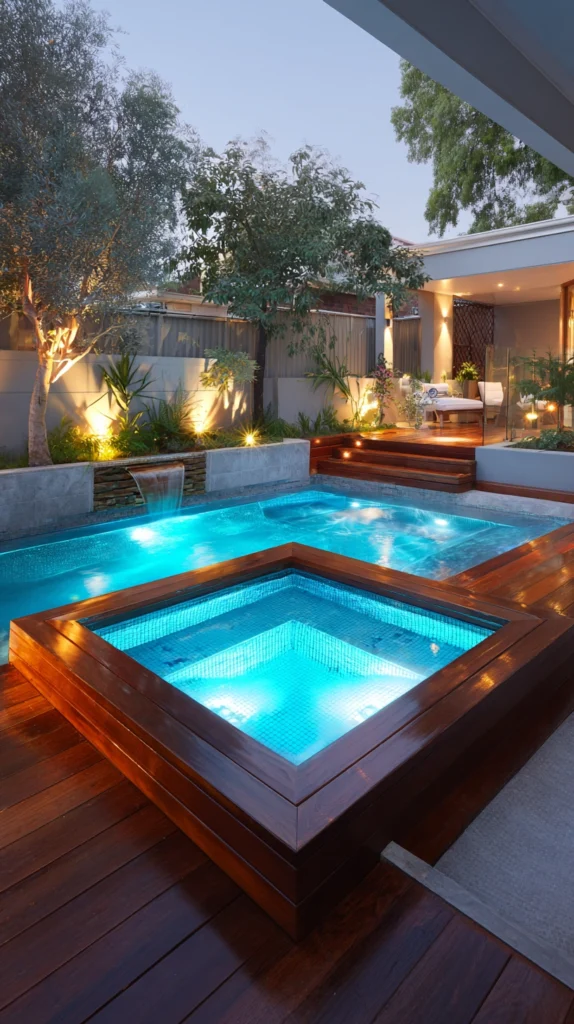
Budget: $500 – $3,000
An above-ground pool combined with a separate above-ground spa or hot tub — positioned on the same deck or in the same defined pool garden area — creates the most complete backyard water wellness facility available without the cost and construction disruption of an in-ground installation. The combination of a cool pool for swimming and exercise and a hot spa for relaxation and recovery creates a contrast hydrotherapy experience that high-end wellness facilities charge significant sums to provide.
Inflatable hot tubs cost $300–$800 and provide a heated, jetted soaking experience for two to four people with minimal installation requirements. Hard-sided above-ground spas cost $1,500–$4,000 and provide a more durable, more energy-efficient, and more aesthetically considered soaking experience. Position the spa on the same deck as the pool so that moving between the two requires only a few steps — the contrast between cold pool and hot spa is the therapeutic benefit, and it works best when the transition is immediate and effortless.
Garden tip: Cover the hot tub with an insulating cover whenever it is not in use — a quality thermal cover ($100–$200) retains heat, prevents evaporation and chemical loss, keeps debris out of the water, and reduces the energy cost of maintaining the spa at temperature by up to 80 percent. An uncovered hot tub loses its heat rapidly and accumulates debris that requires additional chemical treatment. The cover is the most cost-effective spa accessory available and pays for itself in energy savings within a single season.
14. The Enclosed Pool Courtyard
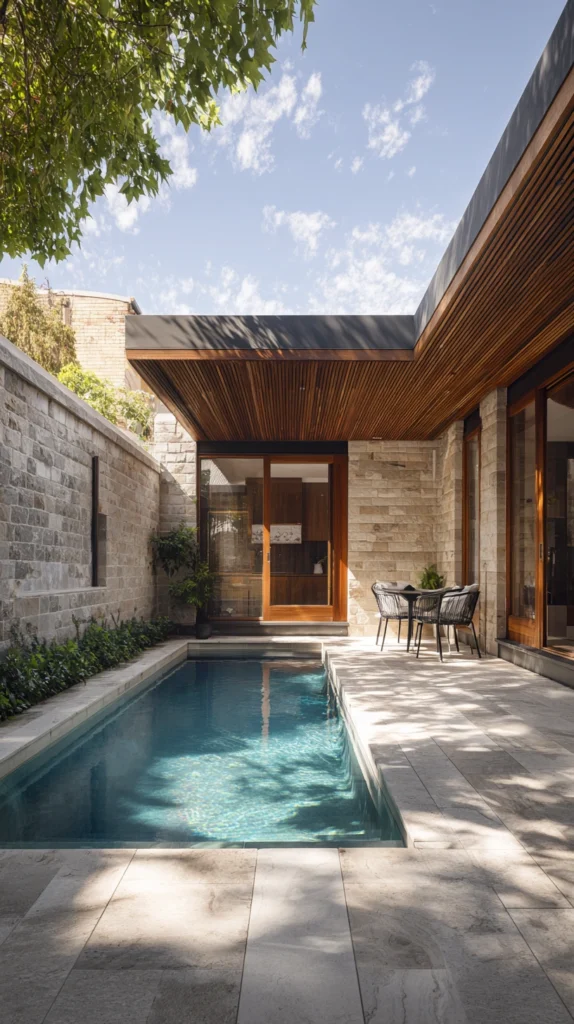
Budget: $400 – $2,500
An above-ground pool installed within a fully enclosed courtyard — with walls or high screens on all sides, a defined entrance, a consistent paving or decking surface throughout, and thoughtful planting around the pool perimeter — creates the most complete and the most private pool environment available in a domestic backyard. The enclosure transforms the pool from a feature within the garden into a dedicated pool room — a space with its own character, its own climate, and its own clear purpose.
Enclose the courtyard with rendered masonry walls, timber batten screens, gabion walls filled with local stone, or tall dense hedging — any combination of hard and planted screening that creates a complete visual boundary at a height of 1.8–2.2 metres. Pave the entire courtyard in a single consistent material — large-format concrete, natural stone, or pale gravel — for a unified ground plane that reads as a designed outdoor room rather than a pool placed on a paved area.
Garden tip: Orient the enclosed pool courtyard to capture maximum sun exposure through the entrance and over the highest walls during the peak swimming hours of the day — from late morning through to early afternoon. A courtyard that is enclosed on all sides but oriented so the sun tracks across the pool surface during the warmest part of the day provides the best combination of privacy and solar warmth. A courtyard enclosed in a way that creates permanent shade over the pool surface defeats the purpose of the installation, regardless of how beautifully the enclosure is designed.
An above-ground pool becomes a backyard destination the moment it is treated as a feature worth designing around rather than a product worth setting up. The water is only the beginning — the deck that surrounds it, the shade that shelters it, the lighting that illuminates it, and the planting that frames it are what transform a functional pool into a genuine outdoor room that earns its place in the garden every day of the summer season.