15 Baby Pink Living Room Ideas That Feel Soft and Dreamy
Baby pink is one of the most misunderstood colours in interior design. It carries associations — nurseries, confectionery, a certain kind of femininity that some find limiting — that prevent many people from considering it seriously as a living room palette.
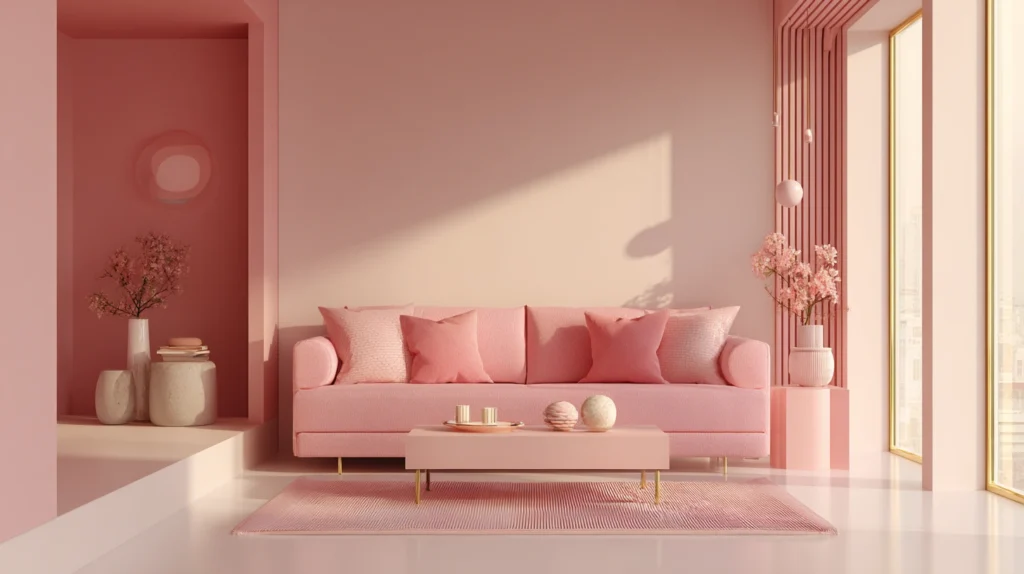
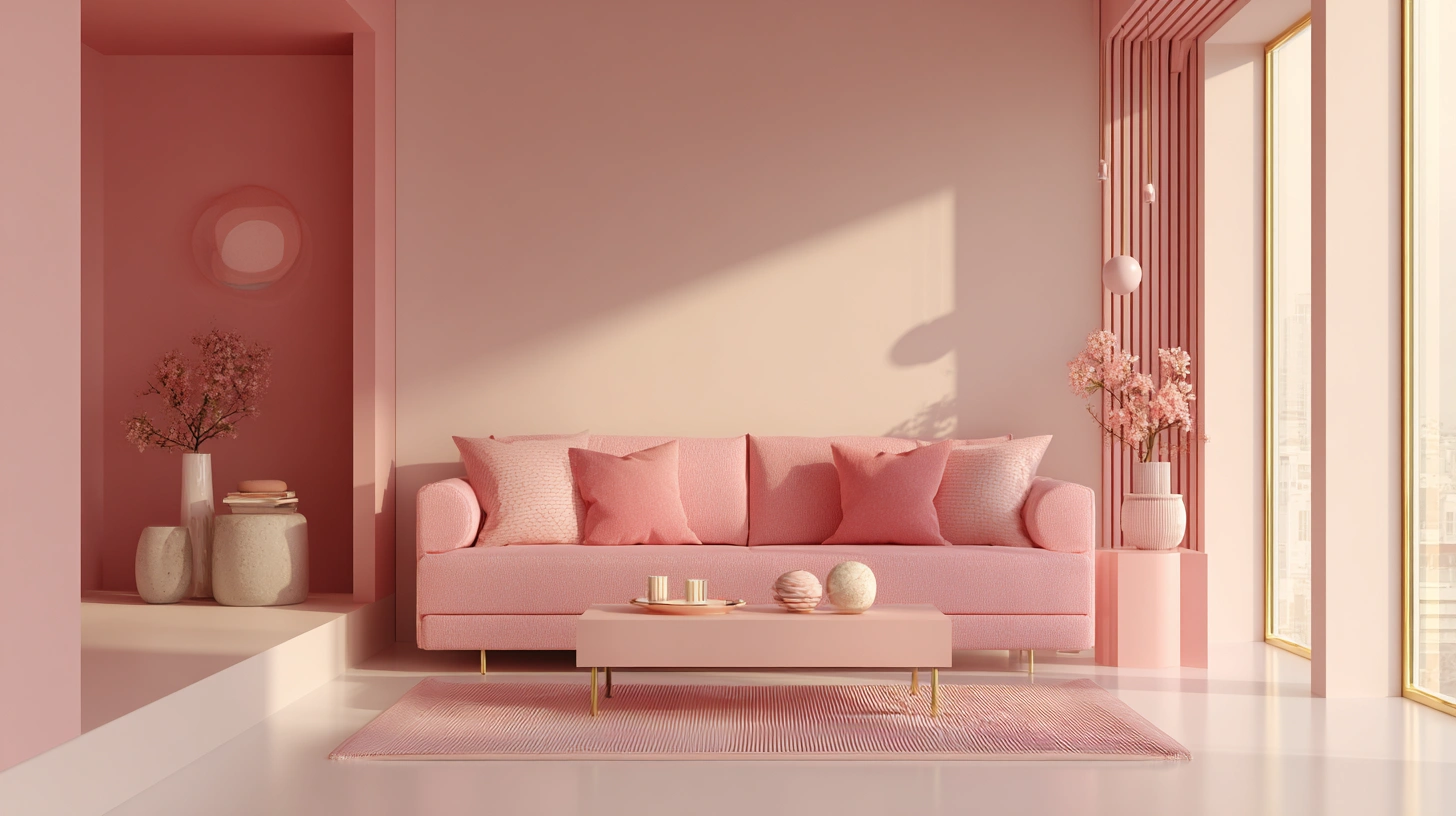
This is a significant decorating oversight. Baby pink, used with the right tonal companions and the right material choices, creates a living room of extraordinary softness and atmospheric warmth that no neutral palette can replicate and that no other colour quite achieves with the same effortless, enveloping quality.
The key to a baby pink living room that feels genuinely dreamy rather than merely sweet is the same as the key to any successful single-colour scheme — depth, tonal variation, and the confidence to layer different versions of the same tone across different surfaces and materials. Baby pink that appears in only one or two elements reads as an accent; baby pink that permeates the room at every level — walls, upholstery, textiles, flowers, ceramics — creates the immersive, atmospheric quality that makes these rooms so genuinely distinctive and so genuinely memorable.
1. The Baby Pink Linen Living Room
Budget: $200 – $1,000
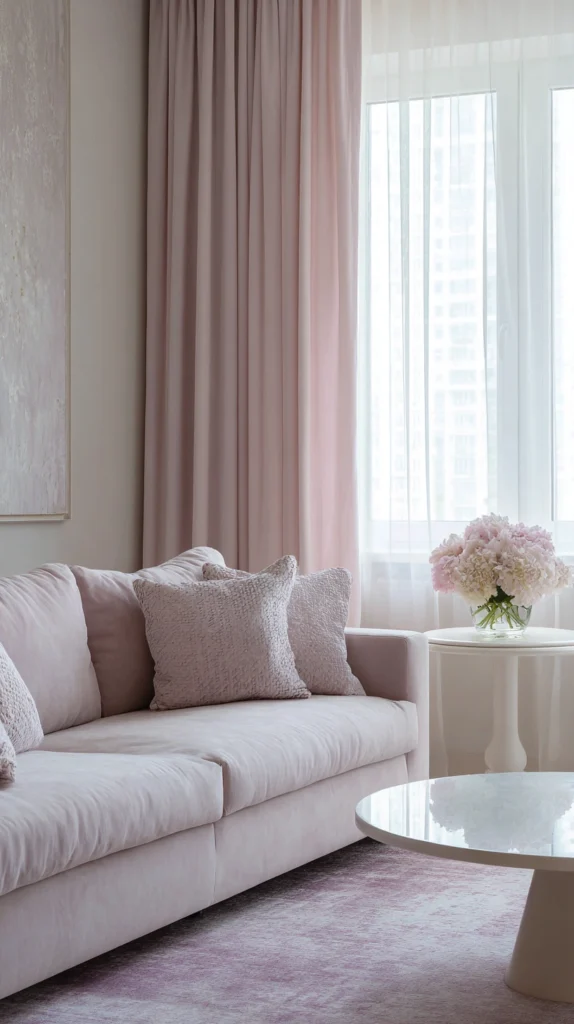
A living room built on the foundation of baby pink washed linen — sofa upholstery, curtains, cushion covers, and throws all in the same soft, slightly irregular linen fabric in a consistent pale pink tone — creates the most texturally rich and the most naturally beautiful baby pink living room available. The quality of washed linen — its slight slub, its natural crease, its warmth against the skin — gives baby pink a depth and an organic quality that flat, synthetic fabrics entirely lack, and it makes the colour read as considered and sophisticated rather than sweet or juvenile.
Washed linen softens the pink tone by giving it the slightly faded, sun-bleached quality of fabric that has been loved and lived with — a quality that suits the dreamy, unhurried atmosphere of the pale pink living room better than any crisp, freshly pressed fabric. The soft texture also means that the room feels warm without being over-decorated — the linen does enough through its natural richness that additional decorative elements need only complement rather than carry the space.
Styling tip: Wash all linen pieces together before installing or using them — the combined wash evens out any slight variations in dye between different pieces bought at different times and creates the unified, harmonious tone that makes a linen-based room look deliberately composed rather than assembled from separately purchased items.
2. The Pale Pink Gallery Wall
Budget: $50 – $300
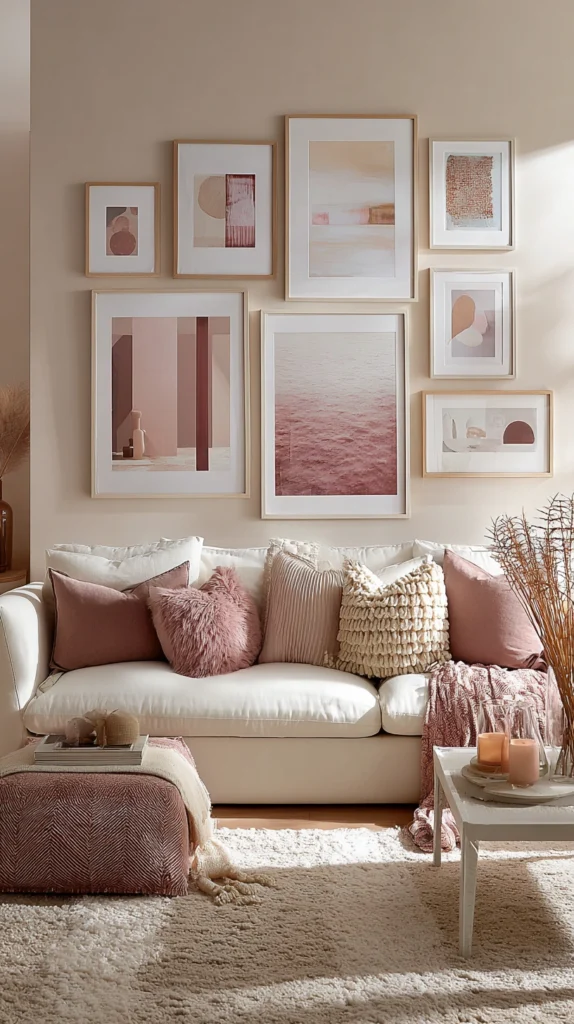
A gallery wall composed entirely of prints and artworks in the baby pink tonal family — watercolour florals in blush and pale rose, abstract washes in pink and cream, soft botanical illustrations, pale pink typography prints, pastel-toned fashion photography — framed in natural timber, white painted wood, or pale rattan creates a wall surface of gentle colour and genuine visual warmth. The pink gallery wall communicates the palette without requiring a single wall to be painted, and its scale and visual complexity create the same immersive quality as a painted room at a fraction of the commitment and cost.
Source prints from independent illustrators on online platforms — a curated selection of six to eight pink-toned prints from independent artists costs $30–$80 in digital downloads plus $20–$50 in printing, and creates a gallery with considerably more originality and personal character than commercially produced print collections at higher prices.
Styling tip: Include one print in the gallery that introduces a tone slightly outside the strict baby pink palette — a pale sage green botanical, a soft lavender abstract, a warm cream typography piece — as a gentle tonal counterpoint that prevents the gallery from reading as monotonously single-toned. The one departure from the palette is what makes everything else read as carefully chosen rather than systematically matched.
3. The Baby Pink and White Stripped-Back Look
Budget: $150 – $700
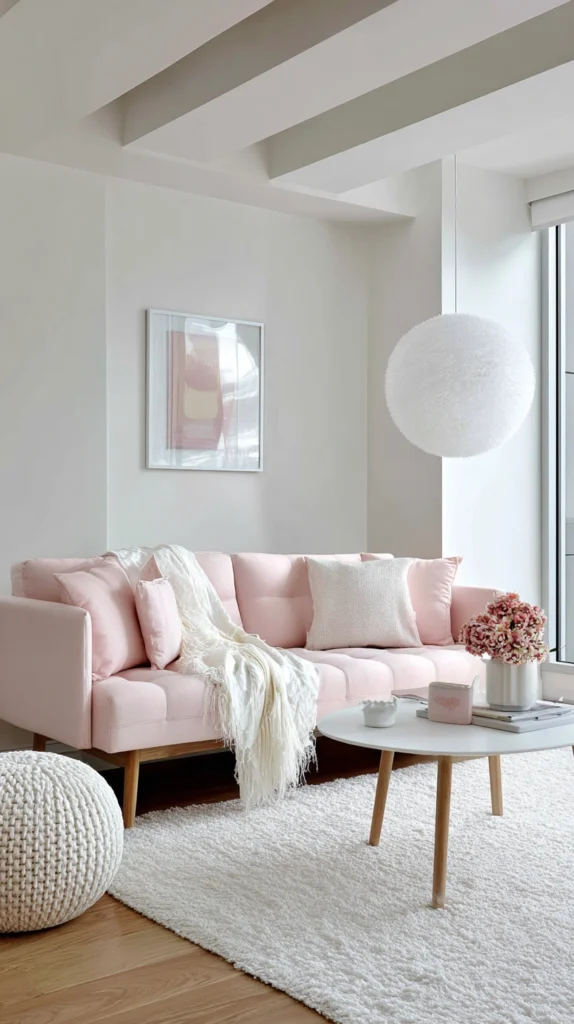
A living room in which baby pink and white are the only two colours — every surface either soft pink or pure white, with natural timber and pale stone as the only material variations — creates an interior of extraordinary clarity and calm that suits contemporary and Scandinavian-influenced spaces with particular natural logic. The stripped-back palette is the most restrained version of the baby pink living room and the one that requires the greatest discipline to execute — every element must earn its place through form and texture rather than colour, because with only two tones available there is nothing else to provide visual interest.
White walls with baby pink upholstery, white cotton curtains with pink linen cushions, a white marble coffee table with pink ceramic vessels — the binary palette creates a room that appears to float between the two tones, never committed entirely to either. The effect in strong natural light is of extraordinary freshness; in the warm light of evening lamps it becomes something intimate and genuinely beautiful.
Styling tip: Introduce texture as the primary source of visual variety in a two-colour living room — waffle weave beside velvet beside linen beside boucle beside smooth cotton creates a surface richness that colour variety would normally provide. The textural contrast between different pink and white fabrics keeps the room visually interesting and prevents the restraint of the palette from reading as visual poverty.
4. The Romantic Baby Pink Maximalist Room
Budget: $400 – $2,500
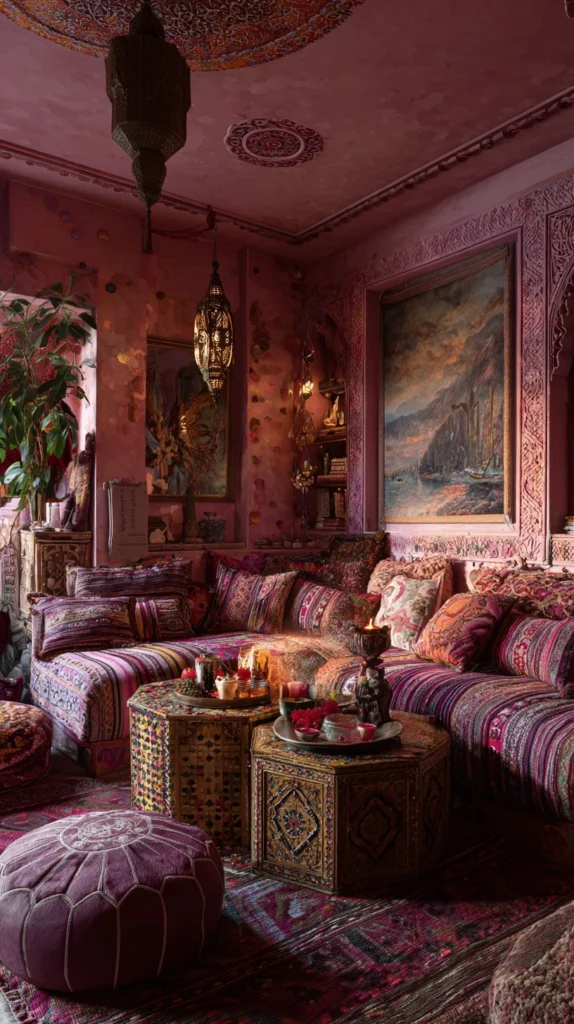
Every surface covered, every corner occupied, every material layered — the maximalist baby pink living room treats the colour not as a background or an accent but as the total environment. Pink floral wallpaper on all four walls. Pink velvet sofa with pink embroidered cushions. Pink curtains pooling on the floor. Pink roses in every vase. Pink candles on every surface. Pink books on pink shelves beside pink ceramics and pink framed mirrors. The maximalist approach requires absolute commitment to the palette and absolute confidence in the vision — hesitation produces a room that looks overwhelmed rather than abundant.
The maximalist baby pink room draws from the tradition of the English romantic interior — the rooms of country houses in the late Victorian and Edwardian periods where floral abundance, layered textiles, and total immersion in a consistent colour palette were understood as expressions of genuine domestic sophistication rather than decorative excess. That tradition is worth referencing directly and executing with the same seriousness it originally deserved.
Styling tip: Anchor the maximalist pink room with one element of genuine depth and weight — a dark timber floor, a deep grey or charcoal cushion, a black framed mirror — that prevents the room from feeling entirely without contrast or grounding. The single dark element is what gives the pink abundance somewhere to land — without it, the room can float into a sweetness that even the most confident maximalist approach struggles to overcome.
5. The Baby Pink and Sage Green Pairing
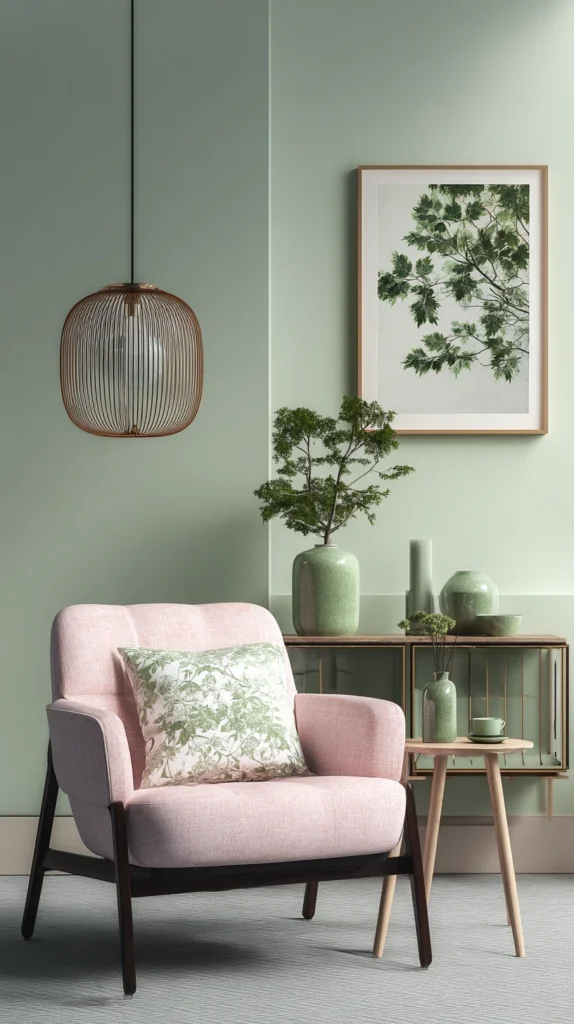
Budget: $200 – $1,000
Baby pink and sage green is one of the most naturally harmonious colour pairings available in interior design — the colours are almost complementary on the colour wheel, each making the other appear more vivid and more beautiful by contrast, and together they create a palette of extraordinary organic warmth that references the natural world with unusual directness. A room in which baby pink walls meet sage green upholstery, or blush cushions sit beside muted green throws, or pale pink curtains hang against sage painted woodwork, has a quality of natural, botanical abundance that neither colour achieves alone.
The pairing works because both tones share a similar level of saturation — neither is vivid enough to overwhelm the other, and both contain enough grey to read as genuinely sophisticated rather than primary-colour simple. The grey undertone in sage and the warm undertone in baby pink mean the two colours exist in the same tonal family even while providing genuine visual contrast.
Styling tip: Use the sage green as a grounding element and the baby pink as the dominant tone — more pink than green in the overall colour balance of the room. A ratio of approximately two thirds pink to one third green creates a room that reads as primarily a pink living room with sage accents rather than an evenly balanced two-colour scheme. The dominant-to-accent relationship gives the room a clear identity that an equal balance of the two colours obscures.
6. The Baby Pink Nursery-Grown-Up
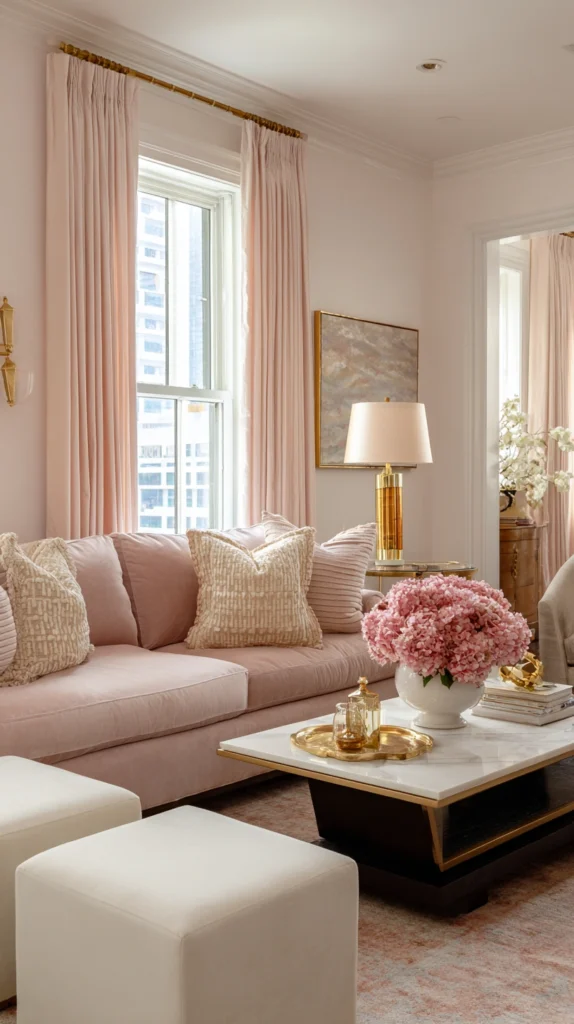
Budget: $150 – $800
The baby pink living room that most explicitly acknowledges the colour’s associations and then deliberately transcends them — using specifically adult materials, scale, and sophistication to create a room that is unmistakably baby pink in colour and unmistakably grown-up in character. Large-scale upholstery in pale pink (not small decorative pieces), serious artwork in pink tones (not decorative prints), quality materials throughout (velvet, linen, marble, brass), and a generally understated approach to decoration that communicates confidence rather than abundance — these are the qualities that distinguish the adult baby pink living room from its nursery association.
The scale of the furniture is critical — large, low, substantial pieces in baby pink communicate adulthood in a way that small, delicate pieces do not. A full-sized sectional sofa in pale blush velvet is immediately an adult piece of furniture regardless of its colour; the same colour on a small occasional chair reads as decorative rather than functional, which tips back toward the juvenile.
Styling tip: Choose artwork for a baby pink living room based on subject matter and artistic quality rather than colour alone — a serious abstract painting or quality photographic print in pink tones communicates that the room belongs to someone with genuine aesthetic sensibility, while decorative prints chosen purely for their pink colouring communicate only the colour preference. The artwork should justify itself as art first and as colour second.
7. The Baby Pink Cloud Room
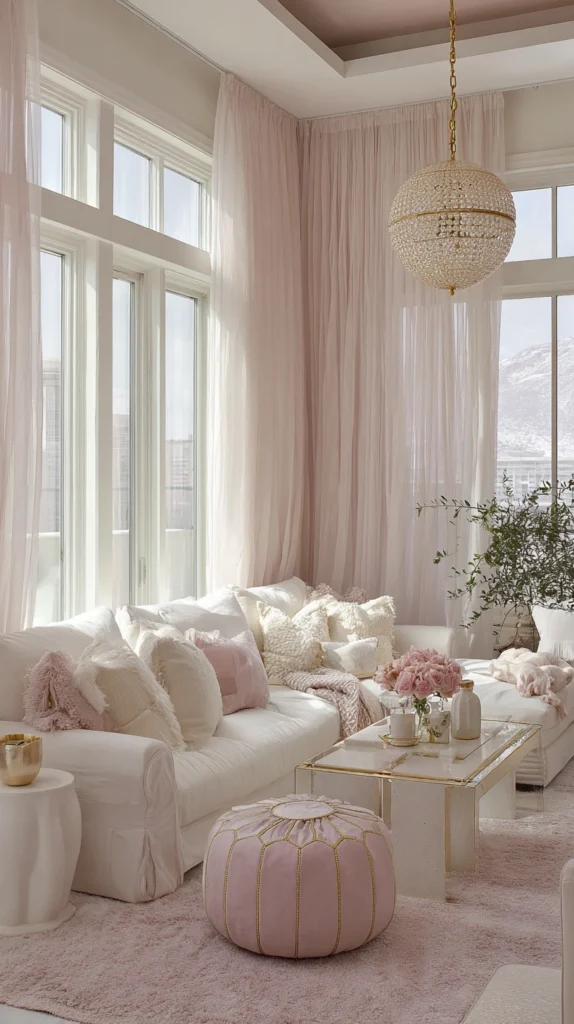
Budget: $200 – $1,200
A living room designed to feel like a cloud from the inside — the palest possible pink on every wall, an off-white ceiling with very slight pink undertone, cream and blush upholstery in the softest available fabrics, sheer pale pink curtains that diffuse the light entering from the window, and white fluffy throws and cushions alongside blush ones — creates an interior of extraordinary atmospheric lightness. The cloud room is the most ethereal and the most escape-like version of the baby pink living room, and it suits rooms with good natural light that can be diffused rather than rooms that are already dark and need strong contrast.
The key material for the cloud room effect is sheerness — sheer curtains, lightweight throws, open-weave cushion covers, and upholstery in fabrics with some visual lightness rather than heavy velvets or thick wools. The lightness of the materials is what creates the floating, atmospheric quality; heavy fabrics in the same pale pink would create a very different, more grounded effect.
Styling tip: Use cool-toned baby pink for the cloud room rather than warm-toned — a pink with a slight blue or lilac undertone rather than one with peach or orange undertones creates the pale, slightly atmospheric quality of natural cloud light. Warm baby pink creates a room that feels cosy and enclosed; cool baby pink creates the open, airy, slightly otherworldly quality that the cloud room effect is built on.
8. The Baby Pink Accent Wall
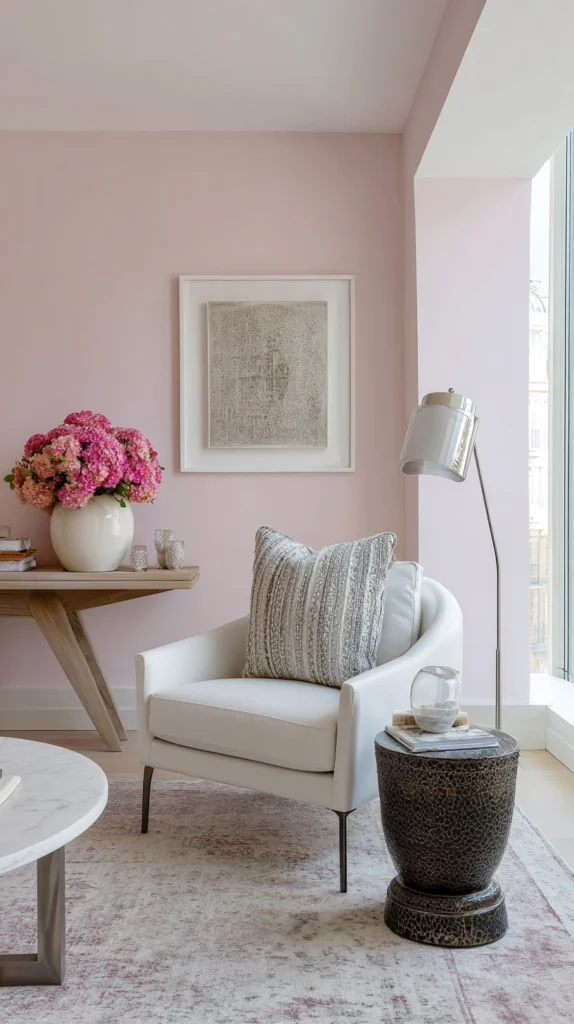
Budget: $20 – $150
A single baby pink accent wall — behind the main sofa, behind a daybed, or at the end of a long living room — creates the most easily achieved and the most easily reversed introduction of the colour into a living room that is not yet fully committed to the pale pink palette. The accent wall provides a backdrop that transforms the perception of every piece of furniture placed in front of it and introduces the warmth of the pink tone into the room without requiring a full commitment to painting all four walls.
A flat or eggshell finish in a quality baby pink — chalky, slightly dusty, with warm rather than cool undertones — costs $20–$40 per tin and covers one average wall in two coats. The chalky finish is the critical quality choice — a shiny or semi-gloss finish on baby pink looks plastic and cheap, while a flat chalky finish gives the colour a depth and a softness that reads as genuinely sophisticated.
Styling tip: Paint the accent wall in a tone that is at least two shades deeper than the main wall colour if the other walls are already a very pale pink or off-white. An accent wall that is too similar in tone to the surrounding walls reads as a variation in paint finish rather than a deliberate colour accent. The tonal difference needs to be clear enough to read as intentional — even when both tones are within the pale pink family.
9. The Baby Pink and Copper Living Room
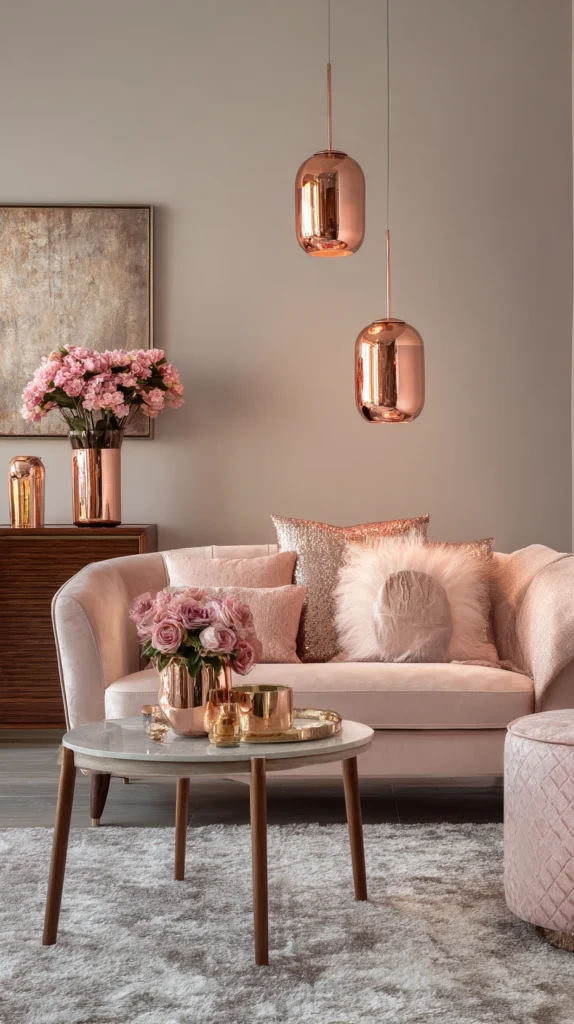
Budget: $200 – $1,000
Baby pink and copper is one of the warmest and most atmospherically rich metallic combinations available in interior design — warmer than pink and silver, more surprising than pink and gold, and with a particular organic quality that references the natural world in the patinated copper of weathered stone and the pale pink of early morning light. A room in which baby pink soft furnishings meet copper pendant lights, copper side tables, copper candleholders, and copper-veined marble surfaces has a warmth and depth that the more conventional pink and gold pairing approaches but does not quite replicate.
Copper metallic accessories are widely available and considerably less expensive than gold equivalents — copper candleholders cost $10–$30 each, a copper pendant light costs $40–$120, and copper decorative objects cost $5–$40 each. The combination of these pieces with a consistent baby pink soft furnishing palette creates a room of genuine warmth and material richness at a very accessible budget.
Styling tip: Allow copper accessories to develop their natural patina over time rather than polishing them back to a bright finish regularly. The aged, slightly darkened patina of un-polished copper is considerably more beautiful and more atmospherically suited to a baby pink living room than the bright, mirror-finish copper of a freshly polished piece. Patinated copper and baby pink are tonal companions in a way that bright copper and baby pink are not.
10. The Baby Pink Living Room for Natural Light
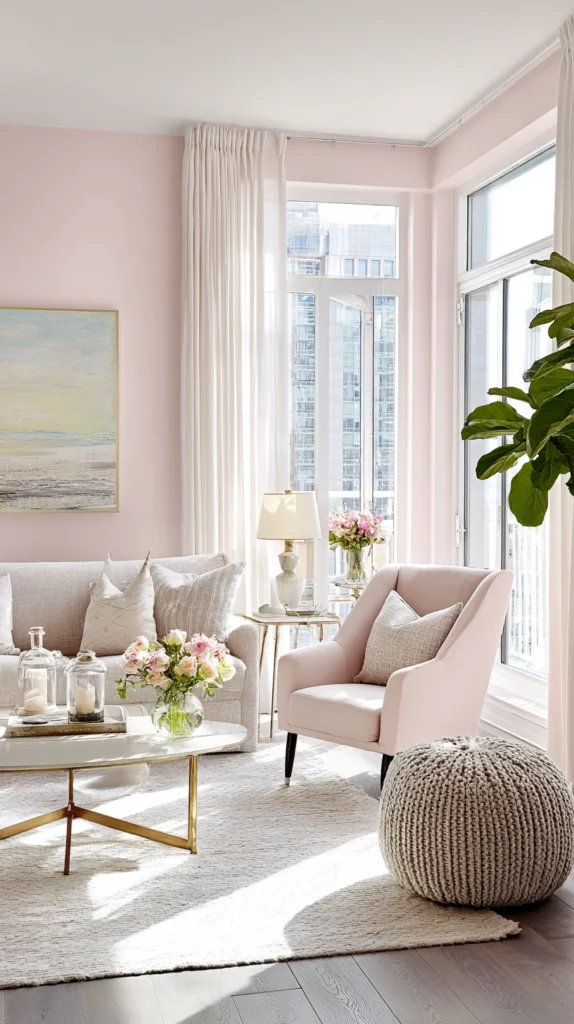
Budget: $150 – $800
A baby pink living room designed specifically around the natural light available in the space — choosing the specific tone of pink based on the room’s orientation and the quality of light it receives — creates the most successful and the most consistently beautiful version of the pale pink room. South and west-facing rooms suit cooler baby pink tones with slight grey or lilac undertones that prevent the colour from reading too warm or peachy in strong direct light. North and east-facing rooms suit warmer baby pink tones with slight peach or terracotta undertones that compensate for the cooler quality of the light and keep the room feeling warm rather than cold.
The relationship between pink tone and light direction is the most important single consideration in choosing a baby pink paint colour and the one most frequently ignored in favour of colour chip selection alone. A baby pink that looks perfect in a south-facing showroom can read as cold lilac in a north-facing room and as strongly peachy orange in a west-facing one in afternoon sun.
Styling tip: Test three different baby pink paint samples in the actual room at three different times of day — morning, midday, and late afternoon — before committing to a final colour. The same paint sample can read as three entirely different colours across the day in the same room, and only by observing all three conditions can the correct tone be reliably identified. The testing takes an afternoon; the investment in time pays an immediate return in avoiding a colour that works at ten in the morning and looks wrong by four in the afternoon.
11. The Baby Pink and Natural Rattan Room
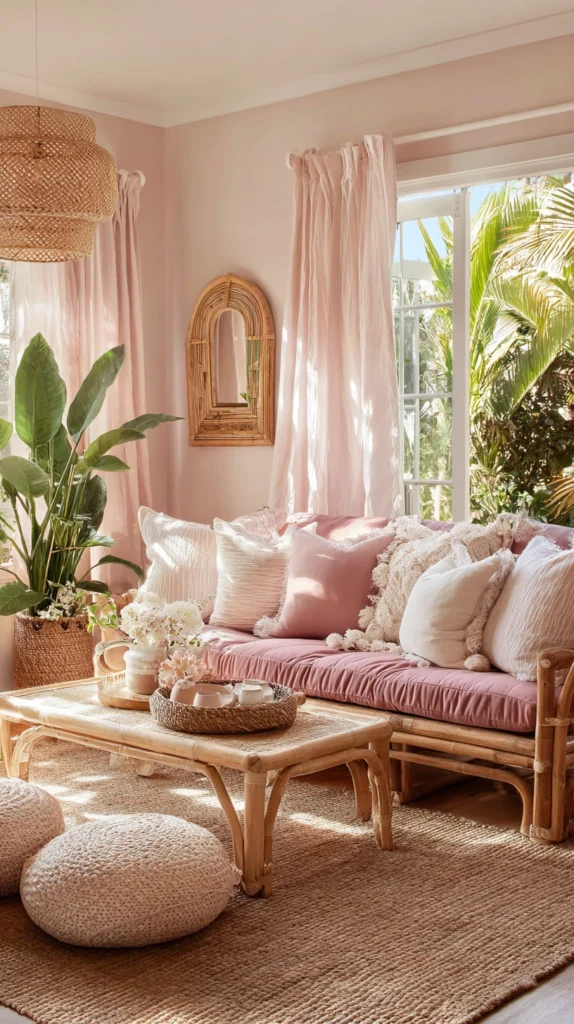
Budget: $200 – $1,000
Baby pink combined with the warm honey tone of natural rattan and cane furniture creates one of the most genuinely summer-like and most organically beautiful living room combinations available. The natural material warmth of rattan — its golden-brown surface, its woven texture, its association with light-filled, warm-climate interiors — complements the delicacy of baby pink in a way that creates a room that feels simultaneously warm and airy, domestic and holiday-like, considered and entirely relaxed.
A rattan sofa or rattan armchair upholstered in pale pink cushions costs $200–$600 and creates the central statement piece of this look. Rattan side tables, woven baskets, and cane lamp bases reinforce the material palette throughout the room. The combination of rattan and baby pink suits rooms with white or very pale walls, natural timber or pale stone floors, and sheer or linen curtains — a room that is light, natural, and airy in its fundamental material choices.
Styling tip: Combine rattan and baby pink with living plants in natural terracotta pots — the green of the foliage, the warm terracotta of the pot, and the honey of the rattan all suit baby pink through natural material logic rather than deliberate colour coordination, and the result is a room that looks assembled from objects with genuine aesthetic affinity rather than selected to match a predetermined palette.
12. The Baby Pink Reading Room
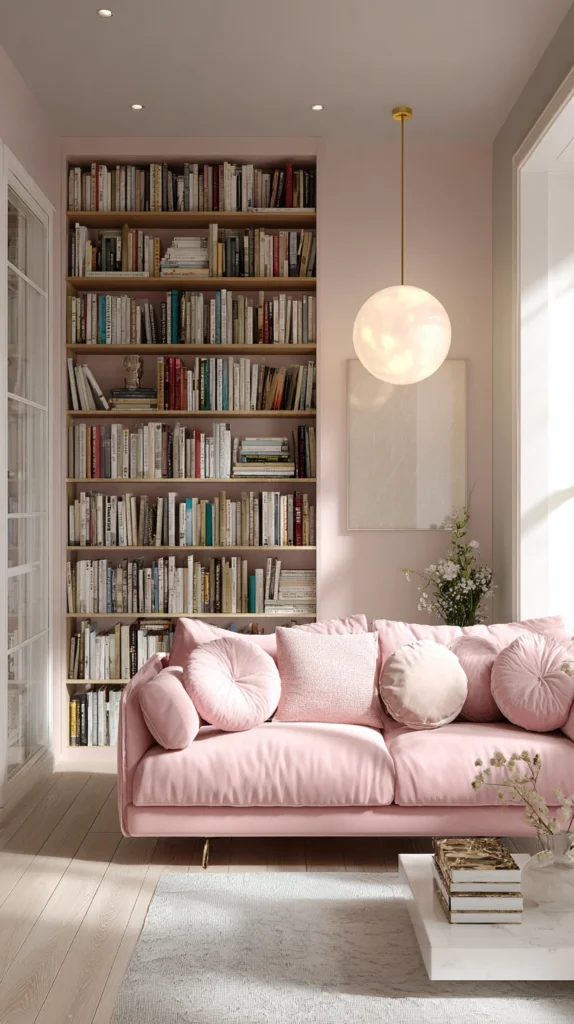
Budget: $150 – $700
A baby pink living room designed specifically around the pleasure of reading — a large, deeply comfortable sofa in pale pink, generous cushions and throws, a dedicated reading lamp in warm brass, a bookcase styled in pink and neutral tones, sheer curtains that diffuse the light to the ideal reading quality, and complete absence of a television as the room’s focal point — creates the most genuinely restorative and the most specifically pleasant domestic space available to a home that takes the pleasure of quiet afternoons seriously.
The reading room is the version of the baby pink living room that most clearly defines the room’s purpose and creates the most coherent relationship between the colour choice and the use of the space. Baby pink — soft, warm, non-stimulating, visually restful — is genuinely the best colour for a room intended for extended quiet reading, and the reading room that acknowledges this relationship creates a space with an internal logic that makes it feel genuinely designed rather than simply decorated.
Styling tip: Position the primary reading chair or sofa within 2 metres of the main natural light source — the window — rather than in the centre of the room or against the opposite wall. Reading in natural light is more comfortable and more sustainable for extended periods than reading under artificial light, and a seating arrangement that places the reader close to the window communicates that the room’s primary activity was considered in the arrangement of its furniture.
13. The Baby Pink and Dark Contrast Room
Budget: $200 – $1,000
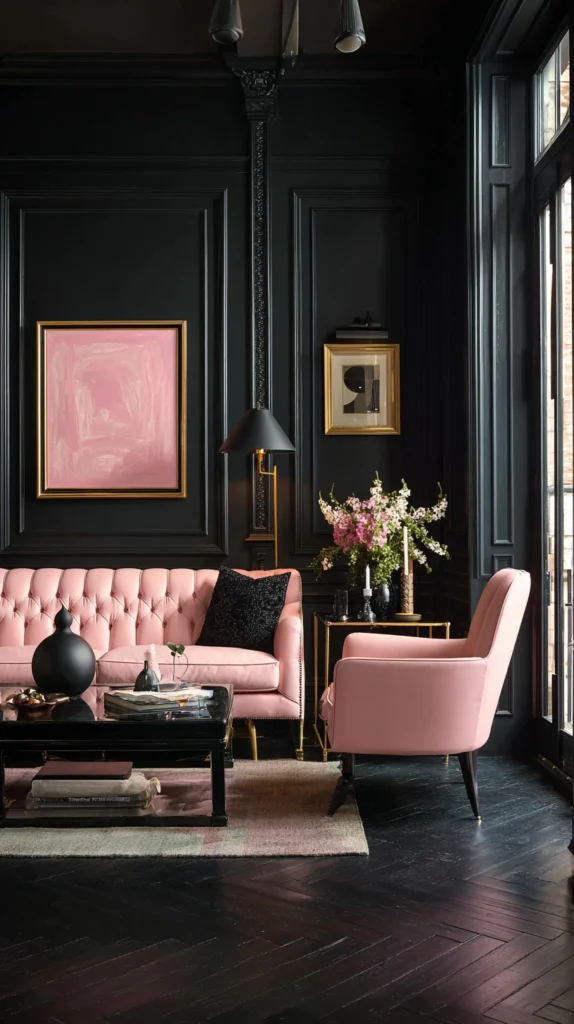
The most dramatically beautiful baby pink living room is often one that introduces a genuinely deep contrasting tone — deep charcoal, dark forest green, navy, or near-black — as a deliberate counterpoint to the pale pink. The contrast makes both colours appear more vivid than either would in isolation — the pink appears lighter and warmer against the dark, and the dark appears richer and deeper against the pale pink — and creates a room with genuine visual tension and depth that a single-tone or close-toned scheme cannot produce.
A dark painted ceiling above baby pink walls creates the most dramatic version of this contrast — the enveloping depth of a charcoal or deep green ceiling against the soft warmth of the pale pink walls below creates a room that feels simultaneously intimate and expansive, grounded and ethereal. It is an unexpected combination and one that guests find genuinely surprising and genuinely beautiful.
Styling tip: Introduce the dark contrasting tone in at least three different elements of the room — the ceiling, a cushion, a side table, a lamp base, a picture frame — rather than in a single element only. A contrast that appears in only one place reads as an accent; a contrast that appears in three or more places reads as a deliberate design decision and creates a visual thread that gives the room its sense of composed intention.
14. The Baby Pink Floral Paradise
Budget: $100 – $600
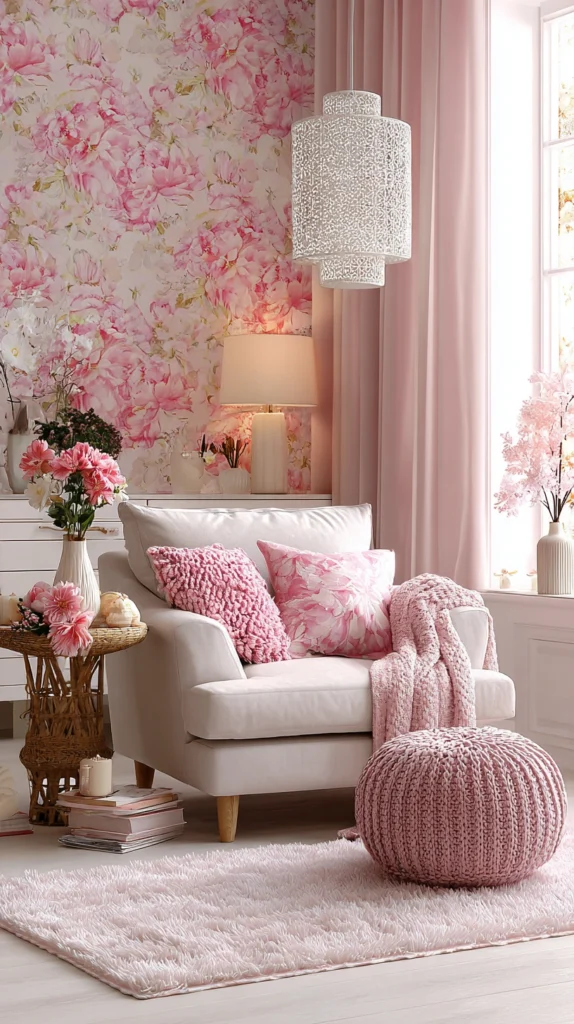
A living room filled with flowers — fresh flowers changed weekly, dried flower arrangements as permanent features, floral pattern wallpaper, botanical print cushions, and floral ceramic pieces all in the baby pink palette — creates an interior of extraordinary natural beauty and sensory richness. The floral paradise living room treats the flower as the primary design language of the space, and baby pink as the colour through which that language is expressed — creating a room that communicates the beauty of the natural world in the most directly and the most abundantly available way.
Fresh peonies, garden roses, sweet peas, ranunculus, and cosmos in baby pink are the flowers most perfectly suited to this aesthetic — all are softly formed, gently fragrant, and available across the summer months. A room that always contains fresh flowers in the pink palette maintains a quality of living abundance that no static decoration can replicate, and the weekly ritual of replacing the flowers keeps the room feeling genuinely attended to and genuinely loved throughout the season.
Styling tip: Mix dried and fresh flowers in the floral paradise room rather than using only one or the other — dried arrangements provide permanent structure and year-round presence while fresh flowers provide seasonal vitality and fragrance. A large dried pampas grass arrangement in a corner, smaller dried lavender bundles on shelves, and fresh flowers on the coffee table creates a floral landscape at three different scales and three different levels of permanence that keeps the botanical character of the room alive in every season.
15. The Baby Pink Twilight Room
Budget: $200 – $1,200
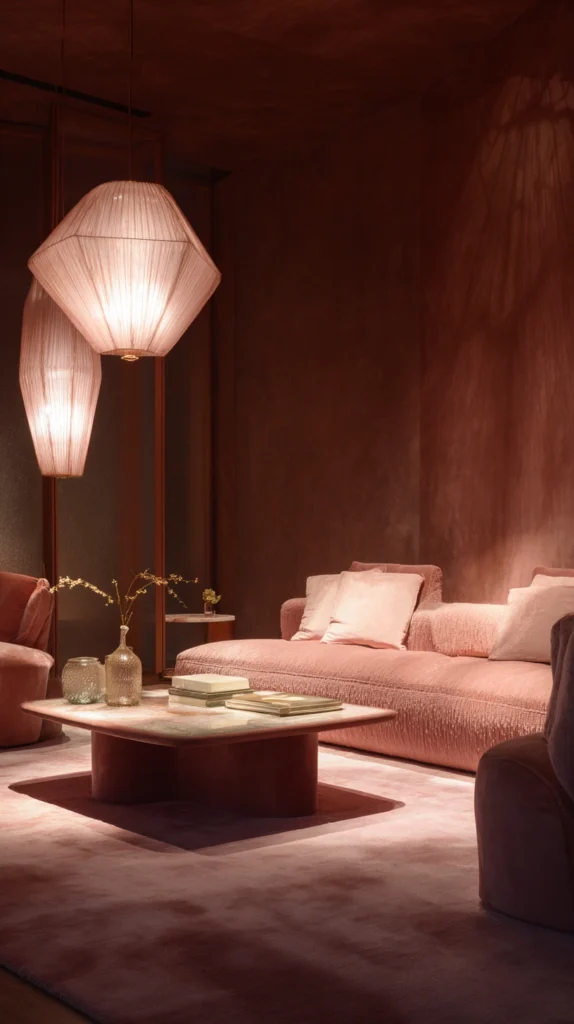
A baby pink living room designed specifically for the hours between late afternoon and late evening — when the light changes most dramatically and the room transitions from a daylight space to an intimate, lamp-lit one — creates the most atmospheric and the most specifically beautiful version of the pale pink interior available. Warm lamp light on baby pink walls produces a colour of extraordinary warmth and depth that is entirely different from the same wall colour in daylight — and designing the room around this evening transformation means that every element performs at its best in the hours when the room is most used and most enjoyed.
Specify warm white bulbs at 2700K in every lamp in the room — the warm white tone renders baby pink as a rich, glowing rose in lamp light that cooler bulbs cannot produce. Position multiple lamps at low height — table lamps, floor lamps, and candles at seated or lower level — rather than a single ceiling fixture, to create the kind of warm, pooled, intimate light that makes the baby pink room most beautiful in the evening.
Styling tip: Add dimmer switches to every lamp circuit in the baby pink living room rather than relying on the full brightness of each lamp. The baby pink room transitions between its most beautiful states through gradations of light rather than on-off switches — dimmed warm lamplight on baby pink walls at seven in the evening is one of the most beautiful domestic light conditions available, and a dimmer switch is the single piece of electrical hardware that enables it most completely and most affordably.
The baby pink living room at its best is not a colour exercise or a trend response. It is a genuine commitment to the most emotionally warm, most texturally soft, and most atmospherically generous end of the domestic colour spectrum — a commitment that creates rooms which feel, when you sit in them at the end of a long day, genuinely restorative and genuinely beautiful in a way that no cooler or more cautious palette quite manages to achieve.
Choose the version of the baby pink room that suits your instincts, execute it with enough tonal depth and material richness to prevent it from reading as sweet, and the dreamy quality will follow as naturally as the light itself.