15 Modern Wood Paneling Ideas That Look Designer
My living room walls were flat builder beige for five years. Smooth drywall, zero texture, nothing to look at anywhere.
Tried art. Tried wallpaper samples. Tried convincing myself it was fine. None of it worked.
Then I put wood paneling on one wall. Warm texture, architectural detail, instant character. Room looked like a designer had been there.
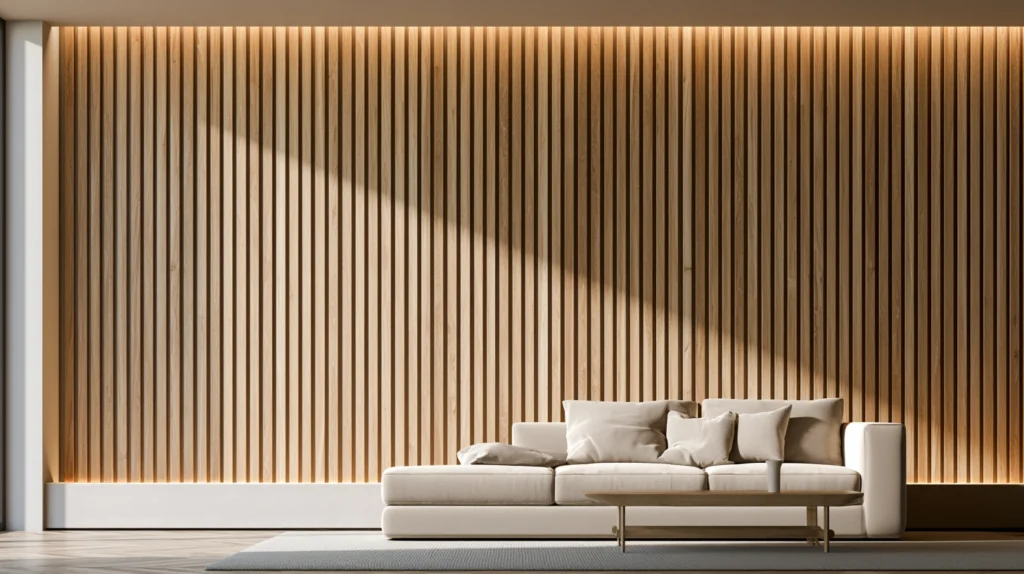
Now every person who walks in asks who did the walls. Same room, same furniture, completely different feeling.
Let me show you 15 wood paneling ideas that add warmth, texture, and genuine designer presence to any wall.
Why Flat Walls Always Feel Unfinished
The blank wall problem:
What goes wrong:
- Art floats without context
- Furniture looks disconnected from walls
- Room feels temporary not designed
- Nothing to anchor the eye
The builder-grade trap:
- Smooth drywall (fine for a start)
- Beige or gray paint applied
- Called it done
- Felt like a rental forever
What flat walls are missing:
- Texture (visual and tactile)
- Depth (shadow and dimension)
- Warmth (wood brings this instantly)
- Architecture (detail that looks intentional)
Result:
- Room feels like a box
- Furniture looks like it arrived and stopped
- No sense of design intention
- Guests say nothing about the walls
After wood paneling:
What changed:
- One wall became the room’s anchor
- Furniture looked placed not abandoned
- Room had a point of view
- Texture gave the eye somewhere to rest
Reactions:
- “Did you renovate?”
- “Who designed this?”
- “The walls are incredible”
- Same room, one wall changed
Cost:
- Most paneling ideas: $100-600
- Some approaches under $100
- DIY-able for most options
- Highest return on investment of any wall treatment
My revelation: Wood paneling isn’t dated or rustic anymore — it’s the detail that separates designed rooms from assembled ones.
1. Shiplap Accent Wall (The Clean Horizontal Classic)
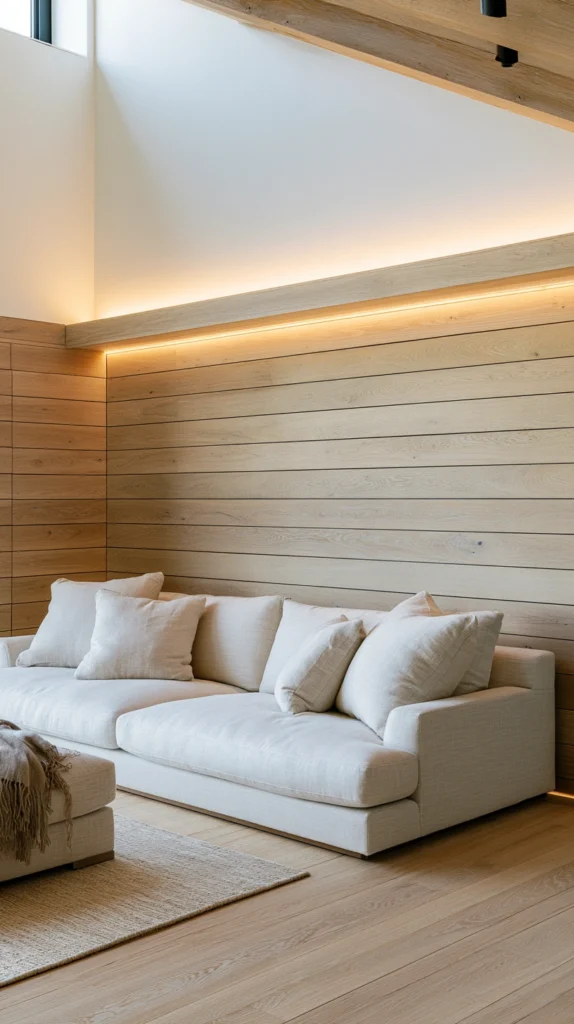
Horizontal wood planks with a reveal gap — the most recognized modern paneling style.
My first paneling wall:
What I chose:
- White oak shiplap (one living room wall)
- Horizontal installation
- Natural finish (no paint)
- Behind the sofa (most visible wall)
What shiplap is:
The details:
- Horizontal planks (typically 4-6 inches wide)
- Small gap between each board (the reveal)
- Gap creates shadow line (depth)
- Looks clean and modern at any width
Shiplap options:
Real wood shiplap:
- Solid pine, cedar, or white oak
- Most beautiful (grain, warmth)
- More expensive ($2-6 per linear foot)
- Requires acclimation before install
MDF shiplap:
- Medium density fiberboard
- Smooth finish (paintable)
- Budget option ($1-2 per linear foot)
- No grain (paint only)
Primed shiplap boards:
- Ready to paint
- Consistent finish
- Widely available
- Middle price point
Shiplap alternatives:
Nickel gap shiplap:
- Smaller gap (nickel-width reveal)
- More refined appearance
- Better for modern rooms
- Premium boards available
Peel-and-stick shiplap:
- Adhesive backing
- No nails or tools
- Rental-safe
- Less durable long term
Finish options:
Natural wood (my choice):
- Clear matte sealer only
- Grain and warmth visible
- Warms any room immediately
- Most popular currently
White painted:
- Classic farmhouse look
- Brightens dark rooms
- Hides grain (cleaner)
- Semi-gloss or satin finish
Dark stained:
- Dramatic and sophisticated
- Walnut or ebony stain
- Modern and bold
- Works in small doses
Installation:
DIY level: moderate:
- Find studs (stud finder, $20)
- Cut boards to length (miter saw or hand saw)
- Start at bottom (level line critical)
- Nail to studs (finish nailer or hand nails)
- Use nickel as spacer (consistent gap)
- Fill nail holes (wood filler)
- Sand, seal, or paint
Time: One wall, one weekend Difficulty: Beginner to moderate
Cost:
- Real wood shiplap (100 sq ft wall): $150-400
- MDF shiplap: $80-150
- Nails, filler, sealer: $30-50
- Total: $110-450
My shiplap wall: Installed behind sofa on Saturday, finished Sunday, room transformed immediately, done it in three more rooms since.
Shiplap Tips
Direction matters:
Horizontal (most common):
- Widens the wall visually
- Classic shiplap look
- Correct for most applications
Vertical:
- Raises the ceiling visually
- More formal feeling
- Works in entryways and hallways
- Less common, more dramatic
Acclimate real wood:
- Leave boards in room 48-72 hours before install
- Wood expands and contracts
- Skipping this causes gaps or buckling
- Non-negotiable for solid wood
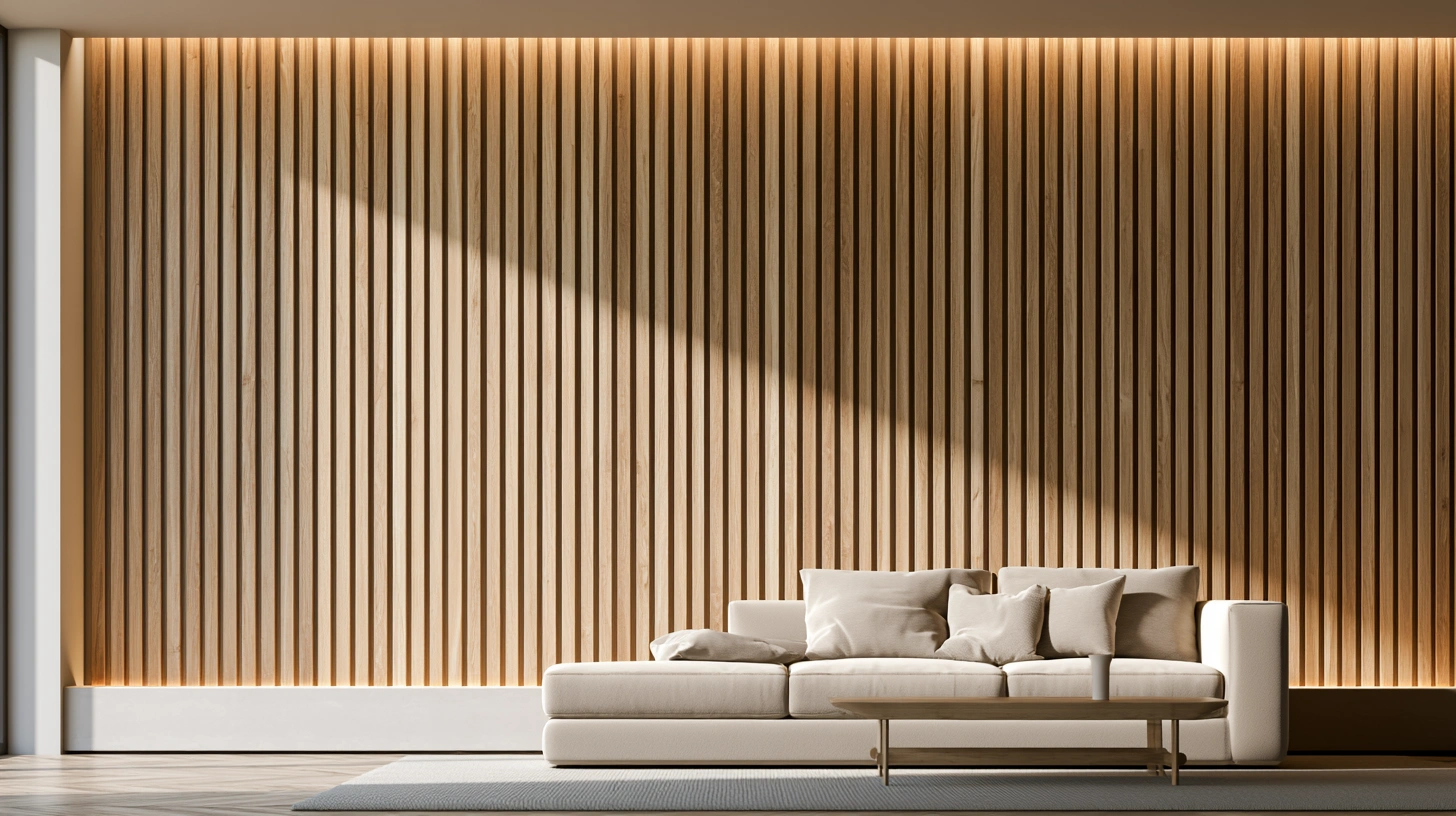
2. Vertical Slat Paneling (The Modern Favorite)
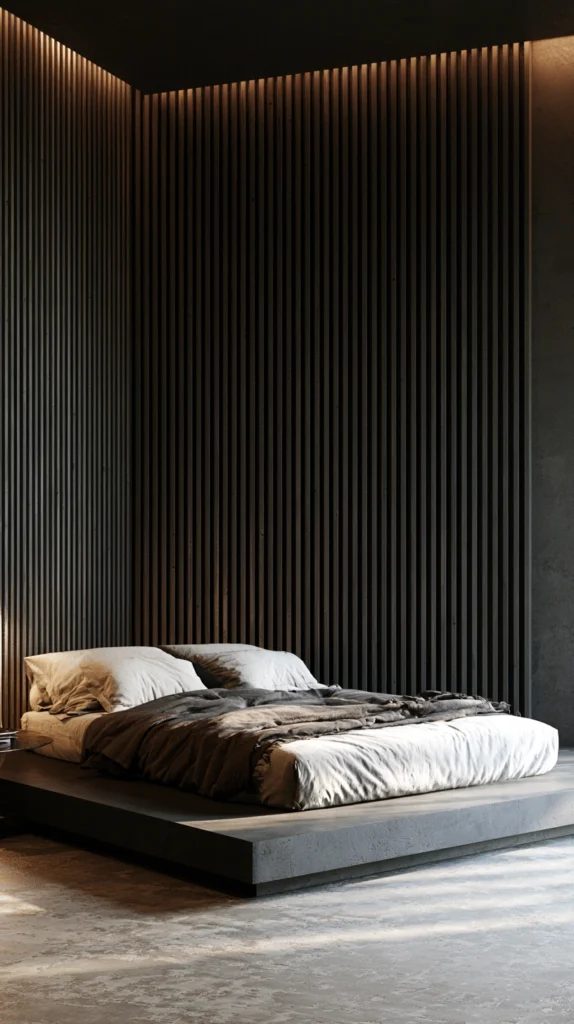
Thin vertical wood strips with gaps between — the most contemporary paneling look right now.
My bedroom feature wall:
What I installed:
- 1×2 inch pine strips (vertical)
- 2-inch gap between each strip
- Floor-to-ceiling (most dramatic)
- Painted same color as wall behind (tone-on-tone)
Why vertical slats are everywhere:
The look:
- Graphic shadow lines (from gaps)
- Modern and architectural
- Works in every room
- Easy to customize (width, gap, color)
The tone-on-tone trick:
What it means:
- Wall behind painted a color
- Slats painted same color
- Unified surface (not contrasting)
- Shadow lines from the gaps do the work
Most popular colors:
- Deep navy (dramatic, sophisticated)
- Warm charcoal (moody, modern)
- Sage green (natural, current)
- Warm cream (subtle, elegant)
- Black (bold, graphic)
Slat dimensions:
Strip width options:
- 1×2 (thinnest, most graphic)
- 1×3 (balanced, most common)
- 1×4 (wider, more traditional)
- Mix of widths (advanced, very modern)
Gap width options:
- Equal to strip width (balanced)
- Narrower than strip (more wood, subtle)
- Wider than strip (more shadow, graphic)
- Consistent spacing critical
DIY installation:
Simpler than shiplap:
- Paint wall the base color first
- Paint strips same color (before installing)
- Find studs or use construction adhesive
- Use spacer block for consistent gap
- Nail or glue vertically floor to ceiling
- Touch up paint after installation
No cuts needed:
- Boards same height as ceiling
- Only end cuts (straight cuts)
- Much easier than horizontal paneling
Cost:
- Pine strips (1×2, 100 sq ft wall): $60-120
- Paint: $25-40
- Adhesive or nails: $15-25
- Total: $100-185
My vertical slat wall: Cheapest paneling I’ve done, biggest visual impact, guests assume it’s expensive custom millwork.
Vertical Slat Tips
Floor-to-ceiling only:
Why full height:
- Half-height slats (look unfinished)
- Three-quarter (awkward stopping point)
- Full height (architectural and complete)
- Always go ceiling to floor
Spacing jig:
- Cut one scrap piece (spacer)
- Use as gap guide for every strip
- Consistent spacing (looks precise)
- Without jig: uneven gaps (obvious)
3. Board and Batten (Classic With a Modern Update)
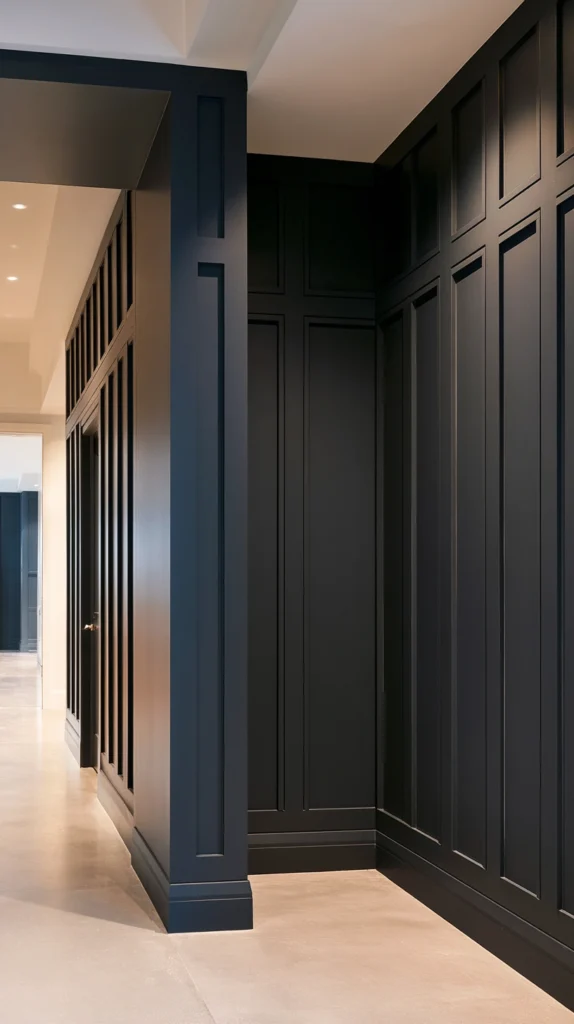
Vertical panels with overlaid battens — traditional detail executed in a fresh way.
My entryway transformation:
What it is:
- Flat panels on wall (boards)
- Narrower strips over the seams (battens)
- Horizontal rail at middle or top
- Looks like wainscoting but taller
Traditional vs modern board and batten:
Traditional:
- White painted (always)
- Chair rail height (half wall)
- Formal and classic
- Colonial and traditional homes
Modern update:
Full height:
- Floor to ceiling (not chair rail height)
- Feels architectural not decorative
- Taller and more dramatic
Colored:
- Deep colors (navy, forest green, black)
- Moody and sophisticated
- Not white (that reads as old)
- Two-tone (different above and below rail)
Wide spacing:
- Battens further apart than traditional
- More modern proportion
- Less fussy
- Cleaner lines
Construction:
How to build it:
Step 1 — Horizontal rails:
- Top rail (below crown or at ceiling)
- Bottom rail (at baseboard)
- Middle rail (optional, proportion choice)
- All level (critical)
Step 2 — Vertical battens:
- Spaced evenly between rails
- Typically 12-16 inches apart (modern wider)
- Nail to wall through rails
- Caulk all seams (paint grade smooth)
Step 3 — Paint:
- Fill all nail holes
- Caulk all gaps (seamless look)
- Two coats paint
- Finish is everything here
Material:
- MDF (smoothest, best for painted finish)
- Pine (paintable, slightly more texture)
- PVC trim (moisture resistant, bathrooms)
Modern color combinations:
Two-tone approach:
- Board and batten in deep color below rail
- Lighter wall above rail
- Most sophisticated version
- Makes ceilings feel taller
Monochromatic:
- Same color floor to ceiling
- Including ceiling (enveloping)
- Dramatic and cozy
- Confidence in color required
Cost:
- MDF boards and battens: $80-150
- Paint: $30-50
- Caulk, filler, primer: $25-40
- Total: $135-240
My board and batten entry: Entryway went from plain hallway to architectural statement, painted deep green, guests assume it’s original to the house.
Board and Batten Tips
Caulk everything:
Why caulk is critical:
- Gaps between batten and wall (visible)
- Paintable caulk fills all seams
- Smooth painted finish requires this
- Skip caulk: looks like stuck-on strips
Proportion rule:
- Battens should be 2-3 inches wide
- Rails 3-4 inches wide
- Wider battens (more traditional)
- Narrower battens (more modern)
4. Limewash or Whitewash Over Wood Paneling (Texture Plus Warmth)
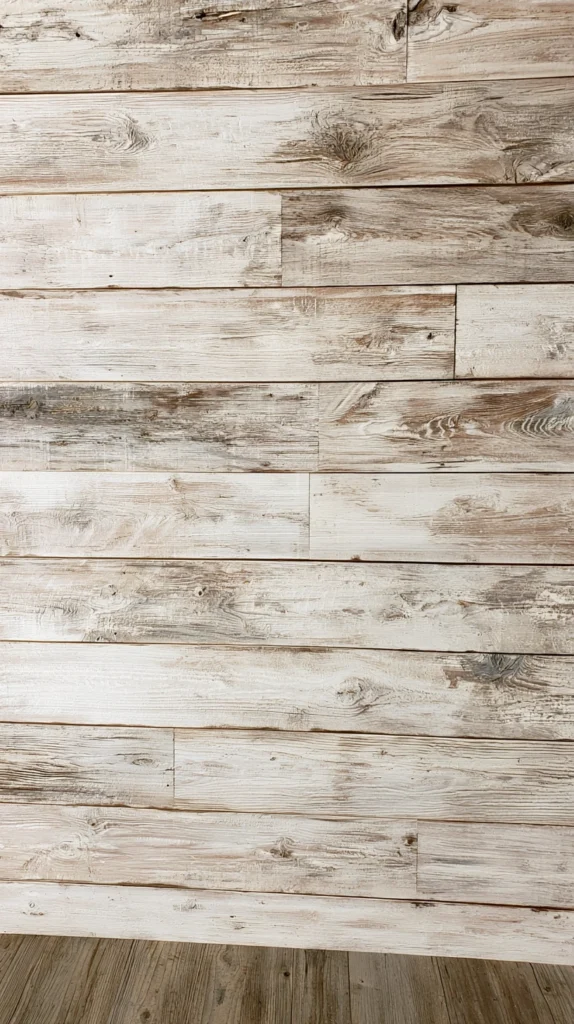
Existing or new paneling with limewash finish — the most organic and beautiful treatment.
My paneling finish discovery:
What I did:
- Installed basic pine shiplap
- Applied limewash instead of solid paint
- Mottled, aged, organic finish
- Looked like an Italian farmhouse
What limewash does to wood:
The finish:
- Semi-transparent (grain shows through)
- Mottled and varied (not uniform)
- Ages and improves
- Impossibly warm
Why it looks expensive:
- No flat paint achieves this depth
- Hand-applied variation (no two walls same)
- Organic imperfection (luxury signal)
- Requires skill but rewards effort
Limewash vs whitewash:
Limewash:
- Calcium hydroxide base
- Penetrates wood (not just surface)
- More matte and chalky
- Ages most beautifully
- Farrow and Ball Limewash ($120 per gallon)
- Portola Paints Roman Clay (similar effect, $80)
Whitewash:
- Diluted white paint
- Sits on surface
- More opaque than limewash
- Less depth
- DIY: 1 part white paint, 1 part water
Application method:
Limewash on shiplap:
- Install shiplap (natural or lightly sanded)
- Apply limewash with natural bristle brush
- Work in sections (wet edge)
- Wipe back with damp cloth while wet
- Variation is correct (embrace it)
- Second coat for more coverage
- Seal with matte topcoat (optional)
Color options:
Beyond white limewash:
- Warm cream (most popular)
- Soft terracotta (stunning on shiplap)
- Pale sage (unexpected, beautiful)
- Warm gray (sophisticated)
- Layered colors (advanced, incredible)
Best wood for limewash:
Porous wood takes limewash best:
- Pine (absorbs deeply)
- Cedar (beautiful grain shows)
- Reclaimed wood (most texture, best result)
- Avoid: MDF (too smooth, no grain)
Cost:
- Shiplap installation: $110-450 (see idea 1)
- Farrow and Ball Limewash: $120 per gallon
- Portola Roman Clay: $80 per gallon
- DIY whitewash (paint and water): $15
- Total finish cost: $15-120
My limewash shiplap: Most-complimented wall I’ve ever done, guests run their hands over it, looks like it belongs in a French farmhouse.
Limewash Tips
Embrace inconsistency:
The wrong goal:
- Trying for uniform coverage (fails)
- Wiping back too much (too subtle)
- Too little (too opaque)
- Correct goal: beautiful variation
Practice first:
- Buy scrap pine board
- Practice application and wipe-back
- Find your preferred technique
- Commit before doing the wall
Reapplication:
- Can add more coats (build depth)
- Can add different color on top (patina)
- Cannot remove easily (plan ahead)
- Test before committing to direction
5. Reclaimed Wood Feature Wall (History and Character)
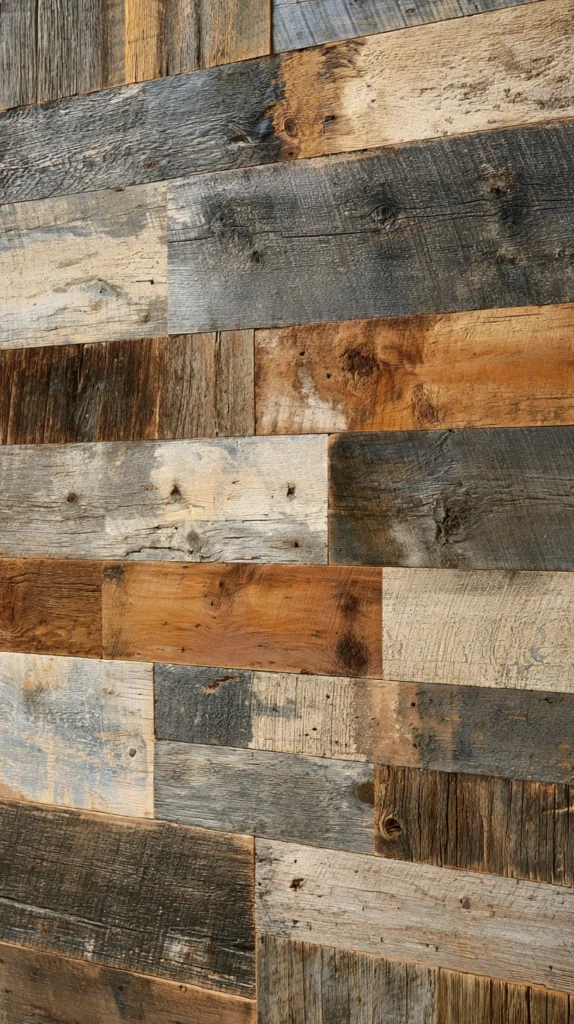
Old wood from barns, buildings, or salvage — the most soulful paneling option.
My reclaimed wood wall:
Where I found the wood:
- Local salvage yard ($2-4 per board foot)
- Old barn boards (friend’s property, free)
- Habitat for Humanity ReStore ($1-3 per board)
- Facebook Marketplace (free to $50 per bundle)
Why reclaimed wood is different:
What new wood can’t replicate:
- Nail holes (history)
- Color variation (age and exposure)
- Surface texture (rough and imperfect)
- Character (decades or centuries of use)
The feel:
- No two boards same
- Weathered grain (dimensional)
- Warm gray, brown, silver tones
- Every room looks collected not purchased
Sourcing reclaimed wood:
Best sources:
Salvage yards:
- Dedicated architectural salvage stores
- Old barn wood, flooring, timbers
- Price varies ($2-8 per board foot)
- Best variety and quantity
Habitat for Humanity ReStore:
- Donated building materials
- Unpredictable inventory
- Very cheap ($1-3 usually)
- Worth checking regularly
Facebook Marketplace:
- Locals demolishing barns or decks
- Often free (they want it gone)
- Requires hauling
- Best price (free)
Online specialty suppliers:
- Etsy reclaimed wood suppliers
- Consistent quality
- Ships (expensive)
- Last resort
Preparation:
Before installing:
- Inspect for pests (critical)
- Kiln dry if unsure (pest prevention)
- Remove old nails (wire brush)
- Sand rough edges only (not faces)
- Let breathe in space 48 hours
Installation:
Mixed width approach:
- Random widths (most authentic)
- No pattern repetition
- Organic variation
- Lay out on floor first (arrange before nailing)
Same width approach:
- More modern (controlled)
- Consistent rhythm
- Still uses reclaimed wood
- More intentional less rustic
Finish:
Usually none:
- Raw and unsealed (most authentic)
- Or matte clear coat (protection)
- Never polyurethane (plastic look)
- Oil finish (penetrating, natural)
Cost:
- Reclaimed wood (100 sq ft): $0-400
- Kiln drying (if needed): $50-100
- Fasteners and adhesive: $20-40
- Total: $20-540
My reclaimed wall: Most characterful wall in the house, told people it’s from a 100-year-old barn (true), costs less than new wood.
Reclaimed Wood Tips
Pest inspection non-negotiable:
Before any use:
- Look for exit holes (beetles, termites)
- Powder near wood (active infestation)
- Kiln treat if any doubt
- Never install suspect wood in home
Mixed orientation:
- Some boards horizontal, some vertical (can work)
- Or all same direction (cleaner)
- Mixing directions looks confused
- Commit to one orientation
6. Diagonal or Herringbone Wood Paneling (Pattern as Statement)
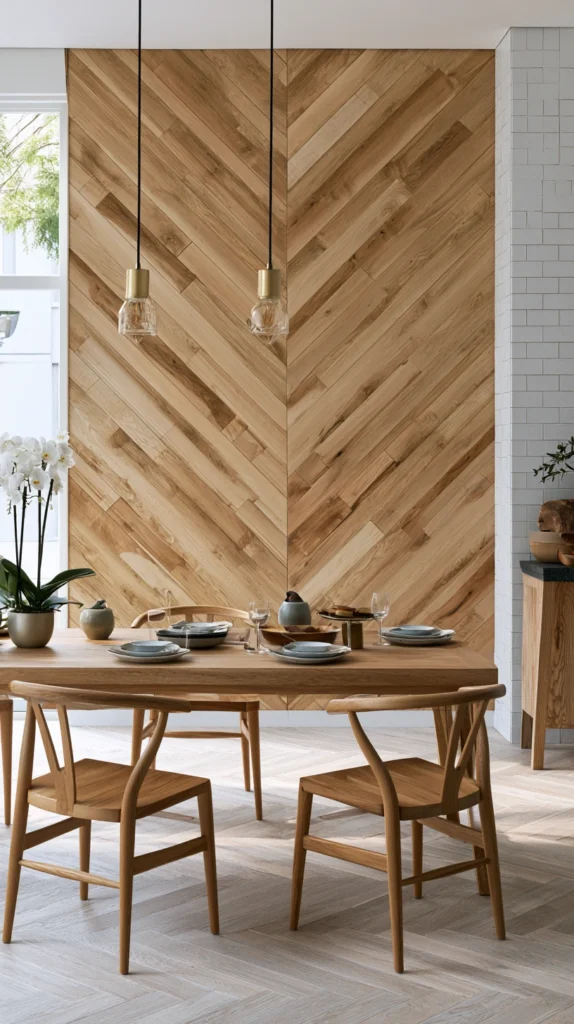
Wood planks installed at angles — the most dramatic paneling pattern.
My dining room statement wall:
What I installed:
- Shiplap boards at 45-degree angle
- Chevron pattern (meets at center peak)
- Natural white oak finish
- Full wall behind dining table
Why diagonal paneling is a statement:
The visual effect:
- Eye follows the angle (dynamic)
- Pattern visible from distance
- Room feels designed by architect
- Much more dramatic than horizontal
Pattern options:
Diagonal (45 degrees):
- All boards same direction
- Simplest angled option
- Clean and modern
- Easier than herringbone
Chevron:
- Boards meet at center peak
- V-shape pattern
- More complex installation
- Most dramatic result
Herringbone:
- Offset V-pattern (no center peak)
- Classic and sophisticated
- Most difficult installation
- Most recognizable pattern
Diamond:
- Four-way angled meeting
- Creates diamond shapes
- Advanced installation
- Eye-catching and unusual
Planning angled paneling:
Math required:
- Calculate angle precisely
- Mark wall with chalk line
- Consistent angle throughout
- Miter saw set to correct angle
- Dry-lay boards before nailing
Starting point:
For chevron:
- Find exact center of wall
- Mark vertical center line
- Work outward from center
- Peak of V at center (symmetrical)
For diagonal:
- Start at one corner
- Consistent 45-degree cuts
- Work across wall
- Trim at edges
Material choice:
For patterned paneling:
- Consistent width boards (pattern reads clearly)
- Tight grain (cleaner look)
- Same thickness throughout (flush surface)
- Primed MDF (sharpest pattern edges)
Finish for pattern walls:
Paint (most graphic):
- Pattern reads most clearly painted
- One color (let pattern speak)
- Matte or satin finish
- No competing texture
Natural wood (warmest):
- Grain adds second layer of interest
- Slightly less graphic
- More organic
- Beautiful in correct room
Cost:
- Boards for 100 sq ft: $120-300
- Miter saw rental (if needed): $40/day
- Paint or finish: $25-50
- Total: $185-390
My diagonal wall: Most skilled DIY project I’ve done, worth the effort, no single piece gets more attention in the house.
Diagonal Paneling Tips
Practice the miter cuts:
Before the wall:
- Set saw to exact angle
- Cut several practice pieces
- Check fit against each other
- Adjust saw if gaps appear
Waste calculation:
- Angled cuts create more waste
- Buy 20-25% more material
- Diagonal always wastes more than straight
- Better to have extra than run short
7. Painted Wood Paneling (Color-Drenched Walls)
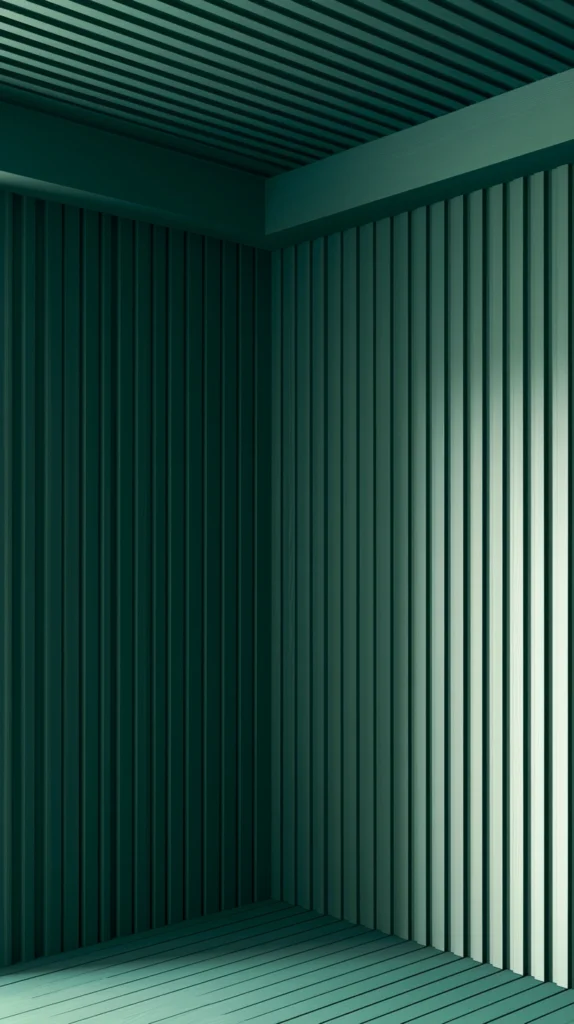
Wood paneling painted a bold or moody color — the most transformative use of paneling.
My office color transformation:
What I did:
- Installed basic vertical slat paneling
- Painted entire room same deep color
- Ceiling included (same color)
- Room went from nothing to everything
Why painted paneling looks designer:
Texture plus color:
- Flat painted wall (color only, no texture)
- Painted paneling (color plus shadow lines)
- Shadow lines visible even in same color
- Depth that flat walls can’t achieve
Color-drenching:
What it means:
- Walls, ceiling, trim all same color
- Paneling carries the color
- Room becomes a jewel box
- Most sophisticated interior approach
Best colors for painted paneling:
Deep moody colors:
- Forest green (Farrow and Ball Studio Green)
- Navy blue (Benjamin Moore Hale Navy)
- Charcoal (Sherwin-Williams Urbane Bronze)
- Deep terracotta (Sherwin-Williams Cavern Clay)
- Black (Benjamin Moore Onyx)
Warm rich colors:
- Burnt sienna
- Deep plum (unexpected, beautiful)
- Dark rust
- Chocolate brown
Soft and enveloping:
- Deep dusty blue
- Warm gray-green
- Muted sage
- Aged linen (deeper)
Where painted paneling works:
Every room:
- Living room accent wall (safest)
- Bedroom (entire room, cocooning)
- Office or library (most popular use)
- Dining room (dramatic backdrop)
- Bathroom (unexpected luxury)
Painting paneling correctly:
Preparation:
- Fill nail holes (flush surface)
- Sand lightly (adhesion)
- Prime (especially MDF)
- Two coats minimum
Application:
- Brush first (gets into gaps and shadow lines)
- Roll over (even coverage on faces)
- Second coat after dry
- Touch-up nail holes after
Sheen selection:
- Matte (most beautiful, less washable)
- Eggshell (good compromise)
- Satin (more durable, slightly glossy)
- Avoid gloss (shows every imperfection)
Cost:
- Paneling installation: $100-300
- Quality paint (deep color, 2 gallons): $80-130
- Primer: $25-40
- Total: $205-470
My painted paneling office: Forest green vertical slats floor to ceiling, ceiling same color, most dramatic room in the house, productivity increased (real).
Painted Paneling Tips
Prime before deep colors:
Why primer matters:
- Deep colors need more coats without primer
- Primer creates adhesion
- Saves paint (fewer coats)
- Worth the extra step always
Ceiling same color:
- Deepens the experience dramatically
- Without ceiling match (room feels unfinished)
- With ceiling match (room feels designed)
- Most designers agree: do the ceiling too
8. Wide Plank Paneling (Bold and Graphic)
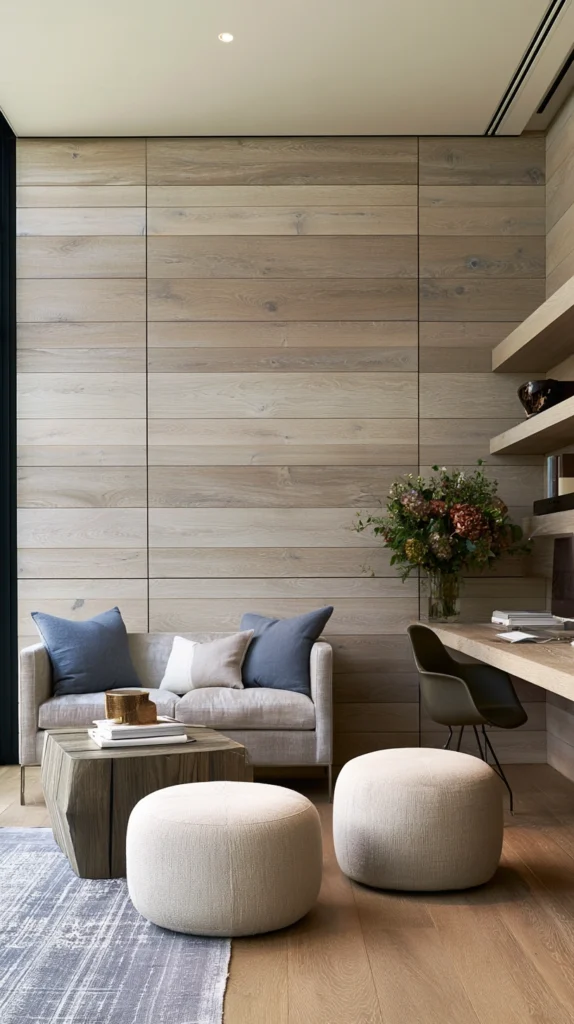
Wider boards for more presence per plank — modern and masculine.
My study wall:
What I chose:
- 8-inch wide pine planks
- Natural finish (sealed only)
- Horizontal installation
- Full wall behind built-in shelving
Why wide planks look different:
The effect:
- Fewer boards (fewer shadow lines)
- Each board more visible
- More wood, less gap
- Modern and bold feeling
Wide vs narrow planks:
Narrow (2-4 inch):
- More shadow lines (more graphic)
- Farmhouse association
- Busier visual texture
- Traditional shiplap feel
Wide (6-12 inch):
- Fewer boards (cleaner)
- More modern feeling
- Each board showcased
- More expensive per board
Very wide (12+ inch):
- Plank wall or board paneling
- Statement piece per board
- Most modern
- Custom or specialty lumber
Best wood species for wide planks:
White oak:
- Most sought-after currently
- Straight grain (clean)
- Warm blond to honey tone
- Premium price ($5-10 per sq ft)
Pine:
- Most affordable ($1-3 per sq ft)
- Knots add character
- Takes stain and paint well
- Good starting point
Cedar:
- Aromatic (pleasant)
- Natural oils (resistant)
- Reddish warm tone
- Good for bathrooms (moisture)
Douglas fir:
- Strong grain pattern
- Warm orange-red tone
- Affordable and available
- Dramatic when stained dark
Finish options for wide planks:
Natural oil:
- Penetrating (not film-forming)
- Shows wood beautifully
- Reapply yearly (easy)
- Most natural result
Hardwax oil:
- More durable than oil
- Still natural look
- Professional-grade product
- Worth the upgrade
Matte clear sealer:
- Easy to apply
- Good protection
- Slightly more plastic
- Fine for walls
Cost:
- White oak wide planks: $400-800 per 100 sq ft
- Pine wide planks: $100-200
- Finish and application: $30-60
- Total: $130-860
My wide plank wall: Pine with natural sealer, warmest wall in the house, wood grain visible from across the room, beautiful and affordable.
Wide Plank Tips
Acclimate longer:
Wide planks move more:
- Wider boards expand and contract more
- Acclimate 72-96 hours minimum
- In the actual room (humidity same)
- Gaps or warping avoided with patience
Leave expansion gap:
- Small gap at ceiling and floor
- Covered by trim
- Wood needs room to move
- Skip this and boards buckle
9. Wood Panel Wainscoting (Lower Wall Only)
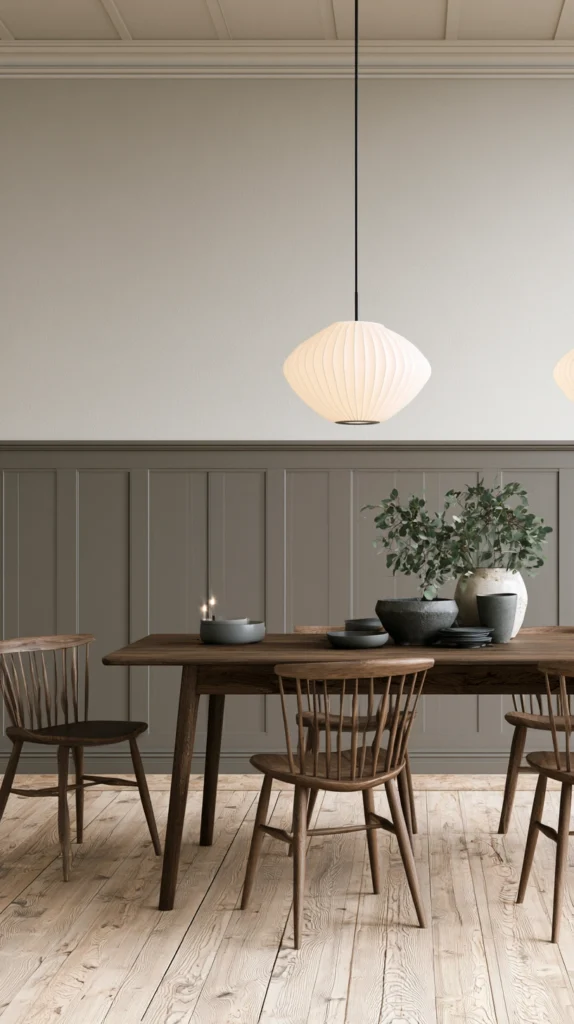
Paneling on lower half of wall only — classic detail with modern application.
My dining room lower wall:
What I installed:
- Shiplap on bottom half only
- Chair rail dividing panel from wall above
- Panel painted deep olive
- Wall above warm cream
Why lower wall paneling works:
Practical reasons:
- Protects wall from chairs and scuffs
- Most damage happens at lower level
- Easy to clean (wipe surface)
- Practical and decorative simultaneously
Design reasons:
- Grounds the room (visual weight at base)
- Creates color zone (two-tone rooms)
- Adds architectural detail (built-in look)
- Defines the wall without overwhelming
Height options:
Traditional (36 inches):
- Chair rail height
- Classic proportion
- Works in dining rooms (protects from chairs)
- Most formal
Modern (48-54 inches):
- Higher than chair rail
- More dramatic
- Better in rooms with tall furniture
- Currently more popular than traditional
Three-quarter height (72 inches):
- Almost full wall (but not quite)
- Very graphic
- Different feeling than full height
- Transition zone visible
Paneling styles for lower wall:
Shiplap below rail:
- Clean and modern
- Goes with any style
- Easy DIY
- Most versatile
Board and batten below rail:
- More traditional
- Formal dining rooms
- Classic look
- Paint only
Flat panel (recessed or raised):
- Most traditional
- Most formal
- Requires skill to build
- Custom millwork feel
The chair rail:
Material:
- Wood molding (most common)
- MDF (paintable, budget)
- Colonial profile (traditional)
- Simple flat profile (modern)
Height:
- 36 inches (standard)
- 42-48 inches (more modern proportion)
- Measure from floor to bottom of rail
- Consistent height all around room
Two-tone color combinations:
Classic:
- White below, color above (traditional)
Modern:
- Deep color below, light above (grounds room)
- Same color both (seamless, sophisticated)
- Natural wood below, painted above (warmest)
Cost:
- Shiplap (half wall, 100 sq ft): $60-200
- Chair rail molding: $30-60
- Paint: $25-50
- Total: $115-310
My dining wainscoting: Dining room went from casual to genuinely sophisticated, olive below cream above, guests assume original architectural detail.
Wainscoting Tips
Level rail is everything:
Most important step:
- Rail out of level (visible from anywhere in room)
- Check with long level (4 foot minimum)
- Mark with chalk line around entire room
- Install rail to line, not to floor (floors not always level)
Paint panel before installing rail:
- Paint lower section first
- Install rail on painted surface
- Caulk rail seam after
- Cleaner finish than painting around rail
10. Dark Stained Wood Paneling (Moody and Sophisticated)
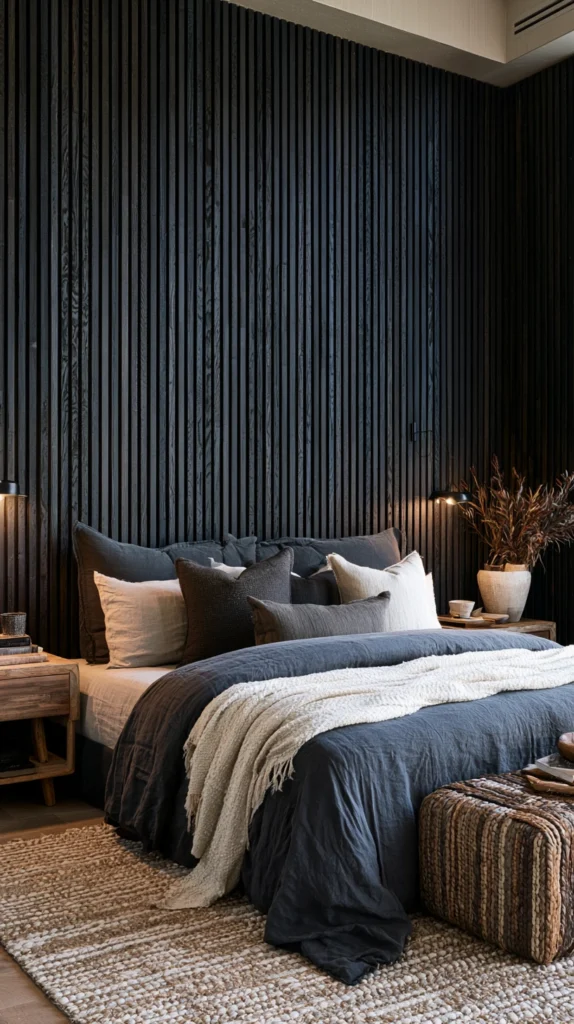
Wood paneling stained very dark — the most dramatic wood treatment.
My bedroom feature wall:
What I did:
- Vertical slat paneling (pine)
- Ebony stain (two coats)
- Nearly black result
- Behind bed (most dramatic placement)
Why dark stain is different from paint:
Dark stain:
- Grain still visible (through the dark)
- Depth from grain texture
- Warm (wood undertone shows)
- Rich and luxurious
Dark paint:
- Grain hidden (opaque)
- Flat depth
- Cooler (no wood warmth)
- More graphic
Dark stain shades:
Ebony:
- Closest to black
- Grain still visible in raking light
- Most dramatic
- Requires multiple coats
Jacobean:
- Very dark brown
- Classic English library color
- Rich and traditional
- Beautiful on oak
Dark walnut:
- Warm dark brown
- Most universally loved
- Not as extreme as ebony
- Easiest starting point
Special walnut:
- Medium-dark (not extreme)
- Warm and sophisticated
- Best on lighter woods (contrast)
- Good first dark stain attempt
Application:
Dark stain technique:
- Sand wood smooth (120 grit, then 220)
- Apply pre-stain conditioner (prevents blotching)
- Apply stain with cloth or brush
- Wipe back after 5-15 minutes
- Second coat (darker)
- Let dry 24 hours minimum
- Topcoat with matte sealer
Pre-stain conditioner:
- Critical for pine (blotches badly without)
- Apply before stain
- Wait 30 minutes then stain
- Minwax Pre-Stain Wood Conditioner ($12)
Where dark paneling works:
Best rooms:
- Bedroom (behind bed, enveloping)
- Study or library (intentional and warm)
- Bar corner or entertainment wall
- Dining room (sophisticated backdrop)
Lighting consideration:
Dark paneling needs good light:
- Adds darkness to room (obvious)
- Compensate with more lamps
- Warm bulbs (2700K minimum)
- Uplighting on wall (shows grain beautifully)
Cost:
- Pine slats: $60-120
- Pre-stain conditioner: $12
- Dark stain: $15-25
- Matte sealer: $20-30
- Total: $107-187
My dark stained bedroom wall: Most dramatic thing in the house, bedroom feels like a luxury hotel suite, dark paneling with warm lamp light is extraordinary.
Dark Stain Tips
Test on scrap first:
Essential step:
- Same wood species as wall
- Full test (conditioner, stain, sealer)
- Let dry completely (color changes when dry)
- Approve before committing to wall
Ventilation critical:
- Stain fumes (strong)
- Open windows
- Run fans
- Respirator recommended
- Don’t skip this
11. Mixed Material Paneling (Wood Plus Other Elements)
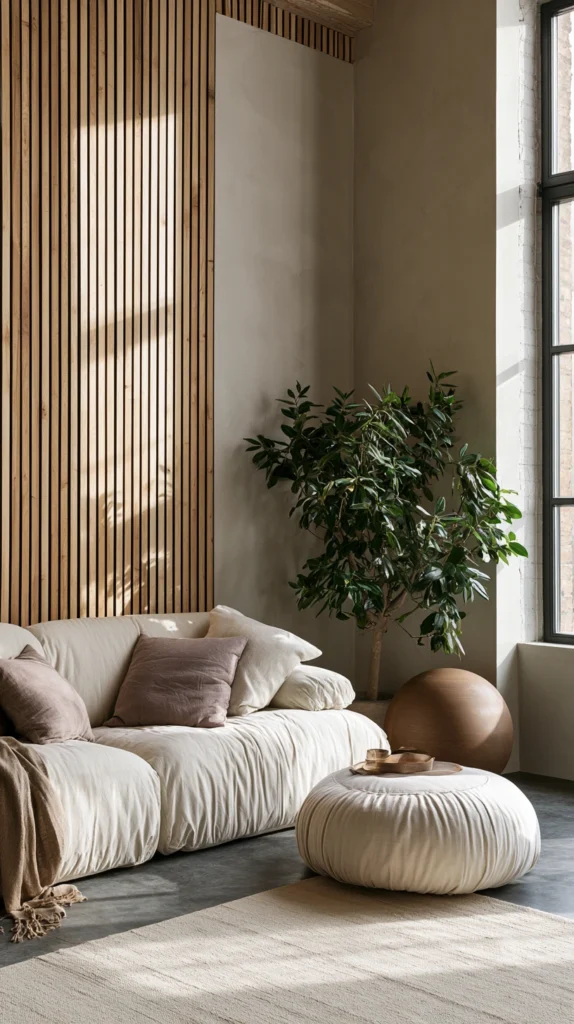
Wood combined with plaster, metal, or tile — the most custom and unique look.
My living room mixed wall:
What I combined:
- Vertical wood slats (two-thirds of wall)
- Limewash plaster section (one-third)
- Meeting at a vertical line
- No transition molding (raw seam)
Why mixed materials work:
The effect:
- Each material highlights the other
- Wall tells a more complex story
- Custom and one-of-a-kind
- Designer rooms always mix materials
Combinations that work:
Wood and limewash plaster:
- Most popular combination
- Warm and organic
- Natural materials together
- Easy to DIY
Wood and tile:
- Tile section as focal panel
- Wood framing the tile
- Kitchen and bathroom walls
- Wet area friendly
Wood and blackboard:
- One wood panel section
- One chalkboard section
- Functional meets decorative
- Kitchen, office, kids rooms
Wood and metal:
- Corrugated metal panel
- Framed by wood sections
- Industrial and warm together
- Unexpected and modern
Wood and wallpaper:
- Wallpaper in center section
- Wood paneling flanking
- Most decorated version
- Pattern contained by wood
How to plan mixed material walls:
Proportion decisions:
- Which material is dominant (more)
- Which is accent (less)
- Where do they meet (vertical or horizontal)
- Is the transition hidden or celebrated
Transition options:
Hidden transition:
- Thin metal strip between materials
- Clean and professional
- Looks intentional
- Requires precision
Celebrated transition:
- Raw seam where materials meet
- Exposed and honest
- Industrial aesthetic
- Easier to execute
Overlapping:
- One material slightly overlaps other
- Natural wood edge over plaster
- Or plaster returns around wood
- Seamless feeling
Cost:
- Wood paneling section: $60-200
- Limewash or plaster finish: $30-80
- Tile section: $50-200
- Metal panel: $40-100
- Total: $100-400
My mixed material wall: Most unique wall I’ve created, impossible to recreate exactly, every interior designer who sees it asks about the material transition.
Mixed Material Tips
Plan on paper first:
Before touching the wall:
- Draw the wall to scale
- Mark materials and proportions
- Decide transitions
- Live with the plan one week
- Change plan not wall
Order of installation:
- Typically paneling first
- Other materials fill the gaps
- Or tile first if tiling a section
- Plan sequence before starting
12. Bedroom Headboard Wall Paneling (Behind the Bed)
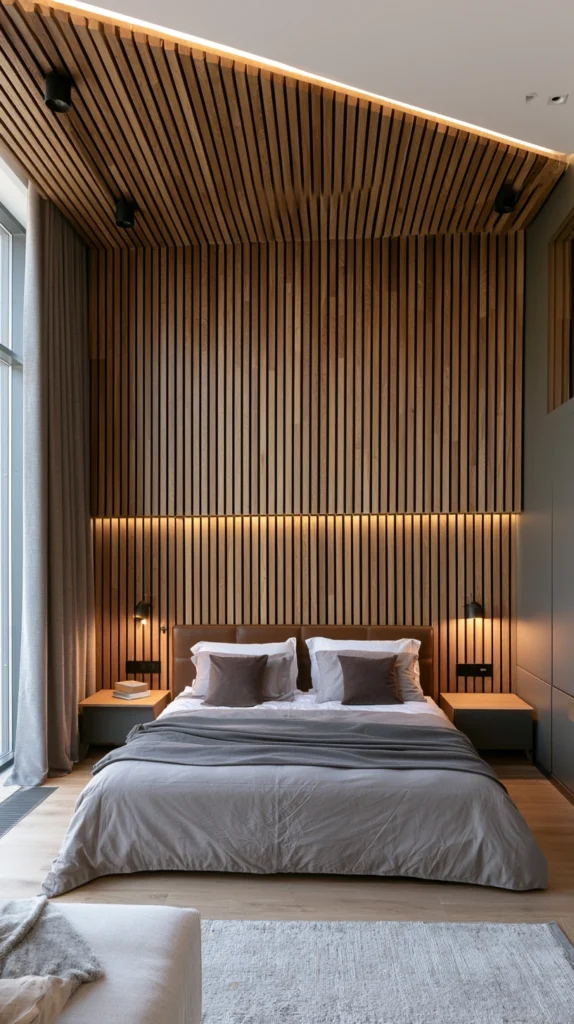
Full wall paneling behind the bed — the bedroom’s most important design moment.
My bedroom before:
What was there:
- Blank wall behind bed
- Two bedside lamps floating
- Bed looked parked not placed
- Room had no focal point
Headboard wall solution:
Why the bed wall matters most:
- First thing seen entering bedroom
- Sets the room’s entire tone
- Photographs behind anything shot in room
- Most impactful bedroom investment
Paneling options for headboard wall:
Vertical slats (most popular):
- Floor to ceiling behind bed
- Painted to match or contrast
- Warmth and texture behind bed
- Replaces need for headboard
Shiplap:
- Horizontal behind bed
- Classic and cozy
- Natural or painted
- Works in every bedroom style
Wide planks:
- Dramatic and bold
- Statement behind bed
- Natural finish (warmest bedroom choice)
- Fewer boards (cleaner)
Board and batten:
- More formal
- White or colored
- Traditional bedroom style
- Works with ornate bedding
Replacing the headboard:
Paneling as headboard:
- Mount wall sconces on panel (bedside lighting)
- No headboard needed (panel is the headboard)
- Saves cost of headboard
- Looks more custom than purchased headboard
Sconce placement:
- 24-30 inches apart (one each side)
- 60-66 inches from floor (seated reading height)
- Hardwired (best) or plug-in (easier)
- Warm bulbs (2700K)
Bedding and panel relationship:
Colors that work:
Dark paneling behind bed:
- Light bedding (contrast)
- White or cream linen (classic)
- Warm taupe (sophisticated)
- Bright accent (pillows only)
Natural wood behind bed:
- Any bedding (most versatile)
- White (fresh)
- Earth tones (cohesive)
- Pattern (pattern plus texture works)
Light painted paneling:
- More bedding options
- Bold pattern (pattern on pattern can work)
- Rich colors (jewel tones against light panel)
Ceiling extension option:
Panel continues to ceiling:
- Paneling wraps from wall to ceiling
- Above-bed section only
- Creates canopy effect
- Most dramatic bedroom treatment
Cost:
- Vertical slats (headboard wall): $80-200
- Sconces (pair, plug-in): $60-150
- Paint if painting: $25-50
- Total: $165-400
My headboard panel wall: Bedroom completely transformed, replaced $400 headboard with $150 paneling and sconces, guests photograph the bedroom corner every time.
Headboard Wall Tips
Panel width:
Should be wider than bed:
- King bed (76 inches) — panel minimum 90 inches
- Queen bed (60 inches) — panel minimum 72 inches
- Narrower than bed (looks squeezed)
- Full wall (most dramatic, always works)
Sconce wiring:
Plug-in sconces:
- Cord runs down behind nightstand
- No electrician needed
- Most common approach
- Cord concealed by furniture
Hardwired:
- Electrician required ($100-200)
- No visible cord
- Permanent and clean
- Worth it for permanent home
13. Outdoor Wood Paneling Brought Inside (Cedar and Teak)
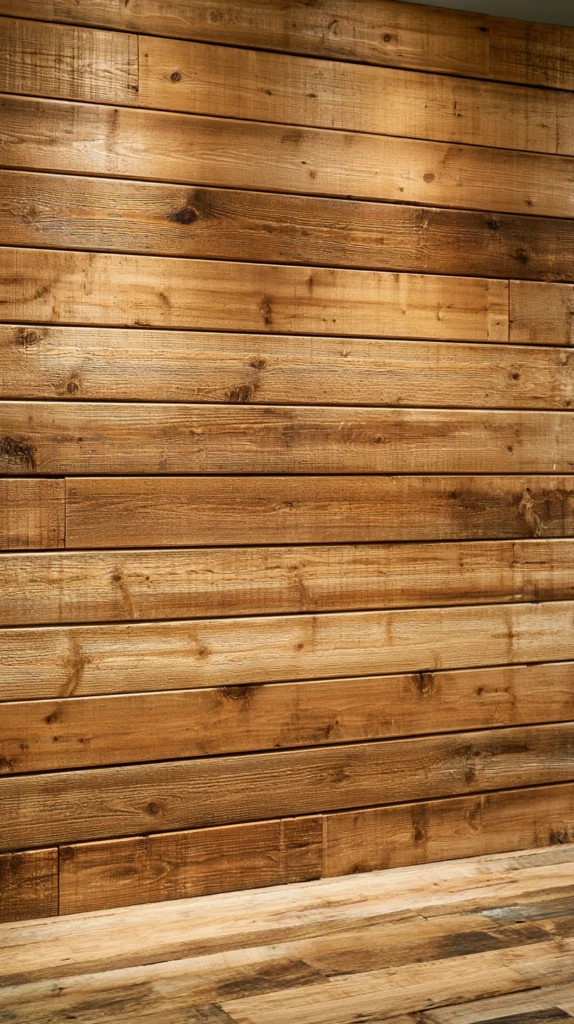
Exterior-grade wood used for interior walls — the most textural and raw option.
My basement wall:
What I used:
- Cedar fence boards (cheapest cedar)
- Raw and unfinished
- Horizontal installation
- Left to age naturally (getting better)
Why exterior wood inside:
The advantages:
- Cheaper than interior wood (sold by fence boards)
- More texture (rougher, more character)
- Natural oils (cedar especially aromatic)
- Weathers beautifully even indoors
Best exterior woods for interior use:
Cedar:
- Most common choice
- Aromatic (pleasant, natural moth deterrent)
- Reddish warm tone
- Available as fence boards ($1-2 each)
- Very affordable
Teak:
- Premium option
- Natural oils (beautiful sheen)
- Resistant to everything
- Expensive but lasts forever
- Buttery smooth when sanded
Ipe (Brazilian hardwood):
- Extremely dense and durable
- Dark chocolate color
- Premium price
- Stunning when oiled
Douglas fir:
- Available as exterior siding
- Warm reddish-orange grain
- Affordable
- Beautiful stained or natural
Cedar fence board approach:
Why fence boards:
- 1×6 cedar fence boards ($1.50-2.50 each)
- Pre-cut (6 feet, trim to fit)
- Cheap and available at any hardware store
- Authentic raw cedar look
Installation:
- Sand lightly (remove splinters)
- No finish needed (cedar oils are enough)
- Or apply tung oil (deepens color)
- Horizontal or vertical (both work)
- Nail to studs (fence boards are lightweight)
Smell consideration:
Cedar aromatics:
- Strong initially
- Fades in 2-4 weeks
- Leaves subtle pleasant scent
- Some people sensitive to fresh cedar
Teak interior wall:
High-end approach:
- Teak wall panels (specialty suppliers)
- Or teak decking boards (narrower, consistent)
- Oil twice yearly (maintains beauty)
- Investment-level paneling
Cost:
- Cedar fence boards (100 sq ft): $50-100
- Tung oil or sealant: $20-30
- Fasteners: $10-15
- Total: $80-145
My cedar wall: Cheapest paneling project I’ve done, basement smelled like a spa for a month, now it’s the most tactile room in the house.
Exterior Wood Tips
Acclimate in space:
Essential step:
- Exterior wood used to weather fluctuations
- Bring inside and stack with gaps
- 72-96 hours minimum
- Movement expected (boards adjust)
Insect and pest check:
- Cedar naturally repels insects
- Still inspect each board
- Teak and ipe: check before installing
- Better than discovering later
14. Wood Ceiling Paneling (The Overlooked Fifth Wall)
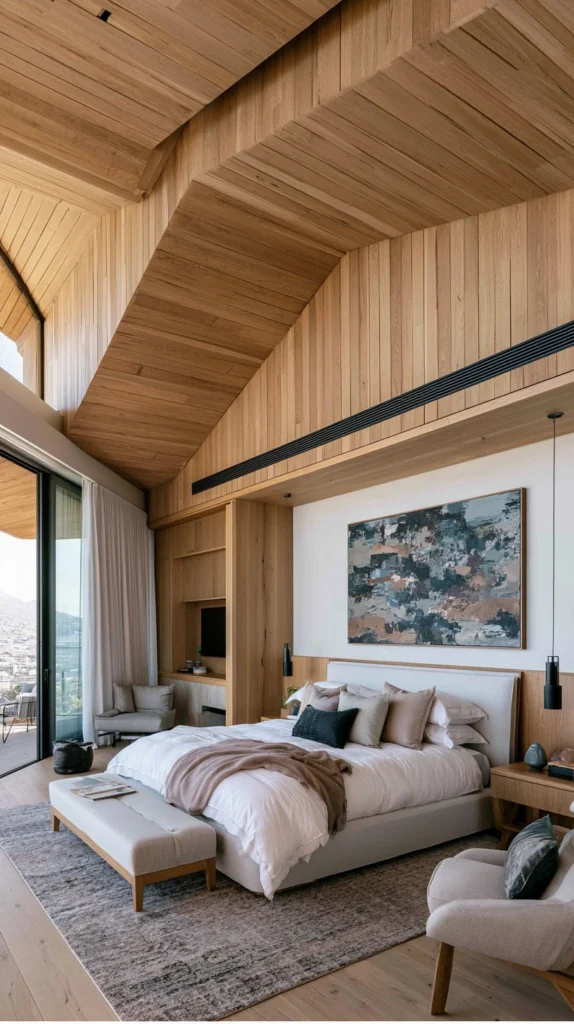
Paneling on the ceiling instead of walls — the most unexpected and impressive option.
My bedroom ceiling:
What prompted it:
- Walls already done
- Ceiling felt unfinished by comparison
- Wanted warmth above the bed
- Nobody else in neighborhood had done it
Why ceilings are the opportunity:
Eye travels up:
- Looking up from bed (bedroom)
- Looking up in open rooms (great rooms)
- Ceilings are noticed
- Most underutilized surface
The warmth from above:
- Wood ceiling warms entire room
- Reflects warm light downward
- Enveloping feeling (like a cabin)
- Transformative beyond expectation
Best ceiling paneling options:
Shiplap ceiling:
- Horizontal or perpendicular to joists
- Painted white (classic, brightens)
- Natural wood (warm, dramatic)
- Must nail into joists (structure)
Tongue and groove:
- Interlocking panels (no gaps)
- Smooth continuous surface
- Classic porch ceiling look
- Painted sky blue (traditional) or any color
Wide plank ceiling:
- Fewer boards (more drama)
- Grain showcased from below
- Each board visible individually
- Most expensive option
Coffered ceiling (advanced):
- Grid of wood beams
- Panels between beams
- Architectural and formal
- Complex but achievable
Practical considerations:
Weight concerns:
- Ceiling paneling must hit joists
- Locate joists first (essential)
- Never attach to drywall only
- Engineer assessment for heavy materials
Finding joists:
- Stud finder set to deep scan
- Mark with tape
- Confirm with small nail test
- Map all joists before starting
Installation considerations:
Overhead work is hard:
- Rent a drywall lift ($40/day)
- Or build support from below
- Two people minimum
- Take breaks (neck strain)
Starting boards:
- First board most important (level)
- Use chalk line (reference)
- Check level constantly
- Level ceiling = everything else correct
Color approach:
White ceiling planks:
- Brightens room (reflects light)
- Classic and universal
- Shows wood texture (clean)
- Most common choice
Natural wood ceiling:
- Warms room dramatically
- Amber light reflected downward
- More dramatic, less universal
- Cabin or chalet feeling
Painted ceiling planks:
- Bold color (sky blue, deep green)
- Pattern adds texture plus color
- Unexpected and personal
- Commit fully or not at all
Cost:
- Tongue and groove ceiling planks: $150-400 for average bedroom
- Shiplap: $100-300
- Wide planks (white oak): $400-800
- Drywall lift rental: $40/day
- Total: $140-840
My wood ceiling: Most dramatic single project, guests look up and go silent, warmest room in the house because wood bounces warm light back down.
Ceiling Paneling Tips
Perpendicular to joists:
Orientation rule:
- Run planks perpendicular to joists
- Secure into every joist
- Structural and easier
- Parallel to joists requires blocking
Pain management:
For neck and shoulders:
- Take break every 30 minutes
- Wear neck support
- Use drywall lift (not your arms)
- Two people makes it manageable
15. DIY Peel-and-Stick Wood Panel Tiles (Rental and Budget Option)
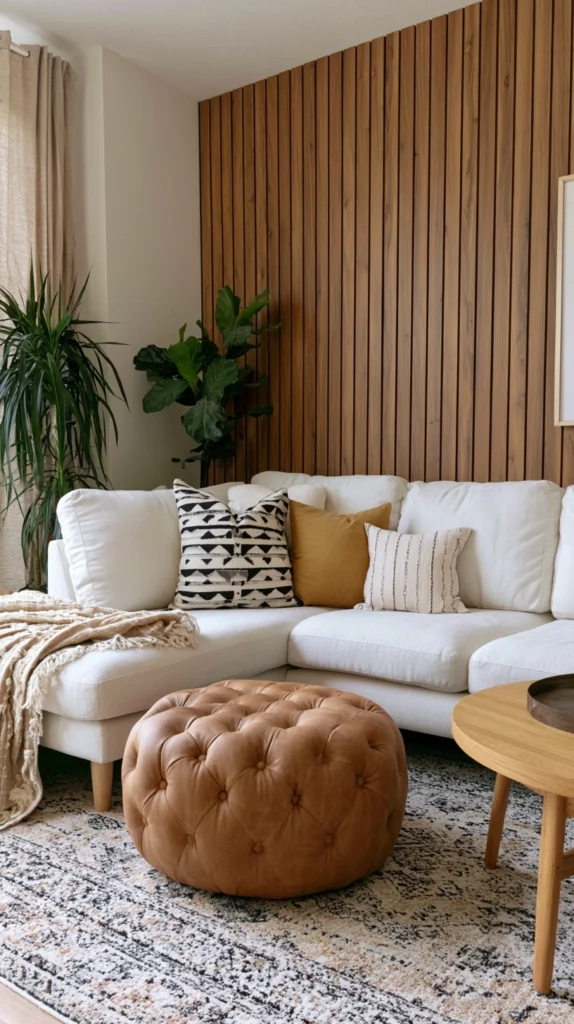
Adhesive wood panel tiles — real wood, no nails, renter-safe.
My rental apartment wall:
The constraint:
- No holes in walls (lease)
- Wanted real wood look
- Needed removable
- Discovered peel-and-stick wood tiles
What peel-and-stick wood panels are:
The product:
- Real wood veneer on adhesive backing
- Sticks directly to drywall
- Removes without damage (usually)
- Pre-finished or paintable
Best brands:
Stikwood:
- Real reclaimed wood veneer
- Multiple species and finishes
- Most popular brand
- $6-12 per sq ft
- Beautiful product
WoodFlex:
- Flexible wood veneer
- Easier to install (curves)
- Good for irregular surfaces
- $5-9 per sq ft
Amazon options:
- Many generic brands
- Variable quality
- Read reviews carefully
- $3-6 per sq ft
Real wood vs wood-look:
Real wood veneer:
- Actual wood (thin slice)
- Grain and warmth real
- More expensive
- Worth it for main rooms
Wood-look vinyl:
- Printed pattern on vinyl
- Cheaper
- Less convincing up close
- Fine for quick updates
Installation:
Simpler than any other paneling:
- Clean wall thoroughly (adhesion critical)
- Measure and cut to length (scissors or utility knife)
- Peel and press (firm pressure)
- Use rubber roller (eliminate bubbles)
- Overlap ends slightly at seams
- Done in hours
No special tools:
- No saw (scissors or knife)
- No nails or drill
- No stud finder
- No construction knowledge
Removal:
Typically clean removal:
- Pull away slowly (warm gently with hair dryer)
- Most come off without wall damage
- Test small piece first
- May pull paint in some cases
Test first:
- Apply small piece in inconspicuous spot
- Leave one week
- Remove and assess wall
- Only proceed if clean removal
Finish and feel:
Pre-finished:
- Ready to stick (most tiles)
- No sealing needed
- Limited color options
Paintable:
- Install then paint
- More color flexibility
- Prime first (adhesion to veneer)
Where peel-and-stick works best:
Accent wall:
- Behind bed (headboard wall)
- Behind sofa
- Fireplace wall
- Anywhere one wall needed
Not great for:
- High humidity (bathroom, kitchen)
- Surfaces with texture (won’t adhere)
- Walls with fresh paint (needs fully cured paint)
- Permanent results (eventual removal needed)
Cost:
- Stikwood (100 sq ft): $500-900
- Generic real wood veneer: $300-500
- Wood-look vinyl: $100-200
- Total: $100-900
My peel-and-stick wall: Only paneling option for my rental, took one afternoon, landlord cannot tell it’s removable, took it down when I moved (clean walls).
Peel-and-Stick Tips
Wall preparation is everything:
Before sticking:
- Wash wall with degreaser
- Wipe dry completely
- Let cure 24 hours
- Any oil or dust (adhesion fails)
Temperature matters:
- Apply above 65°F (adhesive activates)
- Cold walls (won’t stick well)
- Heat room first if needed
- Check adhesive spec sheet
Choosing Your Wood Paneling Style
Every room has a best option:
By room:
Living room:
- Shiplap or vertical slats (feature wall)
- Reclaimed wood (character wall)
- Limewash over paneling (organic)
- Floor-to-ceiling shelving wall
Bedroom:
- Headboard wall paneling (behind bed)
- Dark stained slats (moody)
- Wood ceiling (above bed)
- Wainscoting (lower wall, traditional)
Dining room:
- Board and batten (color-drenched)
- Wide planks (sophisticated)
- Wainscoting with two-tone (classic)
- Diagonal feature wall (dramatic)
Entryway:
- Board and batten (architectural)
- Shiplap (any direction)
- Reclaimed wood (immediate character)
- Vertical slats (floor-to-ceiling drama)
Office or study:
- Dark stained paneling (library feel)
- Painted paneling (color-drenched)
- Floor-to-ceiling shelving with wood
- Mixed material (sophisticated)
By skill level:
Beginner:
- Peel-and-stick (no tools)
- Vertical slats with adhesive (simple)
- Shiplap (moderate, achievable)
Intermediate:
- Board and batten
- Wainscoting
- Wide plank walls
- Stained paneling
Advanced:
- Diagonal or herringbone
- Ceiling paneling
- Mixed materials
- Reclaimed wood (prep intensive)
By budget:
Under $150:
- Cedar fence boards (exterior, interior use)
- Peel-and-stick (vinyl option)
- Vertical pine slats painted
- DIY whitewash over existing paneling
$150-400:
- Shiplap (pine or MDF)
- Board and batten
- Vertical slats (natural wood)
- Wainscoting
$400-800:
- Wide plank paneling
- Reclaimed wood
- Headboard wall with sconces
- Ceiling paneling (average room)
$800+:
- White oak wide planks
- Full room paneling
- Custom millwork-look finish
- Ceiling plus walls combined
Maintenance Reality
Wood paneling is low maintenance:
Weekly:
- Dust with dry cloth or duster
- Nothing else needed
- Painted paneling: same as painted walls
Monthly:
- Check for any damage (chips, dents)
- Address immediately (touch-up paint)
- Wipe oiled wood with dry cloth
- Nothing intensive
Annually:
- Re-oil oiled wood (tung or Danish oil)
- Touch up painted paneling
- Check for any movement at seams
- Assess and address anything changed
What to watch for:
- Gaps at seams (wood movement, normal)
- Fill with flexible caulk (paintable)
- Warping (moisture issue)
- Address moisture source first
My Complete Paneling Journey
What I installed (four rooms, two years):
Room 1 (Month 1, $130):
- Shiplap behind sofa (living room)
- Natural pine, sealed only
- One weekend project
- Room transformed immediately
Room 2 (Month 4, $185):
- Vertical slats (bedroom, tone-on-tone)
- Deep sage green
- Second weekend project
- More confident installation
Room 3 (Month 9, $110):
- Cedar fence boards (basement)
- Raw and unfinished
- Cheapest project
- Most tactile result
Room 4 (Month 18, $300):
- Board and batten (entryway)
- Deep navy, floor to ceiling
- Painted same color throughout
- Most architectural result
Total investment: $725 over 18 months Rooms with paneling: Four Rooms without paneling: Feel unfinished now Main lesson: First panel wall makes every flat wall look wrong
Getting Started This Weekend
Choose one wall. Just one.
This weekend:
Step 1 — Pick the wall:
- Most-seen wall in most-used room
- Behind sofa (living room)
- Behind bed (bedroom)
- Entryway facing the door
- Where eyes go when entering
Step 2 — Choose the style:
- Vertical slats if you want modern
- Shiplap if you want warm classic
- Board and batten if you want architectural
- Peel-and-stick if you rent or want zero commitment
Step 3 — Start with the cheapest version:
- Pine not oak (same look, fraction of cost)
- Paint it (most forgiving)
- Natural later once confident
- Skill builds with each project
My recommendation:
Vertical pine slats, painted:
- Most modern looking
- Cheapest materials ($60-100)
- Easiest installation
- Biggest visual impact per dollar
Buy the wood, cut it Saturday, install Sunday, and your room will look like a different space by the end of the weekend.
Now go give your flat walls the texture and warmth they have been missing.
Quick Summary
Best starter paneling ideas:
Vertical slats painted: Most modern, cheapest, biggest impact ($100-185) Shiplap natural: Warmest, most versatile, classic ($110-450) Board and batten: Most architectural, great for entryways ($135-240) Peel-and-stick: Rental-safe, no tools, instant ($100-900) Cedar fence boards: Cheapest real wood, most texture ($80-145)
By room:
Living room: Shiplap or vertical slats behind sofa Bedroom: Headboard wall vertical slats with sconces Entryway: Board and batten floor to ceiling, bold color Dining room: Wide planks or board and batten two-tone Office: Dark stained vertical slats, full room
By budget:
Under $150:
- Cedar fence boards
- Pine vertical slats painted
- Peel-and-stick vinyl
$150-400:
- Shiplap (pine)
- Board and batten
- Limewash over paneling
$400-800:
- Wide plank (white oak)
- Reclaimed wood
- Ceiling paneling
Essential rules:
Always:
- Acclimate real wood before installing (48-72 hours)
- Find and nail into studs
- Fill nail holes before finishing
- Sand before staining (pre-conditioner on pine)
Never:
- Install without locating studs
- Skip acclimation (warping and gaps result)
- Use gloss paint on paneling (every imperfection visible)
- Try herringbone without practicing miter cuts first
The warmth formula:
Natural wood + warm finish (oil or matte sealer) + warm lighting (2700K lamps) = room that feels designed, warm, and completely different from before.
Common mistakes:
- One small wall section (too timid, not enough impact)
- Wrong direction for the room (test with tape first)
- Skipping primer on MDF (paint absorbs unevenly)
- Not acclimating wood (gaps appear after install)
- All the same width boards (no variation, less interesting)
- Gloss or semi-gloss finish (shows every imperfection)
- Paneling without considering lighting (dark paneling needs more lamps)
- Installing and immediately painting (wood needs to settle)
Remember: One wall is enough to transform a room (start there and only there), pine costs a fraction of oak and looks nearly identical when painted (start with pine), vertical slats are the easiest modern paneling to install and the hardest to believe is DIY, always nail into studs (drywall alone will not hold), acclimate the wood in the room before touching a nail gun (this step prevents every common disaster), fill and sand every nail hole before finishing (the difference between amateur and professional is this step), warm lighting makes wood paneling extraordinary (2700K bulbs everywhere near paneling), the second paneling project is twice as fast as the first (confidence comes with each wall).