13 Farmhouse Kitchen Decor Ideas
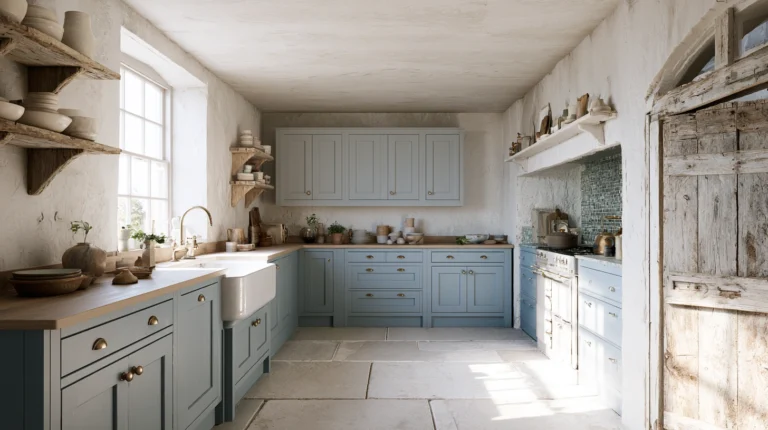
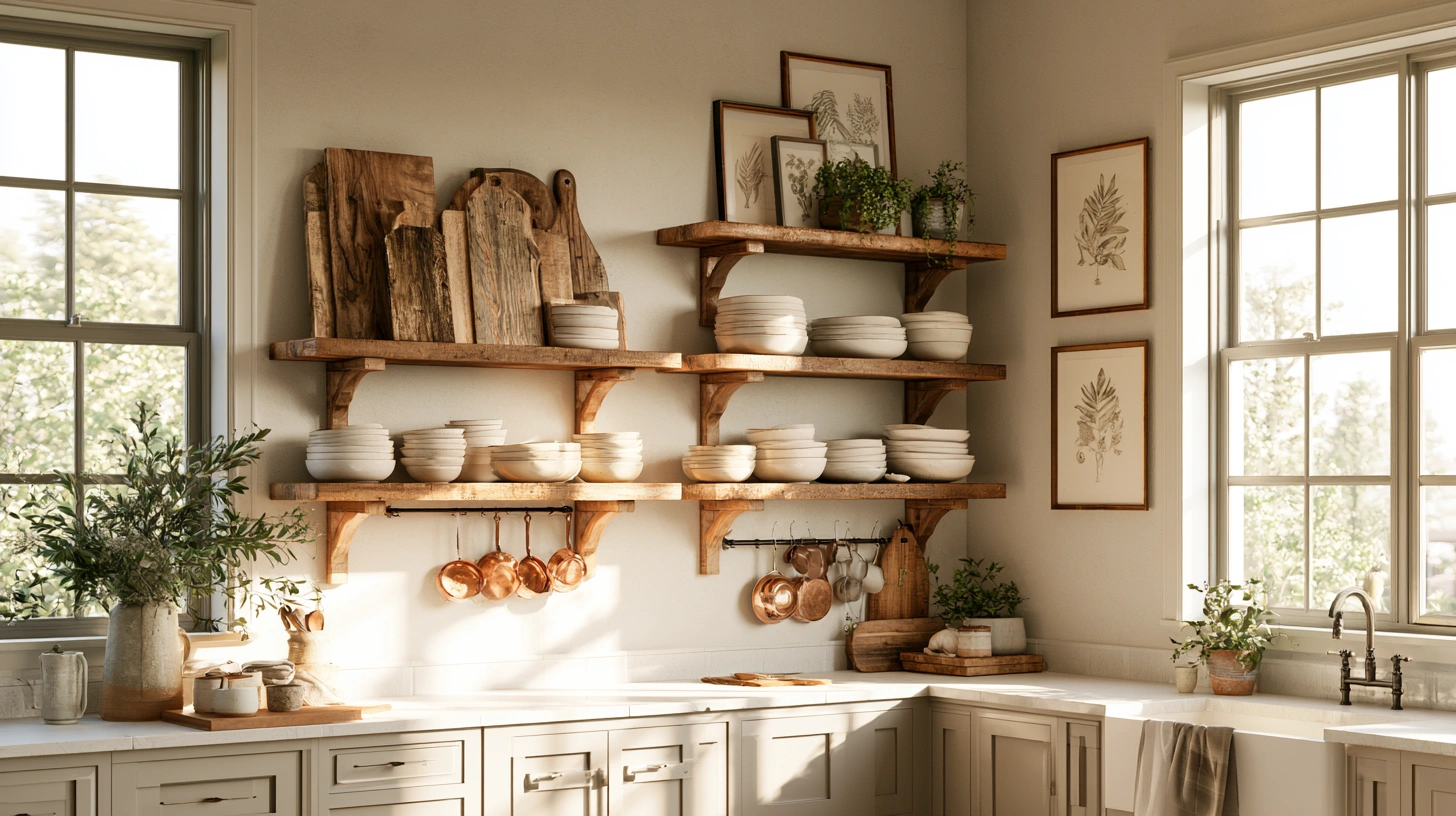
The farmhouse kitchen earns its warmth not from expensive renovations but from the accumulation of right details — the crockery displayed openly because it is beautiful enough to show, the herbs drying above the window, the worn-handled wooden spoons in the jug beside the hob, the printed tea towel folded over the oven handle.
These are decorating decisions and styling choices rather than structural investments, and they are available in any kitchen regardless of its size, its cabinet style, or its budget. The farmhouse kitchen is a state of mind as much as a material condition.
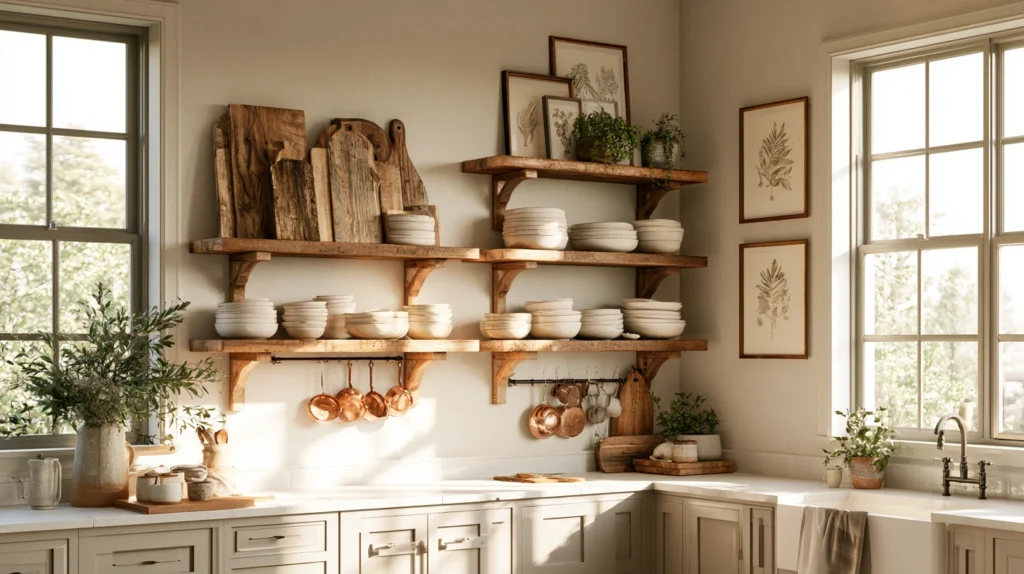
The thirteen ideas below are the specific decor decisions that most effectively create the farmhouse kitchen atmosphere in any real home kitchen — each one grounded in the honest, practical beauty that defines the tradition and each one achievable within a weekend at very low cost.
1. Open Shelving for White or Cream Crockery
Budget: $40 – $150
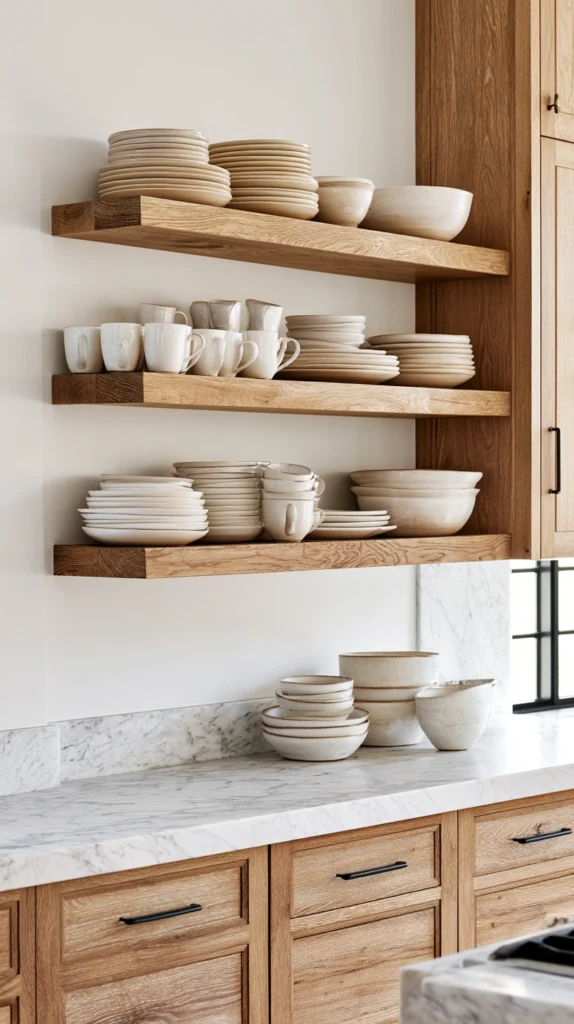
Open shelving displaying a collection of white or cream crockery — stacked plates, rows of mugs, glass jars of dry goods, and a pitcher or two — is the most instantly farmhouse kitchen detail available for any wall in any kitchen. The white crockery reads as both beautiful and genuinely useful and the open display communicates confidence in the kitchen’s maintenance standard. A single shelf of well-chosen white crockery changes the character of the kitchen wall it occupies more dramatically than any paint colour or cabinet change available at the same cost.
A solid timber shelf of 90 cm length on two heavy brackets costs $30–$70 installed. A complete set of white ceramic dinner plates costs $20–$60. White mugs cost $2–$8 each. Glass storage jars for flour, oats, and pasta cost $4–$12 each. The complete open shelf display — shelf, bracket, six plates, six mugs, and four storage jars — costs $80–$180 and creates the farmhouse kitchen’s most characteristic wall feature without any cabinet replacement, any painting, or any structural work.
Decor tip: Resist adding too many different types of objects to the open kitchen shelf. The farmhouse crockery shelf reads best when it contains one type of thing — all crockery, or all storage jars, or all a mix of the two — at a consistent scale. The moment the shelf begins to collect functional objects that are not beautiful — the battery, the pen, the opened letter — it stops functioning as a farmhouse display and becomes general kitchen clutter that happens to be elevated. A clear boundary between what belongs on the display shelf and what belongs in a drawer maintains the specific quality the open shelf creates.
2. A Vintage or Reclaimed Wooden Chopping Board Collection
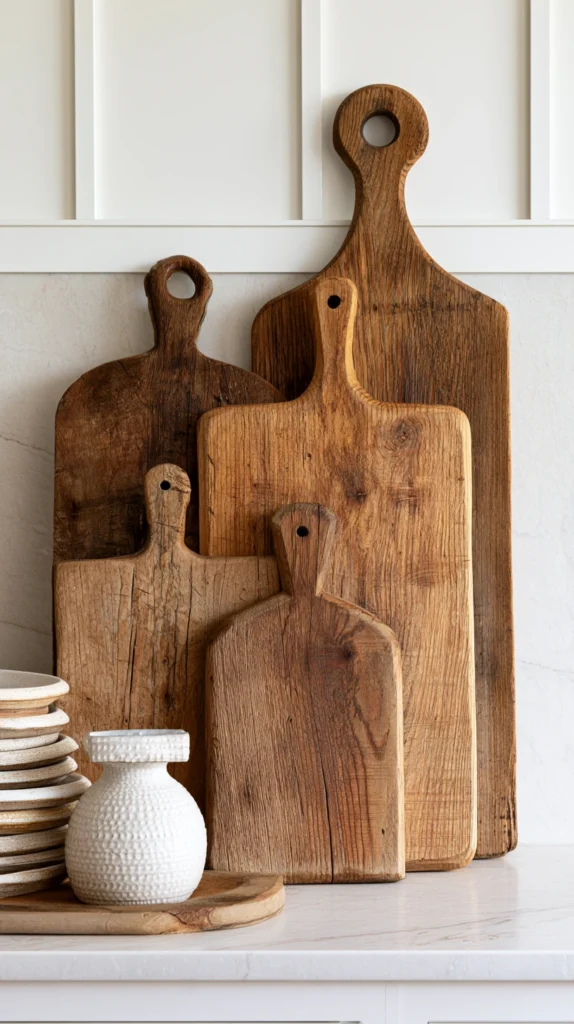
Budget: $20 – $80
A collection of wooden chopping boards — different shapes, different sizes, different woods — displayed upright on a shelf, propped against the wall beside the cooker, or hung from a rail on the kitchen wall creates one of the most warmly tactile and most specifically farmhouse kitchen surface displays available. Wooden boards are both functional kitchen equipment and beautiful objects simultaneously, which makes them the ideal farmhouse kitchen decor element — they need no justification for their display because they genuinely earn their prominent position through daily use.
A quality hardwood chopping board costs $20–$60. A reclaimed bread board from a charity shop or antique market costs $5–$20. A selection of three boards in different shapes — rectangular, oval, and paddle — costs $30–$100 combined. Display propped against the back of the kitchen worksurface, stood on a simple timber plate stand, or hung from a hook on the wall above the preparation area. Oil with food-safe mineral oil or beeswax ($8–$15 per tin) monthly to maintain the board’s surface quality and deepen the natural colour of the wood grain.
Decor tip: Mix boards of different wood species — walnut, oak, maple, and cherry — within the same display collection. Different wood species have distinctly different grain patterns, tonal qualities, and natural colour ranges that create a visual richness in the grouped collection that a set of boards all in the same species cannot provide. The variation between species reads as a collection assembled over time from different sources rather than a set purchased simultaneously — which is always the more characterful and more specifically farmhouse quality in any displayed kitchen collection.
3. Hanging Dried Herbs and Botanicals
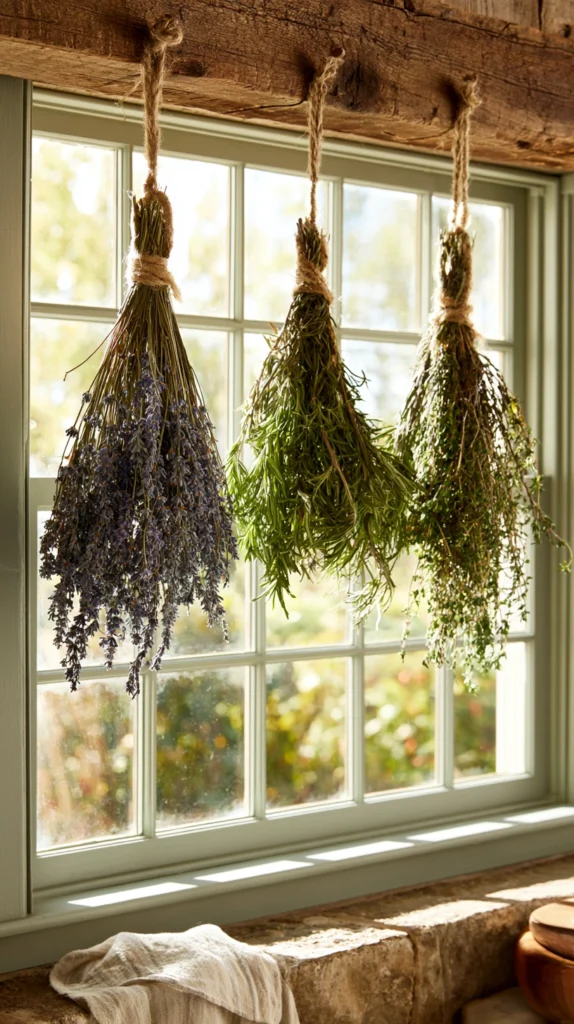
Budget: $0 – $20
Bundles of dried herbs hung from a ceiling beam, a kitchen rail, or a simple hook above the window create the most evocative and most specifically farmhouse kitchen atmosphere of anything on this list. The dried lavender, rosemary, sage, and thyme — gathered from the garden or purchased from a florist or market — connect the kitchen directly to the garden and the growing season in a way that no purchased decoration replicates. The fragrance they release in the warmth of the kitchen is the detail that makes the farmhouse kitchen feel genuinely sensory rather than simply visual.
Fresh herbs from the garden cost nothing to harvest and dry. Fresh herb bunches from a market or florist cost $2–$8 per bunch. A simple hook from a hardware shop costs $1–$3. Tie the herbs with natural jute twine ($3–$6 per reel) and hang upside down in a warm, dry position — above the window where sun and warmth accelerate the drying process, or from a beam or rail over the kitchen table where the bundles are most visible from the room’s main viewpoint.
Decor tip: Hang herb bundles at different lengths from the same rail or beam to create the layered, abundant quality that makes a dried herb display look genuinely generous rather than minimally placed. Three bundles at the same height read as three things hung on a rail. The same three bundles at heights of 15 cm, 25 cm, and 35 cm below the rail create a composition with visual depth and rhythm that reads as a deliberate display rather than three bundles placed where there was a convenient hook.
4. A Printed Tea Towel Collection
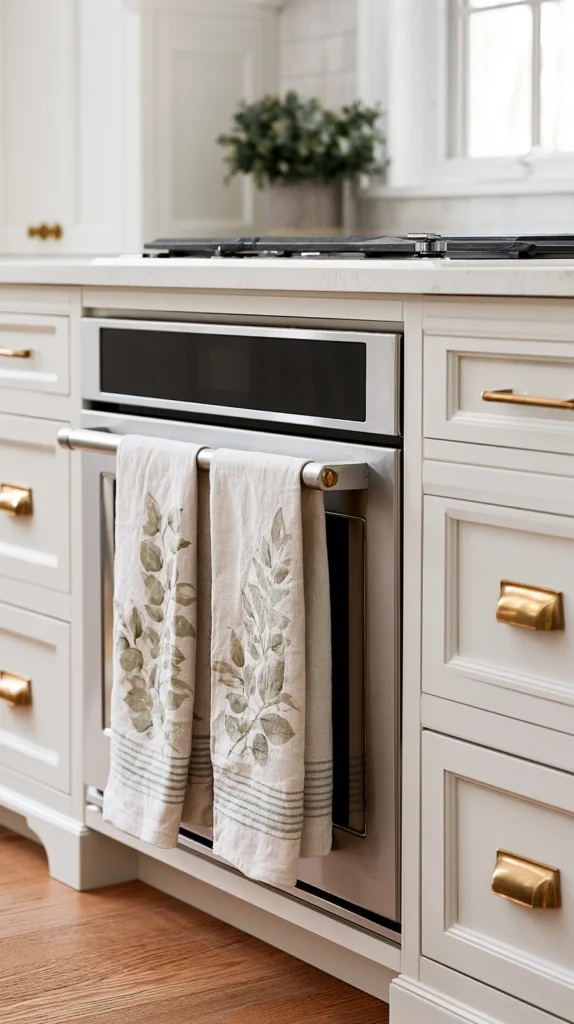
Budget: $10 – $50
A collection of printed linen or cotton tea towels — hung on the oven handle, folded over the edge of the sink, draped over a towel rail, or displayed flat in a basket — is one of the most accessible and most cost-effective farmhouse kitchen decor details available. A quality tea towel with a botanical, typographic, or simple geometric print brings pattern and warmth to the kitchen in a form that is immediately functional and immediately beautiful — the only category of kitchen textile that serves both roles simultaneously without compromise to either.
Quality printed cotton or linen tea towels cost $6–$20 each. A collection of four in coordinated but not matching designs — all botanical, or all typographic, or all in the same colour palette — costs $24–$80 and provides both the display quality of a curated collection and the functional quality of a sufficient supply for everyday kitchen use. Wash and iron before display — a wrinkled or stained tea towel on the oven handle communicates the opposite of the farmhouse kitchen’s curated quality regardless of how attractive the print was when the towel was new.
Decor tip: Replace displayed tea towels weekly rather than allowing them to remain in the same display position until visibly soiled. A fresh tea towel on the oven handle each Monday morning is a small, habitual act that maintains the farmhouse kitchen’s quality of appearance through the week rather than allowing it to decline from the laundered quality of its best day to the used quality of its worst. The weekly habit costs nothing beyond the five minutes of changing the towel.
5. A Vintage Enamel Collection
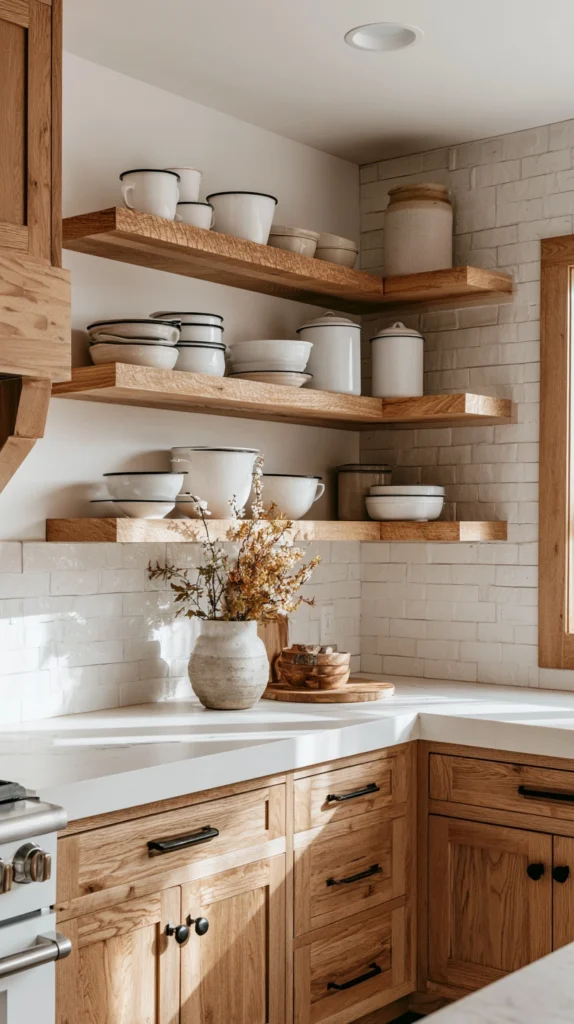
Budget: $20 – $100
A collection of vintage enamelware — white enamel with blue or black rims, in the pots, mugs, plates, and canisters used in farmhouse and army kitchens throughout the twentieth century — creates the most specifically period-authentic and most materially warm farmhouse kitchen decor available at a modest cost from secondhand and charity sources. Genuine vintage enamelware is both decorative and functional — the mugs can be used, the pots can be cooked in, and the whole collection earns its display position through the evidence of genuine use written into its chipped and worn surface.
Individual vintage enamel mugs cost $2–$8 from charity shops and car boot sales. An enamel colander runs $5–$20. An enamel pot costs $8–$30. A complete collection of six pieces sourced from secondhand markets costs $25–$80 and immediately communicates the farmhouse kitchen’s honest, working aesthetic in the material that most specifically references the tradition — genuine enamelware that was made to be used in exactly the kind of kitchen it is now decorating.
Decor tip: Embrace the chips, the staining, and the surface wear of genuinely used vintage enamelware rather than seeking pristine examples at premium prices. The worn surface of enamelware that has been genuinely used is the most valuable aesthetic quality it possesses — it tells the story of a working kitchen in the way that a pristine reproduction never can. A chipped enamel mug on an open shelf is more specifically beautiful in a farmhouse kitchen than a perfect reproduction equivalent at five times the price.
6. Wicker and Rattan Baskets as Storage
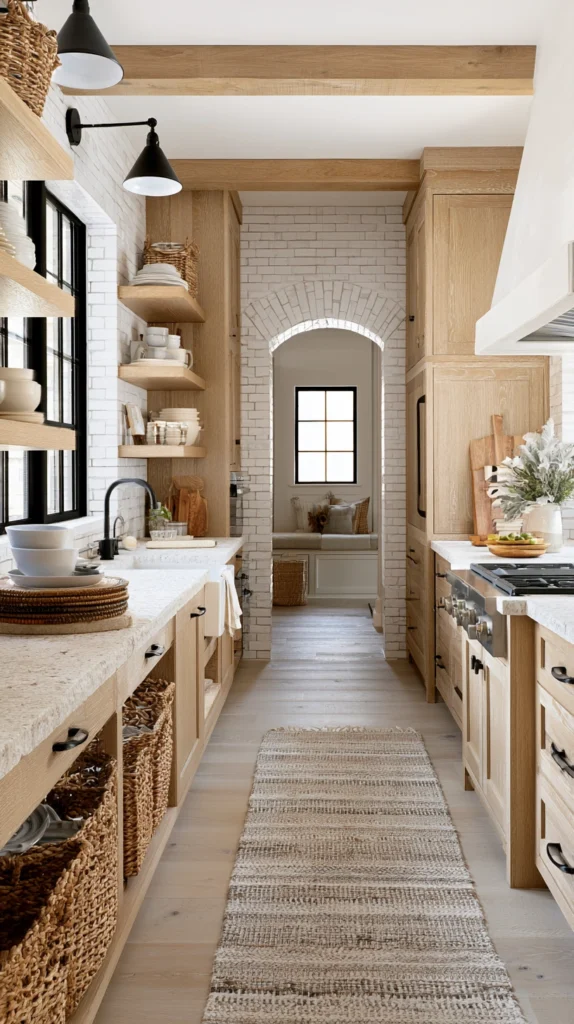
Budget: $20 – $80
Wicker and rattan baskets used for kitchen storage — for fruit on the worksurface, for bread in a lined basket, for root vegetables under the counter, and for dry goods on a shelf — bring the most natural and most warm material texture available into the kitchen in a form that is simultaneously decorative and genuinely useful. The farmhouse kitchen has always used natural woven vessels for kitchen storage and the modern version of this practice reads as both historically authentic and specifically beautiful in any kitchen that uses it consistently.
A quality wicker bread basket costs $12–$25. A rattan fruit bowl costs $10–$25. A large wicker storage basket for vegetables costs $15–$40. A matching set of three baskets in graduated sizes for a shelf display costs $30–$80 total. Use natural unbleached wicker or rattan rather than painted or processed alternatives — the warm honey tone of undyed natural material suits the farmhouse kitchen palette and ages more beautifully than any coloured or processed finish applied to the same woven structure.
Decor tip: Line the bread basket with a clean linen cloth — undyed or white — before placing bread within it. The lined basket looks deliberately prepared for its function rather than casually pressed into service, and the linen lining prevents crumb scatter on the shelf or worksurface beneath the basket while also keeping the bread from direct contact with the wicker surface. It is the small habitual detail — the lined basket, the ironed cloth — that most clearly communicates the farmhouse kitchen’s quality of daily domestic attention.
7. A Chalkboard Wall or Panel
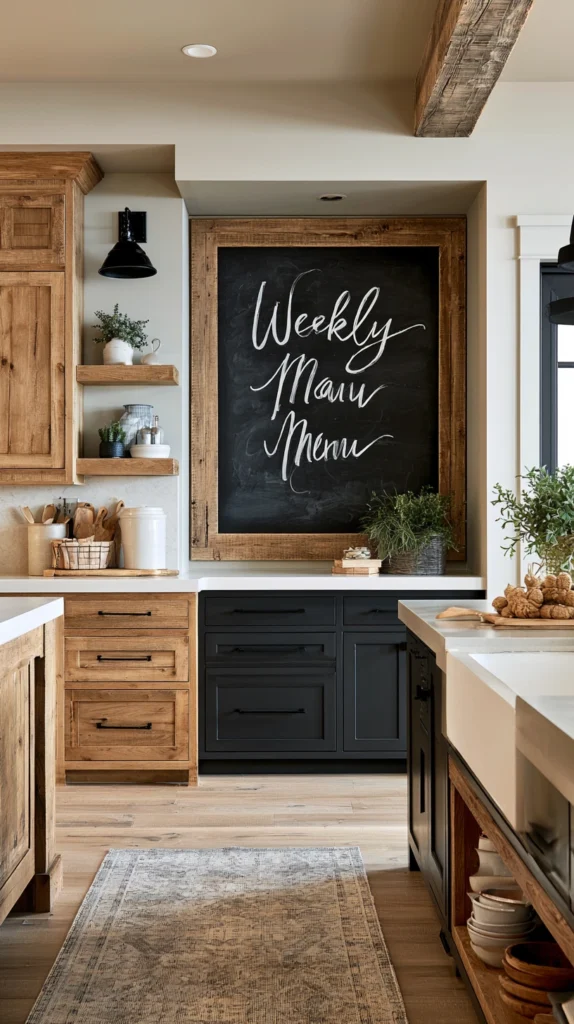
Budget: $15 – $60
A chalkboard surface — a framed panel painted with chalkboard paint, or a section of wall painted in chalkboard paint — provides the farmhouse kitchen’s most practical and most characterful functional surface. A chalkboard used for the weekly menu, the shopping list, a child’s drawing, a seasonal quotation, or a recipe in progress communicates that the kitchen is actively used and actively inhabited — which is the quality that the farmhouse kitchen aesthetic is most fundamentally built on.
Chalkboard paint costs $10–$20 per tin and covers approximately 5 square metres — sufficient for a generous kitchen panel. A timber frame for the chalkboard panel costs $15–$40 in materials. A section of kitchen wall painted with chalkboard paint costs only the paint — the most affordable and most immediately impactful farmhouse kitchen feature on this list. Condition the chalkboard before first use by rubbing chalk over the entire surface and wiping off — this prevents ghost marks from the first writing from remaining visible after erasing.
Decor tip: Write on the chalkboard in a consistent hand rather than mixing different handwriting styles and chalk types within the same panel. A chalkboard panel written in a single consistent style — all capitals, all in white chalk, at a consistent size — reads as intentionally maintained. A panel where different household members have written in different styles with different chalk colours reads as a shared message board rather than a farmhouse kitchen feature. Both are valid — but only the consistent style produces the decorative quality that makes the chalkboard a genuine design element rather than simply a functional surface.
8. A Wooden Fruit Bowl With Seasonal Contents
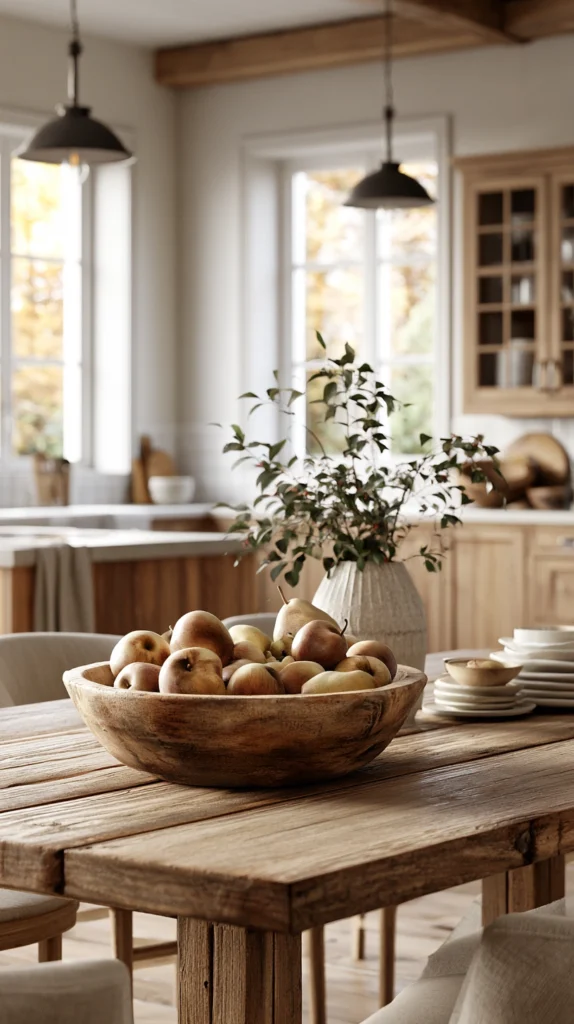
Budget: $20 – $60
A large, generous wooden bowl on the kitchen table or worksurface — filled with seasonal fruit, with lemons and limes, with pine cones and dried seed heads in winter, or with a simple collection of smooth stones — is the farmhouse kitchen’s most immediately accessible and most seasonally responsive decor element. The bowl communicates that the kitchen is connected to what is growing, what is available, and what is in season — which is the most fundamental value of the farmhouse kitchen tradition expressed in its simplest daily form.
A turned wooden bowl in oak, walnut, or olive wood costs $20–$60 from a woodturner or a quality homeware retailer. A hand-carved wooden bowl from a market or a craft fair costs $15–$50. The bowl should be generous in scale — 30–40 cm diameter at minimum — so that its contents read as abundant rather than depleted regardless of how many pieces of fruit it contains. A too-small bowl always looks underfilled. A generous bowl always looks full enough regardless of whether it contains three or twelve pieces of fruit.
Decor tip: Change the bowl’s contents with the season rather than maintaining a permanent mixed fruit display year-round. A bowl of summer berries in June, of apples and pears in September, of citrus fruits in January, and of dried botanicals in February communicates that the kitchen is genuinely connected to seasonal rhythms in a way that a permanent display of imported tropical fruit at any time of year does not. The seasonal change is the farmhouse kitchen detail that is most directly and most affordably expressed through the single object of the wooden fruit bowl.
9. Copper Pots and Pans on Display
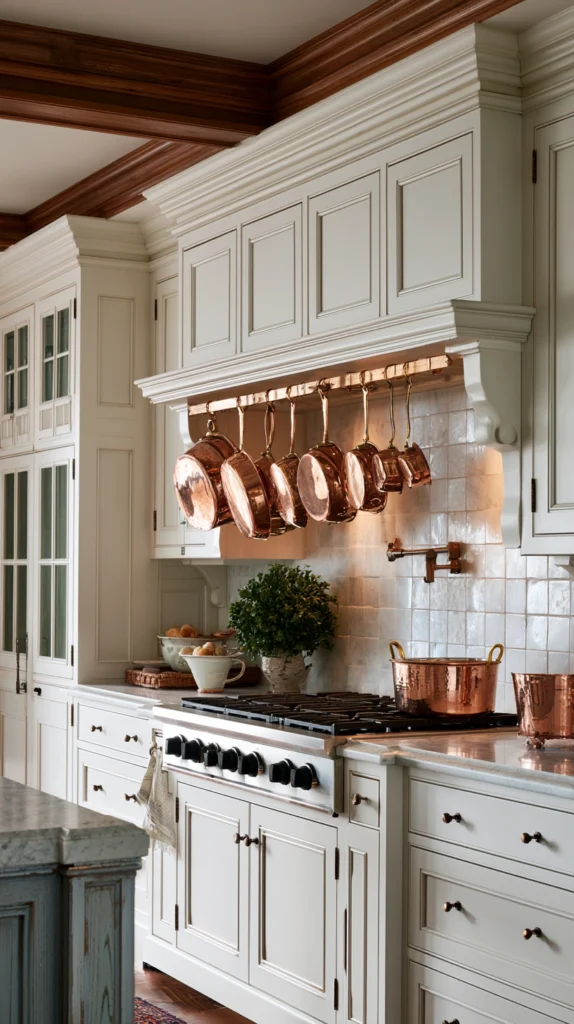
Budget: $40 – $200
Copper pots and pans displayed on a wall-mounted rail, on open shelves, or hung from ceiling hooks above the cooking area bring the farmhouse kitchen’s most materially luxurious and most visually warm surface material into a position of full visibility. Copper in a kitchen catches every light source — morning sun, afternoon warmth, evening lamp — and provides a depth and warmth of reflected light that no other kitchen material approaches. A single copper pan on a wall hook communicates more farmhouse character than any amount of painted tongue-and-groove on the same wall.
A copper sauté pan costs $40–$100. A copper stockpot runs $60–$150. Reclaimed or secondhand copper pans from antique markets cost $15–$60 each — the age and use marks on genuine vintage copper are not defects to be polished away but the surface evidence of a working kitchen history that makes each piece more beautiful in its display position. A simple S-hook on a rail costs $1–$3 and hangs any pan securely from a kitchen rail at the height most appropriate for both safety and visual impact.
Decor tip: Polish copper pans before display but allow a natural light patina to develop over the following weeks rather than maintaining a high shine through constant repolishing. The slightly mellowed, warmer surface of naturally patinated copper is more beautiful in a farmhouse kitchen context than the mirror-bright surface of freshly polished copper — the latter reads as a display object being maintained for appearance, while the former reads as a working pan that is also genuinely beautiful. The distinction is the difference between a polished trophy and a loved tool.
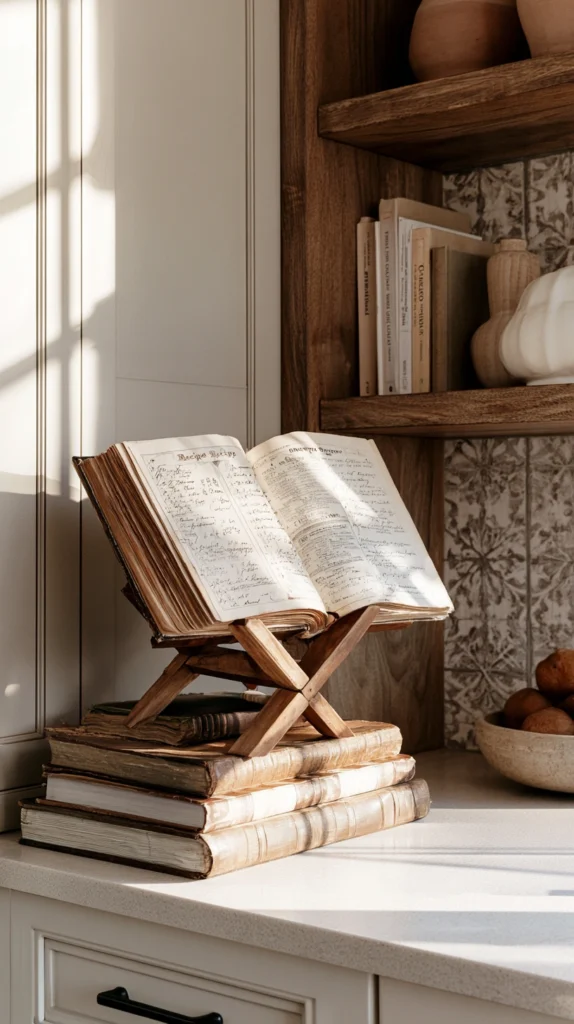
10. Vintage Recipe Books Displayed on a Stand
Budget: $10 – $50
A collection of three or four vintage cookbooks displayed upright on a small timber cookbook stand — or propped open at a well-used page on a recipe book holder beside the cooking area — adds the literary and culinary history of the kitchen tradition to the farmhouse kitchen’s visual character. Old cookbooks — their worn spines, food-stained pages, and handwritten notes in the margins — are the documents of a kitchen’s life and their display communicates a relationship with cooking as a serious and sustaining daily practice rather than an incidental domestic function.
Vintage cookbooks from charity shops, car boot sales, and secondhand bookshops cost $1–$8 each. A small timber cookbook stand costs $12–$30. A display of four vintage cookbooks on a stand costs $16–$62 total and creates a kitchen surface detail of genuine warmth and specific literary interest at the most affordable possible cost. Choose cookbooks whose spine design suits the farmhouse kitchen’s colour palette — old orange and cream Penguin cookbooks, faded linen-covered Victorian household management manuals, or well-worn mid-century edition Larousse Gastronomiques all suit the farmhouse kitchen’s material and tonal vocabulary.
Decor tip: Prop one cookbook open at a seasonal recipe — a pudding in winter, a salad in summer, a preserve in autumn — as an active display rather than a purely decorative one. An open cookbook at a specific page communicates that the kitchen is being actively used for cooking from serious culinary sources rather than simply assembling a display of vintage objects. The functional quality of the open cookbook is the farmhouse kitchen detail most directly and most honestly connected to the tradition of genuine cooking that the whole aesthetic is designed to celebrate.
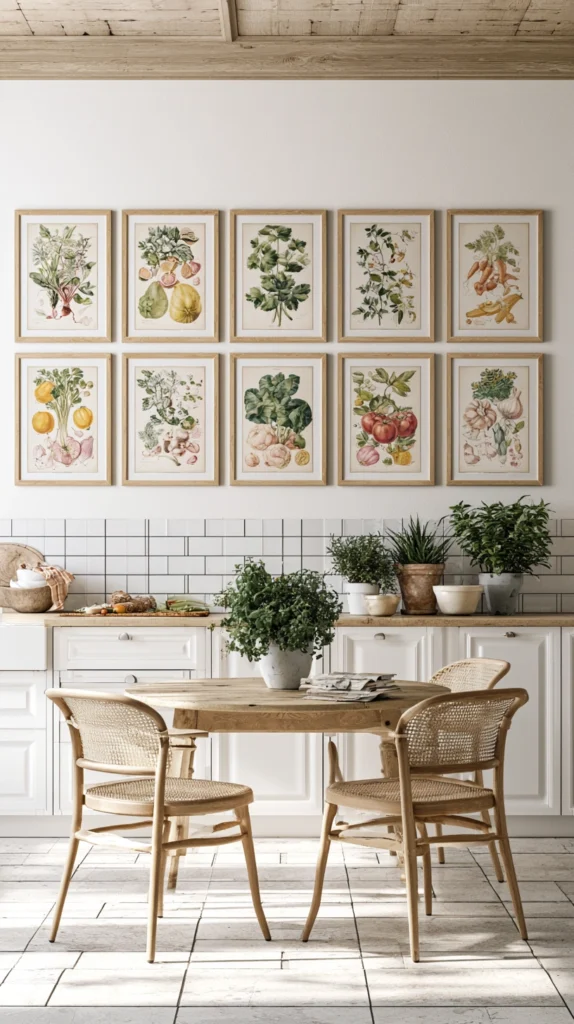
11. Botanical Prints and Botanical Wall Art
Budget: $20 – $100
A grouping of botanical prints — vegetables, herbs, or fruit illustrated in the tradition of Victorian natural history illustration — hung on the kitchen wall creates a specific connection between the kitchen as a space and the garden and landscape as the source of its ingredients. The botanical print is the farmhouse kitchen’s most intellectually appropriate wall art because it pictures the specific plants and foods that the kitchen exists to prepare, giving the kitchen wall a thematic coherence that no other subject of wall art provides with the same directness.
Reproduction Victorian botanical prints — tomatoes, beans, herbs, or seed packets — cost $5–$20 each as reproduction prints or $2–$8 each as downloadable digital files printed at a local print shop. Simple timber or cream frames cost $8–$20 each. A grouping of four vegetable or herb prints in matching frames costs $50–$150 in total for a kitchen wall arrangement of genuine charm and specific farmhouse character. Position above the preparation area or beside the pantry entrance — the positions where the botanical subjects are most directly connected to the kitchen activities happening beneath and around them.
Decor tip: Choose botanical prints specifically of the plants grown in the garden or regularly used in the kitchen — tomatoes if tomatoes are grown, herbs if a herb garden is maintained, fruit if the kitchen makes jam. The connection between the pictured plant and the actual growing and cooking practice of the household gives the botanical print display a personal specificity that a generic collection of whichever botanical prints were most readily available at the time of purchase does not possess.
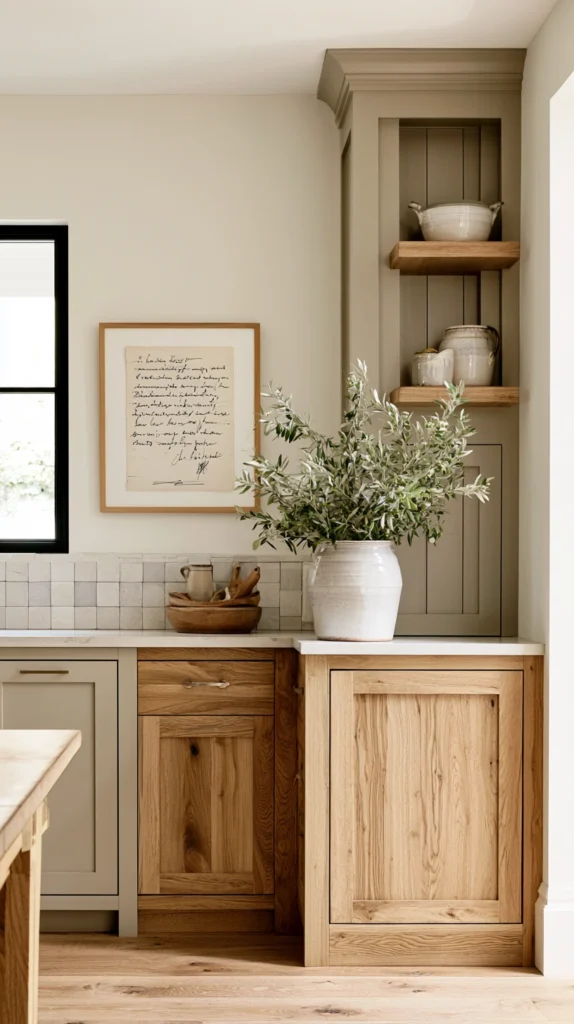
12. A Handwritten Recipe Display
Budget: $5 – $30
A handwritten recipe — grandmother’s scone recipe, the family pasta sauce, a favourite preserve — displayed in a simple frame on the kitchen wall is the most personal and most specifically irreplaceable farmhouse kitchen decor element on this list. No catalogue can supply it, no retailer can sell it, and no other household can possess an identical version of it. A recipe written in a familiar hand and displayed where it is seen daily communicates the continuity of domestic cooking traditions across generations in a form that is simultaneously decorative, functional, and genuinely emotional in its significance.
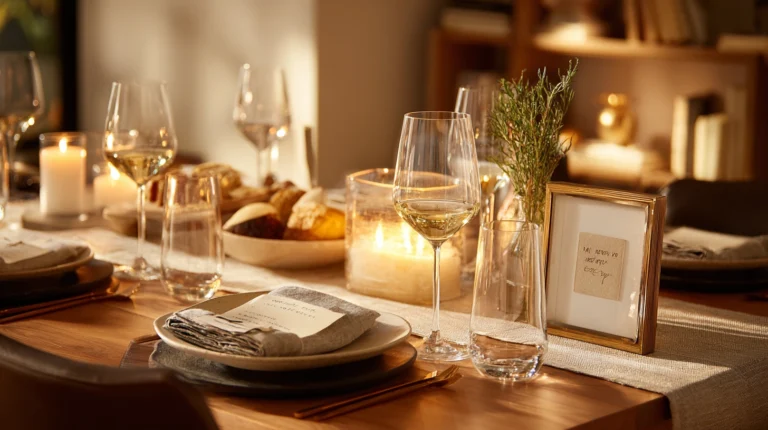
A handwritten recipe on good quality paper costs nothing beyond the paper ($1–$3 per sheet) and the time to write it carefully. A simple frame costs $8–$25. The total display cost is $9–$28 for the kitchen’s most specifically personal and most specifically farmhouse decor element. If the original handwritten recipe is on a stained card or a fragile piece of paper, photograph it and have the photograph printed on quality card stock before framing — this preserves the original while providing a display-quality reproduction that can be framed without risk to the irreplaceable original document.
Decor tip: Write the recipe in a genuinely careful hand rather than rushing through it in the style of everyday handwriting. A handwritten recipe that has been written slowly, with care for the letterforms and the spacing, reads as something that was made for display as well as for use. The same recipe written quickly in everyday handwriting reads as a functional record rather than a designed display piece — and the quality of the handwriting is the specific detail that determines whether the framed recipe reads as farmhouse decor of genuine quality or as a note that has been put in a frame.
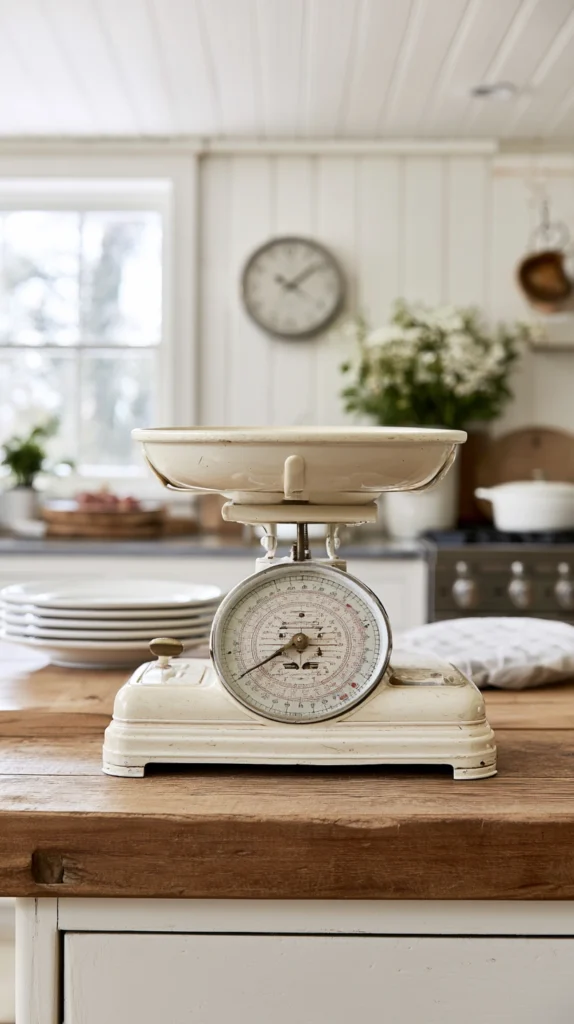
13. A Vintage Scale as a Display Object
Budget: $20 – $100
A vintage kitchen scale — the classic brass-pan balance scale with a set of graduated weights, or a dial scale in cream-painted cast iron — used as both a functional kitchen tool and a display object creates one of the most characterful and most specifically period-authentic farmhouse kitchen decor elements available from any secondhand or antique source. The balance scale is the kitchen’s most architecturally beautiful functional object and its display on an open shelf or the kitchen worksurface adds a sculptural quality that no purpose-made decorative object provides at the same cost or with the same authenticity.
A vintage brass kitchen balance scale with weights costs $30–$80 from antique markets. A vintage cream dial scale runs $20–$60. A reproduction Victorian balance scale costs $40–$100 new. Position on the kitchen worksurface beside the preparation area or on the open shelf most directly visible from the kitchen’s main entry point. Use it for actual weighing when baking or preserving — the farmhouse kitchen’s most important principle is that displayed objects should be genuinely used rather than purely decorative, and a scale that is used for actual baking is always more beautiful in its farmhouse context than one that is displayed unused.
Decor tip: Display a small arrangement of seasonal kitchen objects beside or on the scale platform — a few walnuts in autumn, a small stack of sugar cubes, three figs, or a small bunch of rosemary — that change with the seasons and the kitchen’s cooking activities. The scale as a display surface for small, beautiful food objects is the most specifically farmhouse kitchen use of this already character-rich kitchen tool, and the small arrangements change the object from a static display to a seasonal, active presence in the kitchen’s daily visual life.
The farmhouse kitchen decor idea that works best is always the one that comes from genuine use rather than from a desire to create an aesthetic effect. The dried herbs are there because herbs were grown and are being preserved. The copper pan is on the hook because it is used weekly. The handwritten recipe is framed because it is irreplaceable. The farmhouse kitchen that is genuinely lived in and genuinely cooked in always looks better than the one that has been decorated to look as though it is — because the authenticity of genuine use creates a quality that no amount of careful styling can fully replicate.
Choose the two or three ideas from this list that are most directly connected to how your kitchen is actually used — the food it actually cooks, the traditions it actually maintains, and the objects it actually uses daily. Style those three things well, place them in the right positions, and let the rest of the kitchen’s character develop from the genuine cooking and genuine inhabitation that follows. The farmhouse kitchen is always made from the inside out.