How to Style a Halloween Mantel Without It Looking Tacky
A mantel is one of the highest-visibility surfaces in a home, which makes it one of the riskiest places to get Halloween styling wrong. Every plastic skeleton, purple LED strand, and stretched-cobweb bag added without much thought stacks up quickly on a mantel specifically, since it’s viewed constantly from across the room rather than glanced at in passing the way a porch or a single shelf might be.
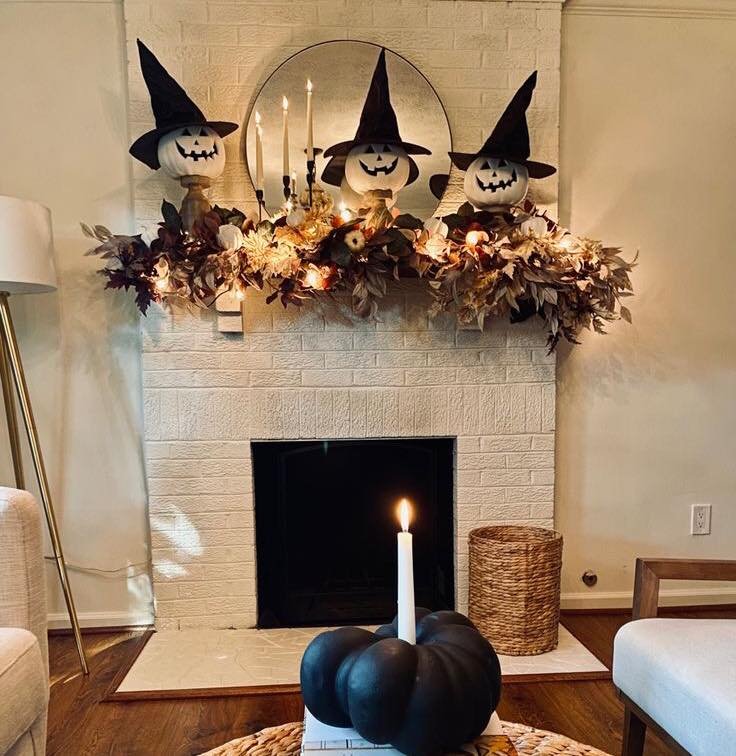
The gap between a tacky Halloween mantel and a genuinely stylish one usually isn’t about how much Halloween decor gets used — it’s about material quality, colour restraint, and the same editing discipline that governs any other well-styled surface in the home. A few well-chosen pieces, in a considered palette, consistently outperform a mantel crowded with everything the seasonal aisle had to offer.
Here’s how to style a Halloween mantel that reads as genuinely elegant and atmospheric, not costume-store seasonal.
Why Halloween Mantels Often Look Tacky Instead of Stylish
The palette-chaos problem:
Without colour restraint:
- Orange, purple, green, and black all used simultaneously, often in their brightest, most saturated forms
- The result: reads as a seasonal aisle display rather than a considered styling choice, regardless of how “on theme” every individual piece is
With colour restraint:
- A tight palette of two or three tones — black, cream, and a single accent like deep burgundy or aged gold
- The result: reads as intentional and elevated, even while remaining clearly, unmistakably Halloween
The material-quality problem:
- Thin plastic skeletons, stretchy synthetic cobwebs, and glowing plastic pumpkins
- The result: cheap materials read as cheap regardless of arrangement, undercutting even a well-composed layout
The over-crowding problem:
- Every seasonal object owned placed on the mantel simultaneously, with no negative space anywhere
- The result: the mantel reads as cluttered and overwhelming rather than atmospheric, the same problem that undermines any overstuffed styled surface
The Five Tasteful Halloween Mantel Principles
Before styling anything, these five principles keep a Halloween mantel reading elegant rather than costume-like:
A tight, considered colour palette:
- Two or three tones maximum, leaning toward black, cream, deep jewel tones, and aged metallics rather than bright orange and purple
- The single most important factor separating tasteful from tacky
One clear motif, not several competing ones:
- Skulls, or bats, or a botanical apothecary theme — pick one direction rather than combining several
- A mantel trying to be witchy, spooky, and cute all at once reads unfocused
Genuine material quality:
- Real dried botanicals, quality candles, actual antlers or bone-look resin rather than thin plastic
- Material quality does more for the “elegant” half of this equation than any single object choice
Height variation and negative space:
- Varied candle and object heights, with visible mantel surface left uncovered
- The same principle that governs any well-composed styled surface applies directly here
Restraint with any single high-risk element:
- Cobwebs, fog, and glowing effects used sparingly, if at all, rather than as the mantel’s dominant feature
- These specific elements are the fastest route to a costume-store look when overused
1. Limit the Palette to Two or Three Tones
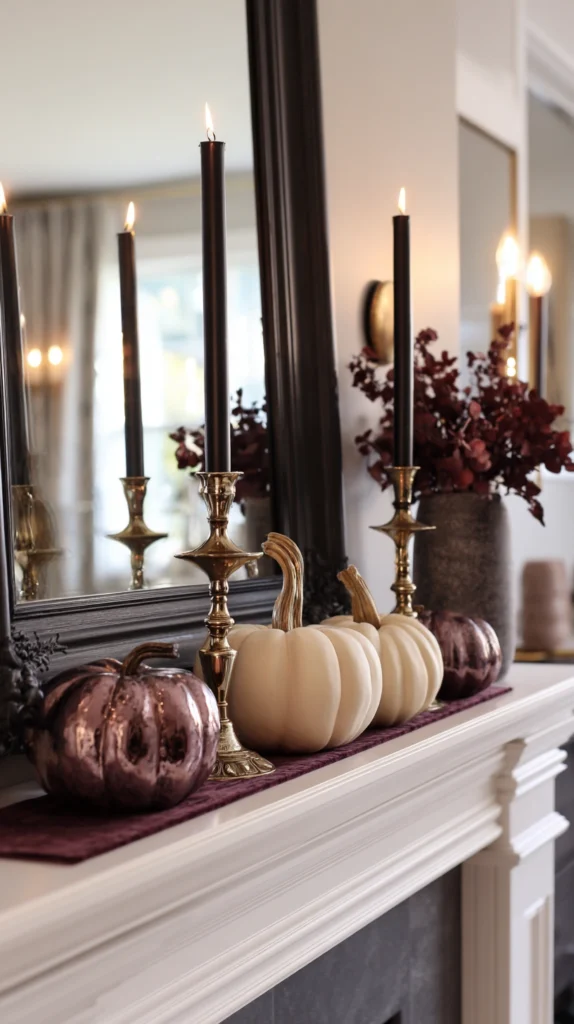
Choose black as the dominant colour, paired with cream or aged gold, and one deep accent — burgundy, forest green, or deep plum — rather than the full bright orange-purple-green Halloween spectrum.
Why this single decision does more than any other
Colour restraint is the fastest, most reliable way to shift a mantel from “seasonal aisle” to “considered styling,” and it costs nothing extra to implement — it’s a matter of what gets chosen and what gets left out, not additional spending.
Application
- Black candles, black-framed elements, and dark botanical accents form the base
- One warm metallic (aged brass or gold) for definition, and a single jewel-toned accent for depth
2. Choose One Motif and Commit to It
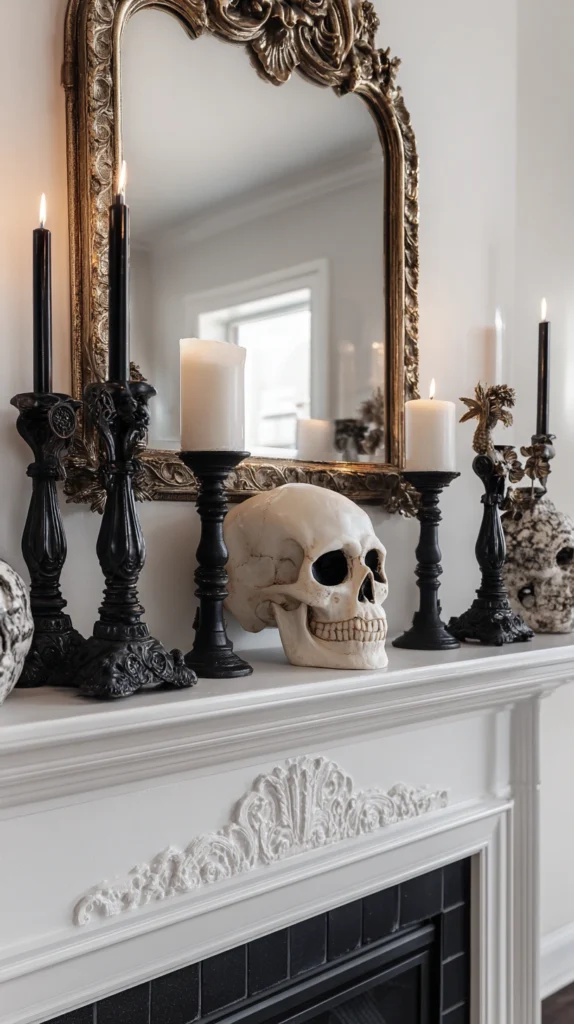
Decide on a single Halloween reference — skulls and bones, bats, witches and apothecary, or classic jack-o’-lanterns — and build the entire mantel around that one theme rather than mixing several.
Why one motif reads more sophisticated than several combined
A mantel featuring skulls, bats, spiders, and pumpkins simultaneously reads as an inventory of everything Halloween-related rather than a designed vignette. Committing to one reference point, the way any well-curated display commits to a single idea, immediately reads more intentional.
Selection
- Skulls and bones suit a gothic, apothecary-leaning aesthetic
- Bats suit a more graphic, atmospheric approach
- Quality pumpkins and gourds suit a more classical, harvest-adjacent Halloween styling
3. Layer Candle Heights for Genuine Drama
A cluster of taper and pillar candles at varying heights — from 6 to 20 inches — rather than a single uniform row, creating the visual hierarchy that makes any styled surface read considered.
Why height variation matters especially on a mantel
A mantel is a long, horizontal surface, and without deliberate height variation, everything placed on it reads as one flat, uniform line. Candles at genuinely different heights break that flatness and give the eye a path to follow across the display.
Assembly
- Group candles at three or four different heights, clustered rather than spaced in an even row
- Black or deep-toned candles, consistent with the limited palette established in step one
4. Choose Real or High-Quality Faux Pumpkins Over Plastic
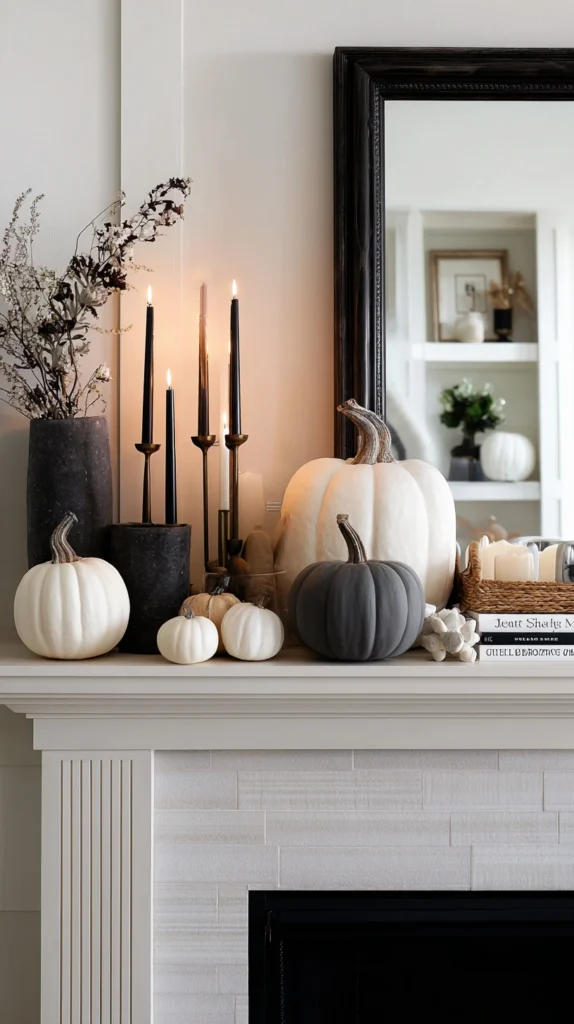
If pumpkins are part of the display, use real pumpkins or high-quality faux versions with a genuine matte, textured finish, rather than glossy, thin plastic pumpkins with painted-on faces.
Why pumpkin quality specifically makes or breaks a mantel display
Pumpkins are one of the most common Halloween mantel elements, and cheap plastic versions are also one of the fastest ways to undercut an otherwise well-composed display. Real or convincingly textured faux pumpkins, in white, black, or deep charcoal rather than bright orange, fit the tasteful, restrained palette far more naturally.
Selection
- White or black-painted real pumpkins, or unpainted natural pumpkins in a muted variety
- High-quality faux pumpkins with a genuine matte, slightly textured surface if longevity through the season matters more than real pumpkins allow
5. Add Black-and-White or Vintage-Style Portraiture
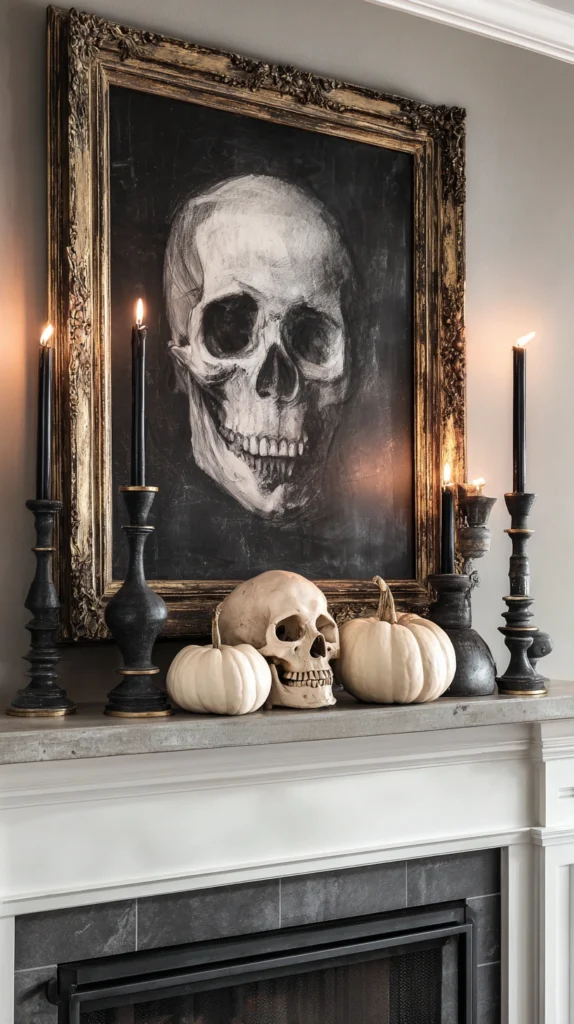
A framed vintage-style portrait or black-and-white photograph, slightly eerie or simply antique in feeling, leaned or hung above the mantel as a focal point.
Why this detail adds atmosphere without leaning into costume territory
A vintage or antique-style portrait carries an inherently haunting, slightly mysterious quality on its own, without needing any overt Halloween imagery attached to it, offering genuine atmosphere through suggestion rather than literal decoration.
Selection and placement
- A genuinely old or vintage-style portrait, sourced secondhand or reproduced from public domain imagery
- Positioned as the mantel’s central focal point, with the candle and object groupings arranged around it
6. Use Genuinely Elegant Materials
Dried florals in dark, muted tones, black feathers, aged velvet ribbon, and antique-look metal objects, rather than synthetic cobwebs and glow-in-the-dark plastic.
Why material choice separates elegant from costume-like more than any single object
The same skull or bat motif reads completely differently depending on whether it’s rendered in thin painted plastic or in a more substantial resin, aged metal, or ceramic finish. Upgrading the material of any Halloween object, even a common one, does significant work toward the tasteful end of the spectrum.
Selection
- Dried black-toned or deep burgundy florals rather than fresh, brightly coloured ones
- Resin or ceramic skull and bone-motif objects with a genuine textured, aged finish rather than smooth painted plastic
7. Use Cobwebs Sparingly, If at All
If cobwebs are used, a small, realistic amount tucked into a corner or draped subtly over a single object, rather than stretched across the entire mantel surface.
Why this is one of the highest-risk elements to overuse
Synthetic stretch cobwebs, applied liberally across a whole mantel, are one of the most immediately recognizable signals of costume-store Halloween decor. Used minimally — a small amount in one corner, or omitted entirely — the mantel avoids this specific and very common pitfall.
Application
- A small amount, tucked around the base of a candle cluster or draped over a single object rather than spread across the full width
- Consider omitting cobwebs entirely if the rest of the mantel already carries sufficient atmosphere through colour and material choice
8. Light With Warm Amber, Not Orange or Purple LED
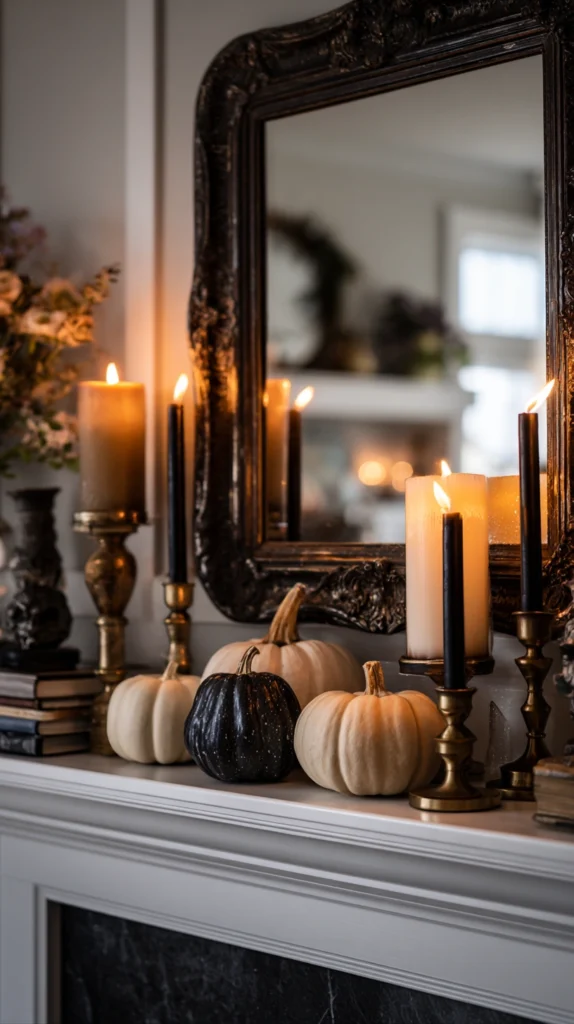
Warm-toned candlelight and 2700K bulbs, rather than coloured LED lighting in bright orange or purple, which reads considerably more costume-like regardless of the objects it illuminates.
Why light colour affects the whole mantel’s perceived tone
Coloured LED lighting casts an artificial, often garish tone across everything nearby, undermining even a well-chosen, tasteful object selection. Warm white or genuine candlelight brings out the depth in black and jewel-toned elements the way it does in any other room, rather than flattening everything into a single artificial colour cast.
Application
- Real or flameless candles in warm amber tones, avoiding any coloured LED string lights or bulbs
- If additional ambient lighting is wanted, a single warm-toned lamp nearby rather than coloured mantel-specific lighting
9. Incorporate a Mirror or Reflective Surface
A dark-framed or antiqued mirror, positioned above or beside the mantel display, adding depth and doubling the candlelight’s effect.
Why a mirror suits this specific styling moment
A mirror both reflects and amplifies the warm candlelight established in the previous step, while adding a genuine sense of mystery and depth — a mirror above a candlelit Halloween mantel carries an inherently atmospheric quality without requiring any additional overtly spooky object.
Selection and placement
- An ornate or antiqued dark-framed mirror, consistent with the mantel’s overall material and colour choices
- Positioned to reflect the candle cluster directly, amplifying the warm light throughout the display
10. Drape Fabric With Restraint
A single length of black or deep-toned velvet draped along the mantel’s edge, or a small amount of cheesecloth used deliberately rather than stretched everywhere, adding texture without tipping into costume territory.
Why fabric draping needs the same restraint as cobwebs
Fabric, used well, adds genuine richness and softness to an otherwise hard, flat mantel surface. Used excessively — draped everywhere, in cheap or shiny synthetic fabric — it reads the same way overused cobwebs do.
Application
- A single runner of quality velvet or heavy cotton along the mantel’s length, rather than multiple layers of different fabrics
- If using cheesecloth for a ghostly texture, apply it to one specific object (a single vase or candle base) rather than draping it across the entire surface
11. Add One Natural Curiosity Object
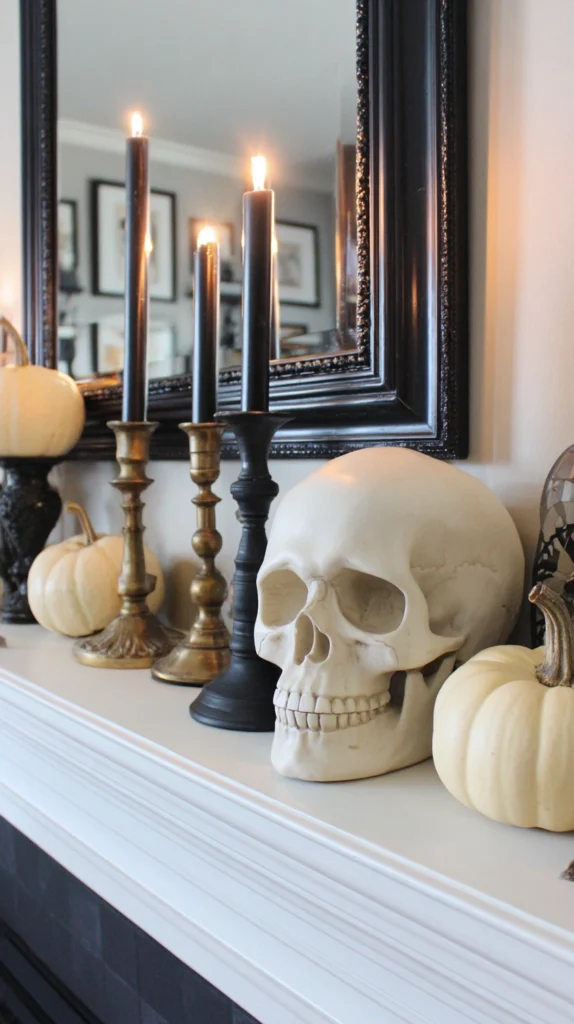
A single genuine or high-quality resin skull, a set of antlers, or a cluster of natural crystals, functioning as the mantel’s one clear “conversation piece” object.
Why one confident object outperforms several smaller ones
Consistent with the broader principle that governs any well-styled surface, one larger, more substantial object provides a focal point the smaller candles and botanicals can be arranged around, rather than a mantel full of many small, competing Halloween objects.
Selection
- A high-quality resin or ceramic skull, rather than a painted plastic version
- Antlers or a substantial mineral specimen, if leaning toward a more naturalist apothecary-adjacent motif rather than a directly skull-and-bones theme
12. Leave Genuine Negative Space
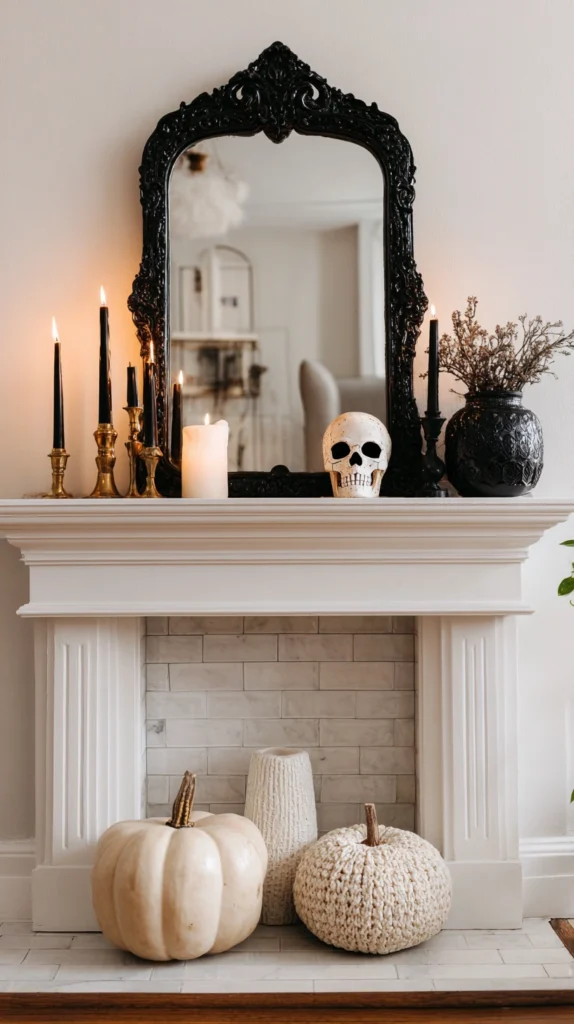
At least a quarter to a third of the mantel’s total surface left visibly bare, rather than covering every available inch with an object.
Why editing matters as much as any single styling choice
Consistent with the restraint principle that governs any well-composed display, a mantel with visible bare surface between groupings reads as curated and intentional, while one packed edge-to-edge reads as cluttered regardless of how nice the individual objects are.
Application
- After arranging the candles, portrait, and curiosity object, resist adding further items simply because surface space remains
- Step back and view the mantel from across the room; if it reads busy rather than atmospheric, remove rather than add
The Complete Tasteful Halloween Mantel
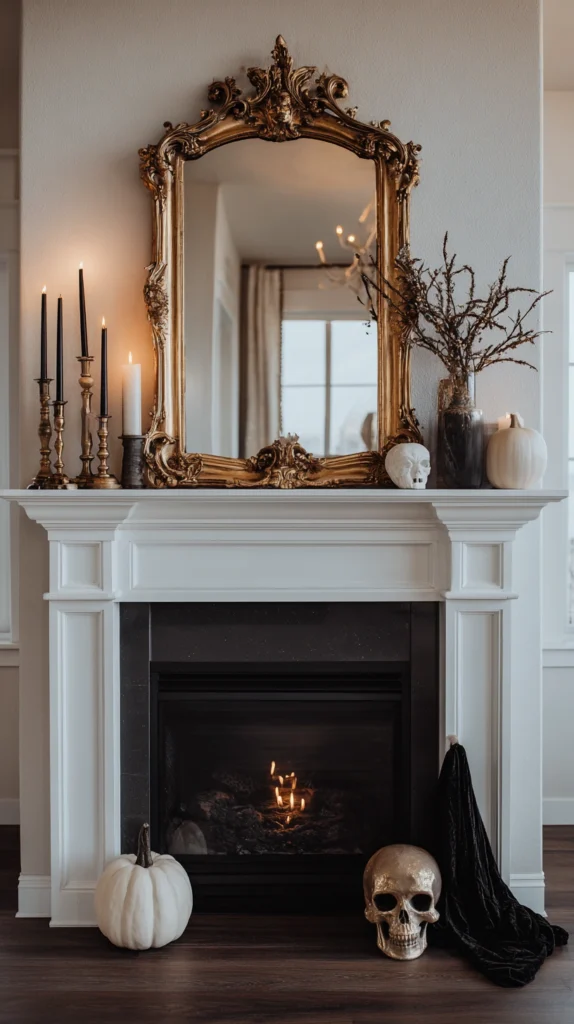
A mantel styled with every principle above applied together — genuinely elegant, atmospheric, and unmistakably Halloween, without reading as a costume store display.
What the finished mantel looks like
The mantel’s palette stays within black, cream, and one deep accent throughout. A single motif — skulls and bones, in this example — runs consistently across the candle holders, the one substantial resin skull, and the antique-framed portrait above. Candles cluster at varying heights, their warm light caught and doubled by the dark mirror behind them. A single length of velvet runs along the mantel’s edge, with a small, restrained touch of cobweb tucked at one corner rather than draped throughout. A third of the surface stays visibly bare, giving the whole arrangement room to breathe.
Cost breakdown for a tasteful Halloween mantel
Assuming a starting point of a bare mantel:
- Candles (varied heights, 6–8 total): $30–55
- Quality resin skull or curiosity object: $25–55
- Vintage-style portrait: $20–40
- Dried florals: $12–22
- Velvet runner: $20–35
- Antiqued mirror, if not already owned: $60–150
Total: $107–357 (excluding mirror if already owned: $47–207)
The Question Before Styling Any Halloween Mantel
Before buying any Halloween decor:
Would this object look reasonable on the mantel in July, minus its seasonal context?
If the answer is: yes, it’s a quality object that happens to suit a spooky theme — a resin skull, a dark-framed mirror, a substantial candle — it’s a safe addition.
If the answer is: no, it only works because it’s Halloween-specific and disposable — a glowing plastic decoration, a stretchy cobweb bag — consider whether it’s essential or whether the mantel would read more elegant without it.
This single test filters out most of the objects most likely to push a Halloween mantel toward costume-store territory, since genuinely well-made objects tend to hold up as design choices independent of the season, while cheap seasonal-only items rarely do.
Getting Started This Weekend
The immediate tasteful Halloween mantel step:
Commit to one motif and one two-to-three-tone palette before buying anything.
The single decision that prevents the most common styling mistakes on this entire list.
Swap any plastic pumpkins or skulls for real or higher-quality versions.
The material upgrade that does more than almost any other individual change.
Cluster candles at varied heights and light them with warm bulbs or real flame.
Establishes the mantel’s atmosphere before any further object is added.
Step back after arranging everything and remove at least one item.
Confirms the display has enough negative space to read as curated rather than crowded.
The rest of the mantel: the elaboration of this weekend.
The palette: the beginning. The tasteful Halloween mantel: what a seasonal display becomes once it’s edited, restrained, and built from materials that would hold up as good design any time of year.