13 Hobbitcore Living Room Ideas for a Cottage-Core Feel
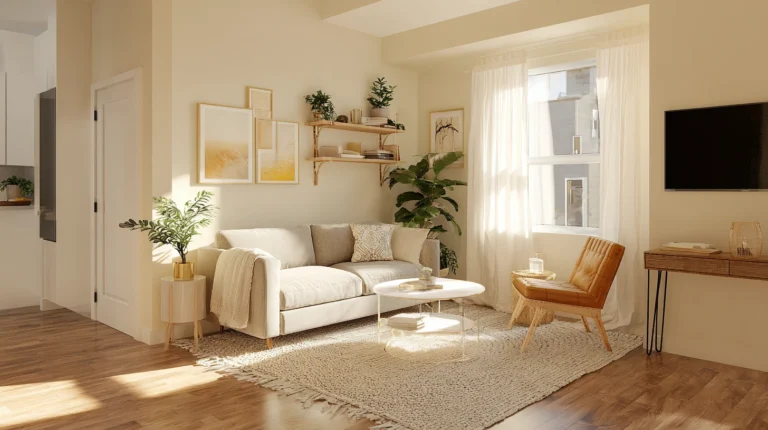
My living room looked like a furniture catalog page for six years. Straight lines, gray walls, matching everything, nothing handmade or curved anywhere.
Tried softening it with one round mirror. It looked like an accident in a room full of right angles. Did nothing.
Then I rebuilt the room around curves, low light, natural materials, and abundance instead of minimalism. Rounded doorways painted on, low warm lighting everywhere, plants spilling off every surface. A completely different world.
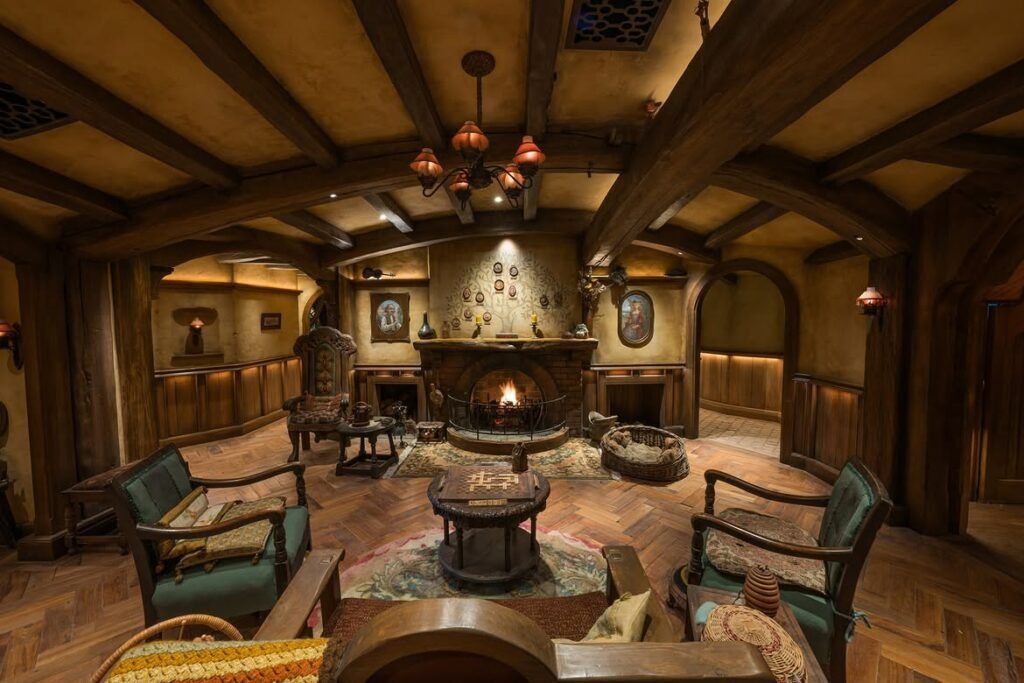
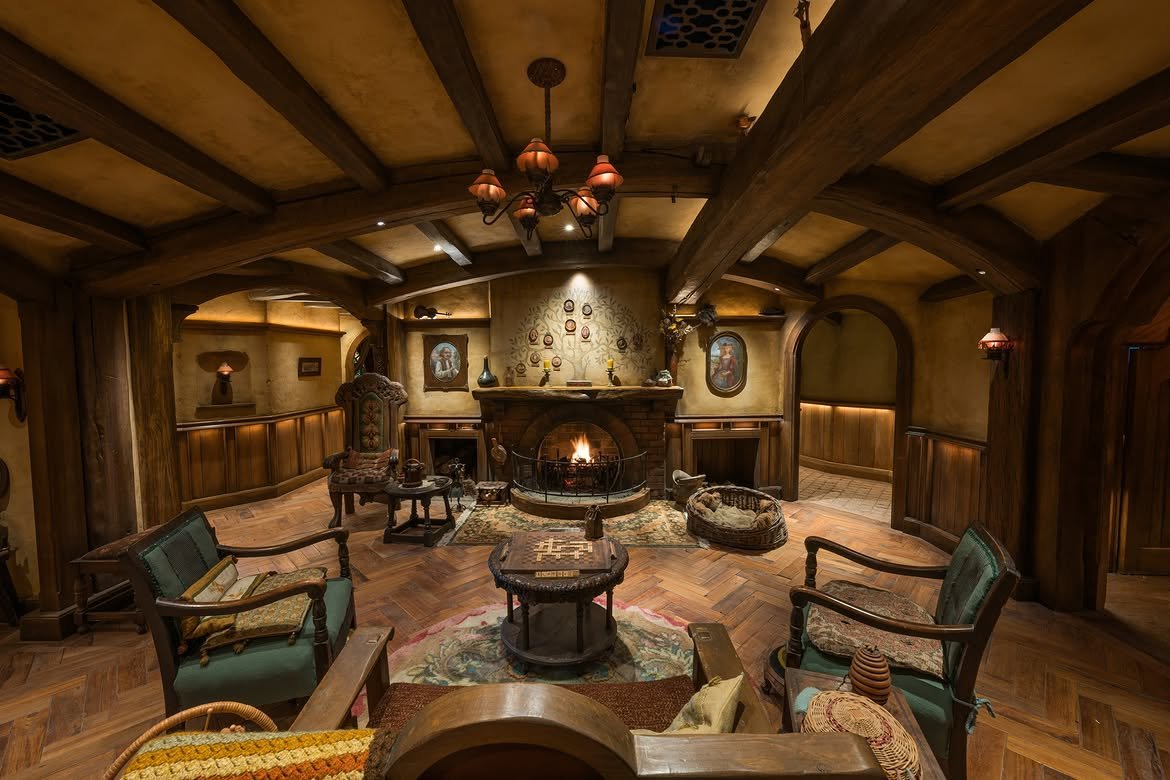
Now guests duck their heads jokingly when they walk in, even though the ceiling is normal height. The room feels like a burrow. That feeling is the entire goal.
Let me show you 13 hobbitcore ideas that turn a flat, modern living room into a warm, round, cottage-core burrow that feels like it grew there.
Why Modern Living Rooms Feel Like the Opposite of Hobbitcore
The straight-line problem:
What modern rooms have:
- Sharp corners everywhere
- Bright overhead lighting
- Minimal collected objects
- Cool or neutral color palettes
- Empty negative space treated as a virtue
What hobbitcore needs instead:
- Curves and arches wherever possible
- Low, warm, scattered light sources
- Abundant collected and layered objects
- Rich, earthy, saturated color
- Filled space treated as cozy not cluttered
The core philosophical difference:
Modern minimalism:
- Less is more
- Clean lines signal sophistication
- Negative space is valuable
- Function over ornament
Hobbitcore maximalism:
- More is cozy
- Curved lines signal warmth
- Filled space is valuable
- Ornament and function together
Why this matters before buying anything:
The mindset shift:
- Hobbitcore is not minimalism with brown furniture
- It rejects the entire modern design philosophy
- Every choice should ask “does this feel handmade and lived-in” not “does this look clean”
- Once this shift happens, every decision becomes easier
My revelation: Hobbitcore is not a color palette you apply to a modern room — it is an entirely different set of values about what makes a room good. Curves over corners, abundance over minimalism, warmth over brightness.
1. Curved Doorways and Arched Openings (The Defining Architectural Feature)
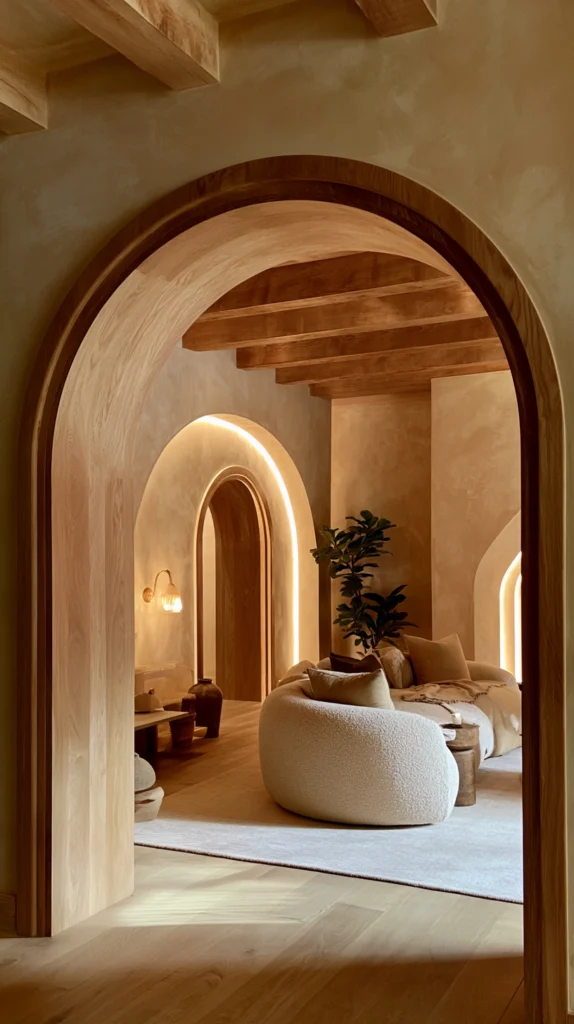
Round-topped doorways instead of square ones — the single most recognizable hobbitcore architectural element.
My doorway transformation:
What I had:
- Standard rectangular doorway into the living room
- Sharp 90-degree corners at the top
- Completely ordinary and forgettable
- Felt like every other house
Why arched doorways define the style:
The Tolkien reference:
- Hobbit holes are famously round-doored
- The architecture itself is the genre’s signature
- No other single change says “hobbitcore” as clearly
- Worth prioritizing above almost any other element
Real architectural arch (renovation level):
For permanent doorway changes:
- Hire a contractor to reshape the doorway opening
- Curved drywall corners (rounded bullnose corners, less dramatic but easier)
- Full arch cut (more dramatic, requires structural assessment)
- Cost: $300-1,500 depending on scope
The faux arch (renter and budget friendly):
Painted arch illusion:
- Paint an arch shape around an existing rectangular doorway
- Trompe l’oeil technique (painted shadow and highlight create the illusion)
- Most affordable hobbitcore architectural change
- Cost: $30-60 in paint and supplies
How to paint a faux arch:
- Measure and mark the arch shape with painter’s tape and string compass
- Paint the arch interior a contrasting or complementary color
- Add subtle shadow painting at the curve (creates dimension)
- Trim the edge with thin wood molding curved to match (optional, adds realism)
Arch trim addition (moderate effort):
Wood arch overlay:
- Flexible wood molding (bends to create the curve)
- Mounted over the existing rectangular doorway frame
- Creates a three-dimensional arch without structural changes
- Cost: $80-200 depending on doorway width
Curtain arch (zero permanence):
Fabric-created illusion:
- Curved curtain rod or flexible track
- Heavy fabric panel creating an arched drape over the doorway
- Removable and completely renter-safe
- Cost: $40-90
Color and finish for arches:
What works:
- Deep forest green arch with cream walls
- Warm terracotta arch in a neutral room
- Natural wood tone arch (if using wood overlay)
- Dark, rich color always more effective than pastel
Where else to add curves once the doorway is done:
Continuing the theme:
- Arched mirror to echo the doorway shape
- Curved bookshelf or rounded reading nook
- Round rugs instead of rectangular
- Arched window if any renovation budget remains
Cost:
- Faux painted arch: $30-60
- Wood arch overlay: $80-200
- Curtain arch: $40-90
- Real architectural arch (renovation): $300-1,500
- Total range: $30-1,500
My arched doorway result: The single change that made every other hobbitcore element make sense, guests notice it before anything else in the room, the faux painted version fooled three separate visitors into thinking it was structural.
Arched Doorway Tips
Start with the faux version:
Testing before committing:
- Paint the faux arch first (cheapest, fastest, reversible)
- Live with it for a month
- If it transforms the room as expected, consider the real structural version later
- Most people find the faux version sufficiently convincing and never upgrade
Repeat the shape, do not overdo the color:
Cohesion principle:
- The arch shape should repeat elsewhere (mirror, shelf, window)
- The arch color does not need to repeat everywhere
- Shape consistency matters more than color consistency for this element
2. Low, Warm, Layered Lighting (Never an Overhead Light Again)
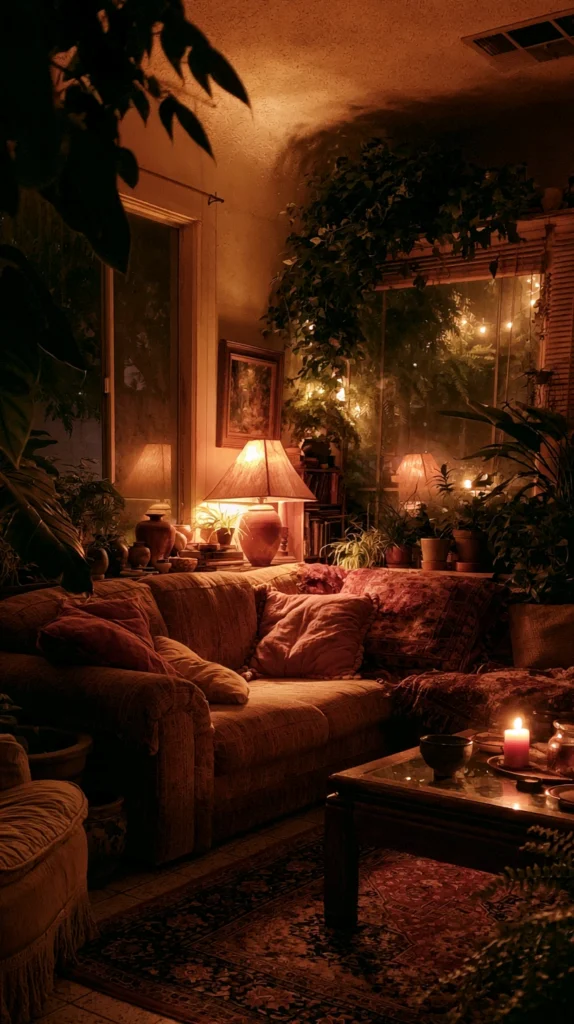
Multiple small warm light sources at low heights — the lighting philosophy that makes a room feel like a burrow.
My lighting before:
The problem:
- One bright overhead fixture
- Cool white bulbs throughout
- Flat, even, shadowless light
- The opposite of cozy, candlelit hobbit warmth
Why hobbitcore lighting is different:
The underground reference:
- Hobbit holes have no overhead electric lighting (candlelight and firelight only)
- Translating this means rejecting overhead fixtures entirely
- Multiple low sources instead of one high source
- Shadows and warm pools of light, not even illumination
The lighting layers:
Floor level:
- Mushroom lamps (literal mushroom-shaped lamp bases, widely available and on-theme)
- Small lanterns placed directly on the floor in corners
- Uplighting tucked behind furniture
Low table level:
- Small table lamps with fabric or paper shades
- Oil lamp style electric lamps (battery or plug-in)
- Candle clusters on low surfaces
Mid level:
- Wall-mounted sconces (plug-in, no electrician needed)
- Hanging lanterns at varied heights
- String lights tucked along shelving
Bulb selection (critical):
The warmest possible:
- 2200K bulbs if available (candlelight equivalent, warmer than standard “warm white”)
- 2700K as the maximum acceptable warmth level
- Never anything above 3000K
- Amber or vintage-style filament bulbs add visual warmth even when off
Mushroom lamps specifically:
Why they fit the aesthetic:
- Literal mushroom shape (cottage-core and woodland reference)
- Often made from glass or ceramic with a soft glow
- Available at most home goods stores currently (very on-trend)
- Cost: $25-60 each
Candle abundance:
Beyond electric lighting:
- Real candles in varied heights, grouped
- Lanterns with candles inside (protected flame)
- Beeswax candles specifically (natural, warm scent, authentic material)
- Group candles rather than scattering single ones
The “no overhead” commitment:
Practical execution:
- If an overhead fixture exists, put it on the lowest possible dimmer setting permanently
- Or replace the overhead bulb with a very low-wattage warm bulb, used rarely
- Rely on lamps and candles for actual daily lighting
- This single discipline does more for the aesthetic than almost any decor purchase
Cost:
- Three mushroom or low table lamps: $75-180
- Plug-in wall sconces (two): $60-120
- Candles and lanterns: $40-80
- Warm bulbs throughout: $25-40
- Total: $200-420
My layered lighting result: The room now looks the same whether the sun is up or down, nobody has seen the overhead light on in over a year, guests specifically comment that the lighting “feels different” without identifying why.
Hobbitcore Lighting Tips
Shadow is a feature:
Embracing darkness:
- Modern lighting tries to eliminate shadow
- Hobbitcore lighting creates and preserves shadow
- Dark corners are correct, not a lighting failure
- Resist the urge to “fix” every dim area with more light
Dimmer switches everywhere:
Control over intensity:
- Even warm bulbs can be too bright at full power
- Install simple plug-in dimmers ($10-15 each) on every lamp
- Run everything at 40-60% capacity most of the time
- Full brightness reserved only for active tasks like reading fine print
3. Abundant Greenery and Trailing Plants (The Burrow Grows Into the Landscape)
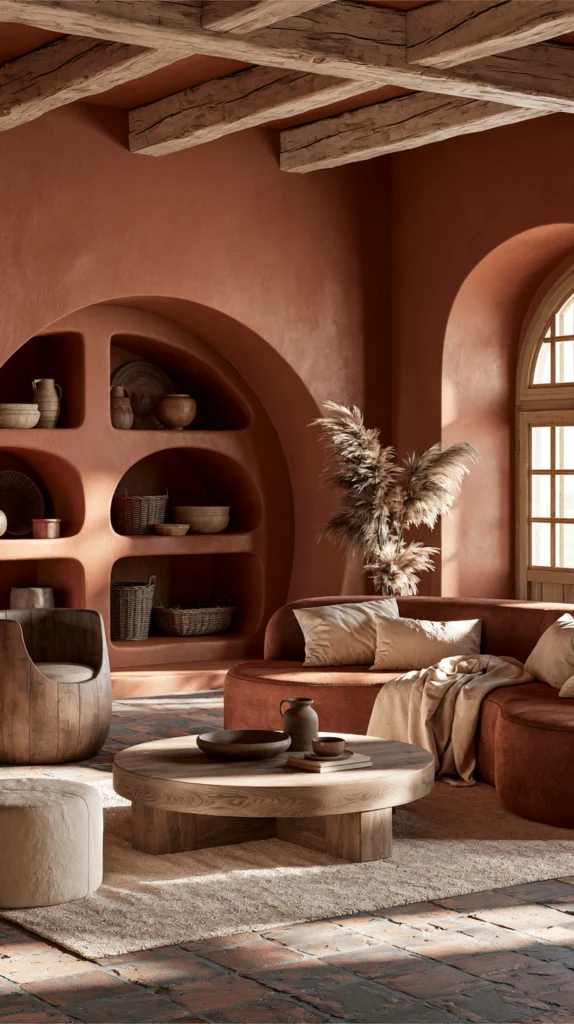
Plants spilling from every surface, climbing walls, and softening every hard edge — the living element that makes a room feel grown rather than built.
My sparse plant situation before:
What I had:
- Two small succulents on a windowsill
- The rest of the room entirely plant-free
- Hard surfaces with nothing softening them
- Felt built, not grown
Why abundance matters for this style:
The underground burrow concept:
- A hobbit hole is built into a hillside, surrounded by garden
- The interior should feel like nature has crept inside
- Sparse plant placement reads as decoration
- Abundant plant placement reads as habitat
Where plants go in a hobbitcore room:
Climbing and trailing:
- Pothos or philodendron trained up shelving or along a beam
- Trailing plants on top of bookshelves, cascading down
- Ivy (real or high-quality faux) along window frames
Clustered groupings:
Corner plant jungles:
- Three to five plants of varying heights grouped in every corner
- No single corner left bare
- Mixed pot materials (terracotta, ceramic, woven basket) for organic variation
Windowsill abundance:
Every windowsill filled:
- Small pots lined densely, not spaced sparsely
- Herbs (real, functional, fragrant) mixed with ornamental small plants
- Varied heights even within the small windowsill space
Best plants for hobbitcore specifically:
Woodland and cottage appropriate:
- Ferns (any variety, evokes forest floor)
- Ivy (climbing, traditional cottage plant)
- Pothos (easy, trailing, abundant growth)
- Moss (real preserved moss in bowls or on surfaces)
- Herbs in pots (rosemary, thyme, mint — functional and fragrant)
Mushroom and fungi decor:
Beyond live plants:
- Ceramic or resin mushroom figurines scattered among plants
- Mushroom-shaped objects (bookends, small sculptures)
- Reinforces the woodland floor aesthetic
- Cost: $5-25 per piece, widely available currently due to cottage-core trend
Hanging plant strategy:
Vertical greenery:
- Macrame plant hangers (handmade material, fits the aesthetic perfectly)
- Hung at varying heights from a beam or ceiling hook
- Trailing plants inside, cascading downward
- Most space-efficient way to add abundant greenery
Pot material choices:
What fits the aesthetic:
- Terracotta (always correct, ages beautifully)
- Hand-thrown ceramic (irregular, handmade-looking)
- Woven baskets as pot covers (texture and warmth)
- Avoid sleek modern planters (white ceramic, geometric, too clean for this style)
Cost:
- Ten to fifteen plants of varying sizes: $80-200
- Mixed pots (terracotta and ceramic): $40-90
- Macrame hangers (three): $30-60
- Mushroom decor pieces: $20-50
- Total: $170-400
My plant abundance result: The room finally feels alive and grown rather than furnished, every corner has greenery now, the macrame hangers with trailing pothos are the first thing every guest photographs.
Plant Abundance Tips
Real plants need real light assessment:
Before committing to abundance:
- Hobbitcore loves dim, warm light (per idea 2)
- Most plants need brighter light than this aesthetic typically provides
- Choose low-light tolerant plants specifically (pothos, ZZ plant, snake plant, ferns)
- Supplement with a discreet grow light if the room is very dark
Faux plants as backup:
Where faux works fine:
- High shelves with poor light access
- Areas with inconsistent watering attention
- Mix high-quality faux with real plants (nobody can tell from across the room)
- Reserve real plants for spots you will actually tend to
4. Round and Organic-Shaped Furniture (Softening Every Edge)
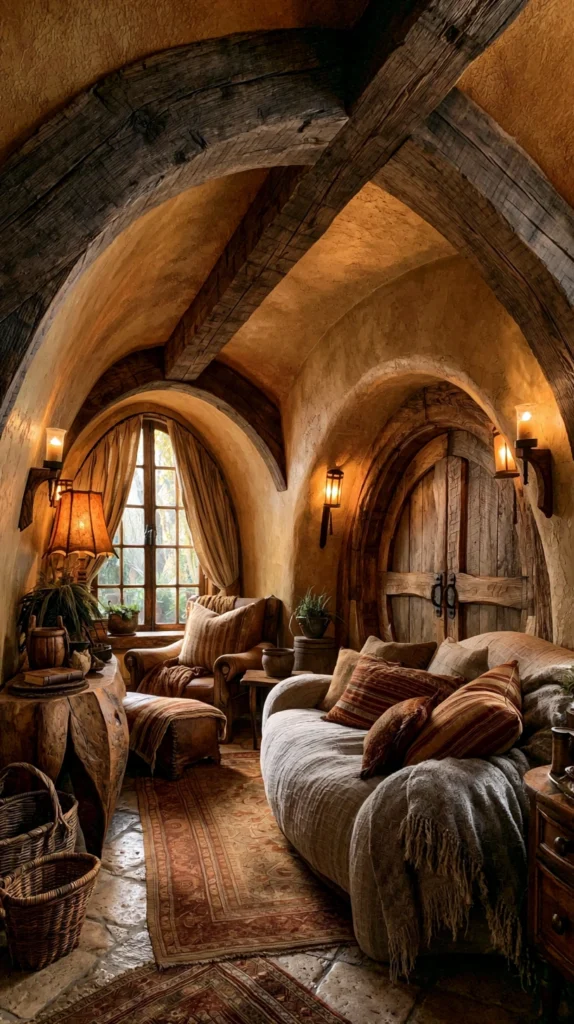
Curved sofas, round tables, and organic silhouettes replacing sharp rectangular furniture — extending the arch theme into every piece.
My rectangular furniture problem:
What I had:
- Square coffee table
- Rectangular sofa with sharp boxy arms
- Every piece a hard right angle
- Fighting against the curved doorway I had just installed
Why curves matter throughout the room:
Consistency with the architecture:
- One curved doorway surrounded by all-rectangular furniture looks confused
- Curves should repeat throughout the room
- The furniture silhouette is as important as the wall shape
Round coffee tables:
Best options:
- Wood round table (tree-trunk slice style is especially on-theme)
- Pedestal-based round table (single curved support)
- Live-edge round table (irregular natural wood edge)
- Cost: $150-500 depending on material and craftsmanship
Curved or rounded sofas:
Sofa shape options:
- Curved-back sofa (gentle arc rather than straight line)
- Rolled-arm sofa (soft curves at the arms instead of boxy edges)
- Tufted chesterfield style (rounded silhouette, traditional cottage feel)
- Cost: $800-3,000 (significant investment, prioritize if budget allows)
Budget alternative to a new sofa:
Softening an existing rectangular sofa:
- Add a deep, soft slipcover that rounds the visual silhouette
- Pile cushions at the arms to visually soften hard corners
- Drape a throw over any sharp corner permanently
- Cost: $40-100
Wingback and barrel chairs:
Curved seating additions:
- Barrel chairs (fully rounded back, very on-theme)
- Wingback chairs (traditional cottage shape, slight curve)
- Positioned near the reading or fireplace area
- Cost: $200-600 each, or significantly less secondhand
Organic and irregular shelving:
Beyond seating:
- Live-edge wood shelves (irregular natural edge, not a straight rectangle)
- Curved bookshelf units (rounded corners or arched tops)
- Mushroom or organic-shaped side tables
- Cost: $50-300 per piece
Sourcing curved furniture affordably:
Best sources:
- Estate sales (vintage curved furniture, often very affordable)
- Facebook Marketplace (search “curved,” “round,” “barrel chair”)
- Antique shops (genuine vintage curves, higher cost but authentic)
- Etsy (handmade live-edge and organic pieces)
Cost:
- Round coffee table: $150-500
- One curved accent chair: $200-600 (or $50-150 secondhand)
- Sofa softening (slipcover and cushions): $40-100
- Total: $390-1,200 (significantly less with secondhand sourcing)
My round furniture result: Replacing just the coffee table with a round live-edge wood piece changed the entire room’s geometry, the secondhand barrel chair found at an estate sale for $80 looks like it belongs in a storybook, every curve now relates to every other curve.
Round Furniture Tips
Prioritize the coffee table first:
Highest impact for lowest cost:
- The coffee table sits at the room’s visual center
- A round table changes the perceived geometry of the entire room
- Cheaper to replace than a sofa
- Start here if budget only allows one furniture change
Mixing curved and straight is fine:
Not everything needs to curve:
- One or two curved statement pieces is often enough
- A straight bookshelf beside a round table still works
- The goal is curve as a recurring theme, not curve as the only shape allowed
- Total geometric purity is less important than overall warm feeling
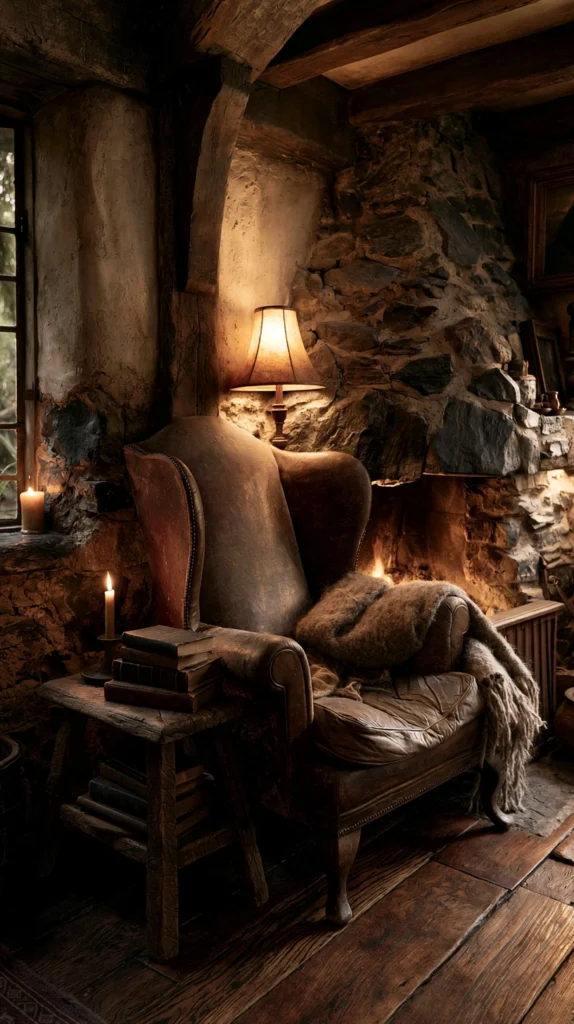
5. Exposed Wood Beams (Real or Faux) (The Structural Signature)
Visible wooden beams across the ceiling — referencing the timber construction of cottage and hobbit-hole architecture.
My flat ceiling problem:
What I had:
- Completely flat, featureless ceiling
- Standard drywall, painted white
- Nothing to look up at
- The most overlooked surface in the entire room
Why beams matter for this aesthetic:
The structural reference:
- Cottage and hobbit-hole construction relies on visible timber framing
- A flat ceiling reads as modern and mass-produced
- Beams immediately suggest age, craftsmanship, and rustic construction
- One of the most transformative additions to the entire room
Real structural beams (major renovation):
For those with the budget and structure:
- Hire a contractor to add real load-bearing or decorative structural beams
- Reclaimed barn wood beams (most authentic material)
- Cost: $1,500-5,000+ depending on room size and beam authenticity
Faux beam installation (accessible to most):
Lightweight faux beams:
- Polyurethane faux beams (lightweight, paintable, mounted with adhesive and screws)
- Looks remarkably convincing once installed and painted
- DIY-friendly weekend project
- Cost: $200-600 for a standard living room
How to install faux beams:
- Measure ceiling and plan beam placement (typically running the shorter direction of the room)
- Mark stud or joist locations for secure mounting
- Cut faux beams to length
- Mount with construction adhesive and screws into the ceiling structure
- Paint or stain to desired wood tone
- Add age and texture with a darker glaze in the crevices (optional but very effective)
Reclaimed wood beam option:
Real wood, lighter installation:
- Source reclaimed wood timbers (barn wood, old construction lumber)
- Lighter and thinner cuts than full structural beams
- Mounted as a decorative (non-structural) element
- More authentic material than faux polyurethane, less expensive than full structural work
- Cost: $400-1,200 depending on wood sourcing
Beam placement patterns:
Layout options:
- Parallel beams running one direction (simplest, most common)
- Grid pattern (beams in both directions, more dramatic and labor-intensive)
- Single large central beam (lower commitment, still impactful)
Finish and color:
Best beam finishes:
- Dark walnut or espresso stain (most dramatic against lighter ceilings)
- Natural raw wood tone (lighter, more rustic farmhouse feeling)
- Whitewashed (lighter cottage aesthetic, less hobbit-hole, more cottage-core)
- Choose based on overall room palette
Beam-adjacent lighting:
Completing the look:
- Small pendant lights or lanterns hung from the beams
- String lights wrapped along the beam length
- Reinforces the lighting philosophy from idea 2
Cost:
- Faux polyurethane beams (full room): $200-600
- Reclaimed wood beams: $400-1,200
- Real structural beams: $1,500-5,000+
- Total range: $200-5,000
My faux beam installation: Three dark walnut faux beams running across my living room ceiling for under $400, installed in a single weekend, the single most-asked-about feature when people see photos of the room.
Wood Beam Tips
Scale beams to room size:
Proportion matters:
- Thin, small beams in a large room (look insufficient, lost)
- Oversized beams in a small room (overwhelming, lowers visual ceiling height too much)
- Standard residential rooms typically suit 6-8 inch wide beams
- Measure and compare to room dimensions before ordering
Lighting beneath beams:
Avoiding shadow problems:
- Beams create some shadow below them depending on light angle
- This is generally desirable for the aesthetic (more shadow, more cozy)
- If it becomes too dark beneath, add one additional low lamp nearby
- Embrace rather than over-correct the shadow effect
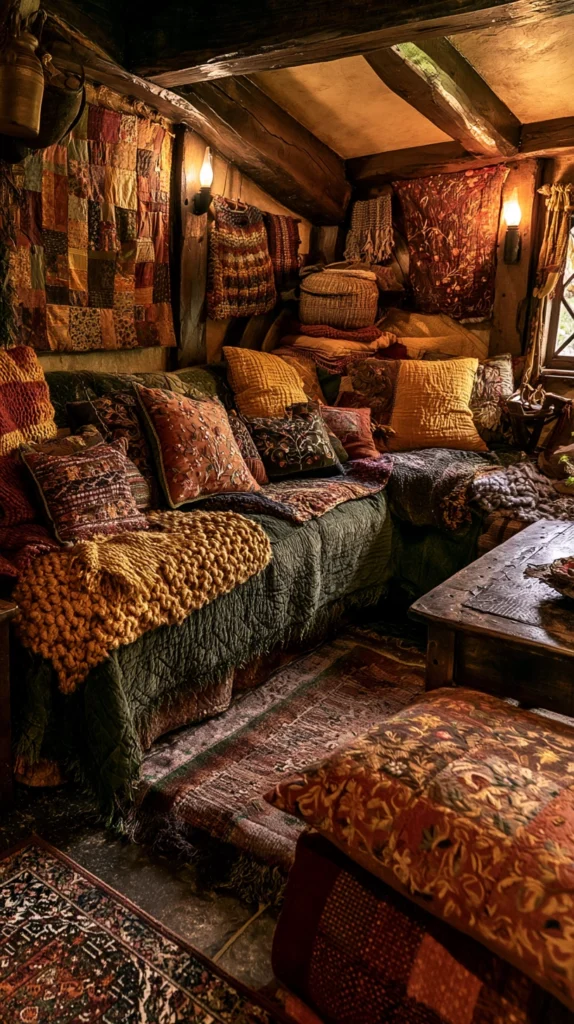
6. Layered Textiles in Earthy, Saturated Tones (Quilts, Tapestries, and Woven Throws)
Heavy, handmade-looking textiles in deep natural colors covering every surface — the textural abundance that makes a room feel handcrafted.
My textile starting point:
What I had:
- One thin gray throw
- Bare walls with no fabric softening anything
- A single flat sofa cushion
- No sense of handcraft anywhere
Why textiles matter so much in hobbitcore:
The handmade quality:
- Knitted, woven, and quilted textiles suggest someone made them by hand
- Mass-produced smooth fabrics read as modern and impersonal
- Texture and visible craft are central to the aesthetic
- More textiles, more visible texture, more authenticity
Quilts specifically:
Why quilts fit perfectly:
- Patchwork construction suggests handmade tradition
- Often passed down or made by hand (or look like they were)
- Layer over the back of a sofa or armchair
- Earthy color patchwork (browns, rust, forest green, mustard) most appropriate
Sourcing quilts:
- Estate sales and antique shops (genuine vintage quilts, $40-150)
- Etsy handmade quilters ($80-250)
- New manufactured quilts in patchwork patterns ($40-90, less authentic but accessible)
Woven tapestries:
Wall-mounted textile art:
- Large woven wall hangings (botanical, woodland, or abstract patterns)
- Adds warmth and texture to bare walls without paint or art frames
- Natural fiber materials (wool, cotton, jute) preferred over synthetic
- Cost: $40-150 depending on size and material
Heavy woven throws:
Beyond the quilt:
- Chunky wool or wool-blend throws
- Deep, saturated earthy colors (moss green, rust, deep brown, mustard)
- Draped generously over chair backs and sofa arms
- Cost: $40-90 each, layer two or three different textures together
Rugs as floor texture:
Layered rug approach:
- A natural fiber base rug (jute or sisal)
- A patterned or textured wool rug layered on top
- Possibly a third small accent rug or sheepskin near the favorite reading chair
- This layering replicates the abundant, collected feeling throughout the room
Tablecloth and runner textiles:
Surface coverings:
- A woven or embroidered tablecloth on any side table
- Runners on shelves beneath displayed objects
- Adds another layer of pattern and texture at a different height than throws and rugs
Color palette for hobbitcore textiles:
The earthy saturated range:
- Deep forest and moss green
- Rust, terracotta, and burnt orange
- Mustard and harvest gold
- Deep brown and chestnut
- Burgundy and wine
- Avoid: pastels, bright primary colors, anything that reads as clean or modern
Pattern types that fit:
Best patterns:
- Patchwork (quilts especially)
- Botanical and floral (small scale, vintage-feeling)
- Woven geometric (Scandinavian or folk-pattern inspired)
- Avoid: sleek modern geometric prints, anything with a glossy or synthetic sheen
Cost:
- One vintage or handmade-style quilt: $40-150
- Woven wall tapestry: $40-150
- Two to three chunky wool throws: $80-180
- Layered rugs (base plus accent): $80-250
- Total: $240-730
My layered textile result: The vintage patchwork quilt found at an estate sale for $45 anchors the entire sofa now, the woven wall tapestry covers what used to be a bare wall, the room finally feels like it was assembled by hand over many years rather than purchased in one trip.
Textile Layering Tips
Buy textiles over multiple trips:
Avoiding the matched-set look:
- Purchasing all textiles from one store in one visit risks looking coordinated rather than collected
- Spread purchases across thrift stores, estate sales, and handmade sources
- The slight mismatch in exact tone is what makes it look genuinely gathered over time
- This patience pays off in authenticity
Washing and caring for vintage textiles:
Gentle handling:
- Hand wash or gentle cycle for vintage quilts (delicate stitching)
- Air dry flat to preserve shape
- Vacuum tapestries gently rather than washing when possible
- These pieces are meant to last and improve with age, not be treated as disposable decor
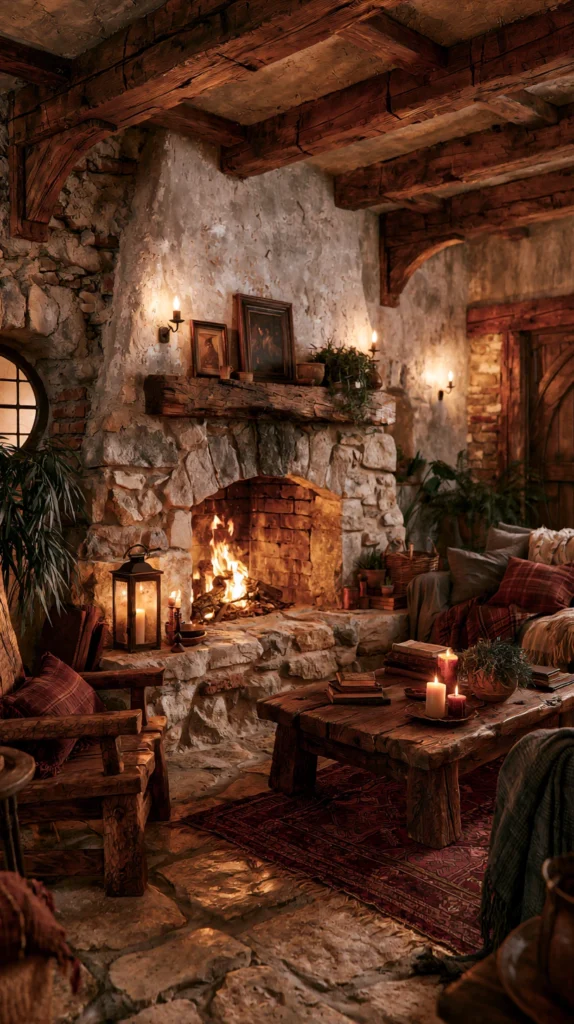
7. A Proper Reading Nook With a Fireplace or Fire Alternative (The Emotional Heart of the Room)
A dedicated cozy corner built around warmth and a good book — the functional centerpiece that defines hobbitcore living.
My nook-less living room:
What was missing:
- No dedicated reading spot anywhere
- Books scattered without a home
- No fire or fire-like element at all
- The room had furniture but no emotional center
Why every hobbitcore room needs this:
The lifestyle the aesthetic represents:
- Hobbits are famously associated with comfort, food, books, and fire
- A reading nook with warmth nearby is the physical manifestation of that lifestyle
- Without it, the room has the look of hobbitcore without the feeling
- This is arguably more important than any single decor object
Building the nook:
Location selection:
- A corner (ideally near the curved doorway or beneath exposed beams)
- Near a window if possible (natural light for daytime reading)
- Away from major foot traffic (creates the enclosed, private feeling)
The chair:
Best seating choices:
- A deep, worn-in armchair (leather or heavy fabric upholstery)
- A wingback chair (traditional cottage shape, also references idea 4’s curves)
- Secondhand and slightly worn is preferable to pristine new (authenticity)
- Cost: $150-500 new, $50-200 secondhand
The fire element:
Real fireplace:
- If the room has one, make it the nook’s anchor
- Style the mantle and hearth per cozy seasonal guidance
- The single best possible hobbitcore feature if available
Electric or candle fireplace alternative:
- Small electric fireplace insert positioned near the reading chair
- Candle cluster on the floor or a low table nearby (protected and stable)
- LED candle grouping for safety if near textiles and books
- Cost: $30-300 depending on approach
The reading light:
Task lighting for the nook specifically:
- A small lamp beside the chair (warm, low wattage, per idea 2’s lighting philosophy)
- Positioned at shoulder height when seated for proper reading illumination
- A mushroom lamp here ties the nook into the broader lighting scheme
Book storage and display:
Surrounding the chair with books:
- A small bookshelf or stack of books beside the chair
- Books as a side table (stacked, with a lamp or candle on top)
- Worn, well-loved looking books preferred over pristine new copies
- Secondhand bookshops are the best and most affordable source
Footrest and blanket:
Completing the comfort:
- A small footstool or pouf (round, per idea 4’s curved furniture theme)
- A wool throw blanket draped over the chair arm, always available
- A small side table for tea or a candle
Personal and sentimental objects:
What makes a nook feel truly yours:
- A favorite mug or teacup kept nearby
- A small collected object (a stone, a small carved figure)
- Something with personal meaning, not purchased specifically for the aesthetic
- This is what separates a styled corner from a genuinely lived-in one
Cost:
- Secondhand armchair: $50-200
- Electric fireplace or candle cluster: $30-300
- Mushroom lamp: $25-60
- Small bookshelf or book stack: $0-100
- Footstool: $30-100
- Throw blanket: $30-65
- Total: $165-825
My reading nook result: This corner is now where I spend more time than anywhere else in the house, the secondhand wingback chair found for $90 with a small electric fireplace beside it has become the genuine heart of the room, not just a styled photo opportunity.
Reading Nook Tips
Sit in it before finalizing:
Testing comfort first:
- A beautiful chair that is uncomfortable defeats the entire purpose
- Sit in any potential chair for at least fifteen minutes before buying
- The nook only works if it actually gets used daily
- Comfort matters more than perfect aesthetic matching
Resist over-styling:
The lived-in requirement:
- A reading nook that looks too perfectly arranged looks staged, not lived-in
- Leave a book open and face-down occasionally (looks like recent use)
- Let a blanket be slightly rumpled rather than perfectly folded
- This small imperfection is what makes it believable as a real, used space
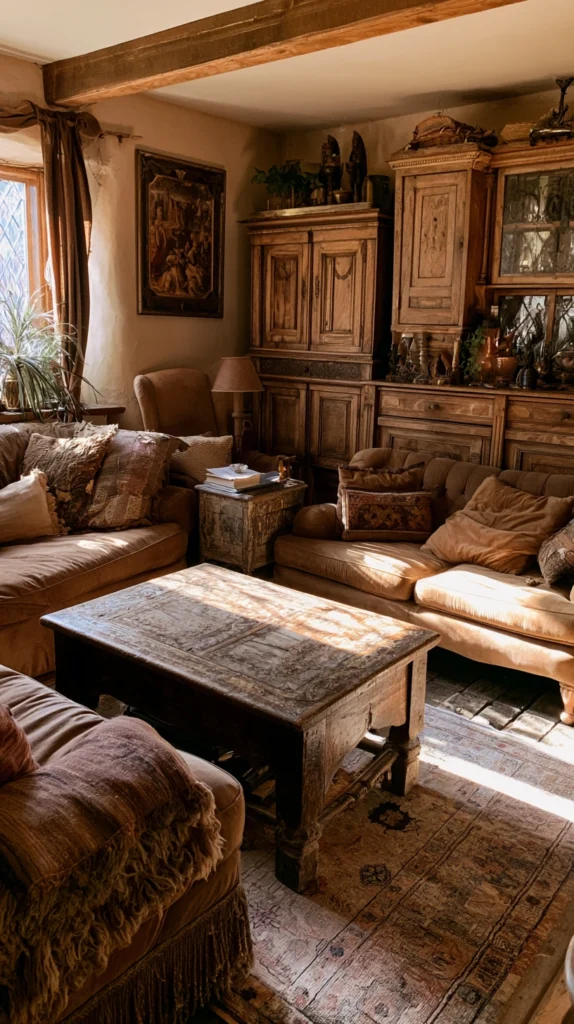
8. Mismatched and Collected Furniture (Nothing Bought as a Matching Set)
Every piece sourced individually over time rather than purchased as a coordinated set — the philosophy that prevents the room from looking showroom-new.
My matching set problem:
What I had:
- A living room set purchased together from one store
- Sofa, two chairs, and coffee table all from the same collection
- Coordinated but completely impersonal
- Looked like a furniture store display, not a home
Why mismatched furniture is essential:
The collected-over-time aesthetic:
- Hobbitcore implies generations of accumulated belongings
- A matching set suggests one shopping trip, one moment in time
- Mismatched pieces suggest a life lived, items gathered slowly
- This is one of the hardest modern habits to break but one of the most important
How to mismatch intentionally:
The unifying principle:
- Pieces should differ in exact style and source
- But should share a color family, wood tone, or general era
- Complete randomness looks chaotic; thoughtful variation looks collected
- The skill is in variation within a cohesive feeling
Sourcing different pieces from different places:
Building the collection:
The sofa:
- One larger investment piece, possibly new or higher quality
- Sets the room’s general color and style direction
The accent chairs:
- Sourced secondhand, ideally from different eras or styles
- A vintage wingback paired with a different vintage barrel chair
- Different upholstery patterns are fine if colors relate
The coffee table:
- A completely separate find from the sofa and chairs
- Often the easiest piece to source as a unique, characterful object
- A trunk, a round wood slice table, or a vintage chest can all work
The side tables:
- Two side tables that do not match each other
- Different heights, materials, and styles
- As long as both feel “old” or “natural,” they relate even without matching
Sourcing locations for mismatched pieces:
Best places to find character:
- Estate sales (best source for genuinely aged, characterful furniture)
- Antique shops (curated but pricier)
- Facebook Marketplace (patience required, best prices)
- Family hand-me-downs (free, often the most meaningful pieces)
- Vintage and secondhand shops (curated selection, moderate prices)
Mixing wood tones:
The rule for wood furniture specifically:
- Two or three different wood tones can coexist if all are warm
- Avoid combining warm wood tones with cool gray-toned wood
- Slight variation in tone (medium oak beside dark walnut) reads as collected
- Drastic variation (orange pine beside black-stained wood) can look accidental rather than intentional
Reupholstering for cohesion:
Unifying mismatched pieces:
- If furniture shapes vary widely but feel disjointed, reupholster in related fabrics
- Does not need to match exactly, but should share a color family
- A budget-friendly slipcover can achieve similar cohesion without full reupholstery
- Cost: $80-300 per piece for reupholstery, $40-100 for slipcovers
Cost:
- Secondhand chairs (two, mismatched): $100-400 total
- Unique coffee table find: $50-250
- Mismatched side tables (two): $40-150
- Total: $190-800 (significantly less than purchasing a new matching set, often $1,500-3,000+)
My mismatched furniture result: Selling the matching living room set and replacing it piece by piece over four months with secondhand finds completely changed the room’s personality, every piece now has a story, the total cost was actually lower than the original matching set despite taking longer to assemble.
Mismatched Furniture Tips
Build gradually, not all at once:
The patience requirement:
- Buying everything mismatched in one trip can still look curated-on-purpose in an obvious way
- Spreading purchases over months allows genuine variation to emerge
- This patience is part of what makes the eventual room feel authentic
- Resist the urge to complete the room in one weekend
The “would this exist in a hobbit hole” test:
A useful filter:
- Before buying any piece, ask if it looks handmade, aged, or natural
- Sleek, glossy, obviously mass-produced modern furniture fails this test
- Worn wood, natural upholstery, visible craftsmanship pass
- This simple mental test prevents accidental modern pieces from sneaking in
9. Stone, Exposed Brick, or Textured Wall Treatment (Bringing the Earth Indoors)
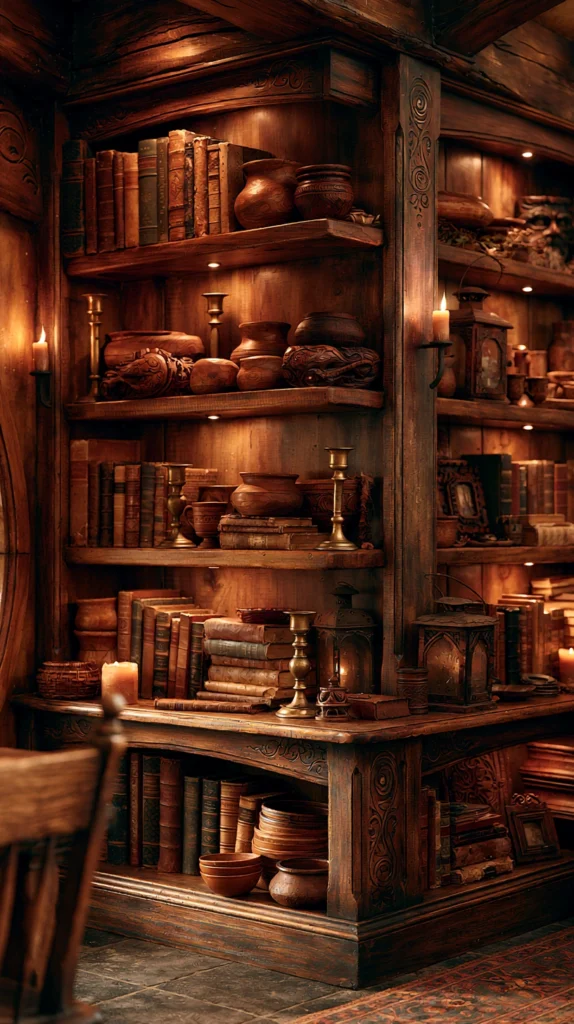
Rough, natural wall surfaces instead of smooth painted drywall — referencing the literal earthen walls of a hobbit hole.
My smooth drywall problem:
What I had:
- Perfectly smooth, flat painted walls throughout
- No texture, no sense of natural material
- The opposite of an earthen, dug-into-a-hillside feeling
- Walls that could belong to any house anywhere
Why textured walls matter:
The literal earth reference:
- Hobbit holes are built into hillsides, with stone and earthen interior walls
- Smooth drywall reads as modern construction
- Texture suggests age, natural material, and the underground reference
- This is one of the more involved changes but among the most impactful
Exposed brick (real or faux):
Real exposed brick:
- If the home has brick beneath drywall, exposing it is a major but achievable renovation
- Requires careful removal and brick cleaning
- Most authentic option, significant labor cost
- Cost: $500-3,000+ depending on wall size and condition
Faux brick panels:
- Lightweight polyurethane brick-look panels
- Mounted directly over existing drywall
- DIY-friendly, much faster than real brick exposure
- Cost: $150-500 for a feature wall
Stone veneer:
Faux stone panels:
- Manufactured stone veneer (lightweight, mortar-set or adhesive-mounted)
- Most dramatic and authentic-looking texture option
- Often used around a fireplace specifically, but works on any wall
- Cost: $300-900 for a feature wall area
Limewash and textured plaster:
The painted texture option:
- Limewash paint creates a mottled, aged, plaster-like texture without any structural work
- Most affordable texture option on this list
- Can be applied over existing smooth drywall
- Cost: $60-150 in materials, DIY-applicable
How to apply limewash for this effect:
- Apply with a natural bristle brush in a cross-hatch pattern
- Work in small sections, wiping back while wet for variation
- Multiple thin coats build the most authentic aged texture
- Earthy tones (warm tan, soft terracotta, muted green) suit the aesthetic best
Wood plank or shiplap texture:
Alternative natural texture:
- Reclaimed or new wood paneling adds texture without stone or brick
- References the timber aspect of cottage construction
- Pairs well with the exposed beam ceiling from idea 5
- Cost: $100-400 depending on wood and wall size
Where to apply textured walls:
Strategic placement:
- One feature wall (often behind the sofa or surrounding a fireplace) is usually sufficient
- Full-room texture can feel heavy in smaller spaces
- Combine with the reading nook (idea 7) for maximum cozy impact in one zone
Cost:
- Limewash texture (one wall): $60-150
- Faux brick panels (one wall): $150-500
- Stone veneer (one wall): $300-900
- Real exposed brick (full renovation): $500-3,000+
- Total range: $60-3,000+
My limewash textured wall: Applying a warm terracotta limewash to the wall behind my reading nook for under $100 in materials created more visual depth than any single furniture purchase, the mottled, aged quality looks like it has been there for decades.
Textured Wall Tips
Test the limewash technique first:
Practice before committing:
- Buy a small sample pot and practice on a piece of scrap drywall or cardboard
- The wipe-back technique takes a few attempts to get comfortable with
- Once confident, move to the actual wall
- This practice prevents costly mistakes on the real surface
Lighting interacts dramatically with texture:
The relationship to idea 2:
- Textured walls catch and hold shadow beautifully under warm, low lighting
- This is precisely the lighting philosophy already established
- The combination of texture and warm low light is where the aesthetic truly comes alive
- Neither element works as powerfully alone as they do together
10. A Well-Stocked, Slightly Cluttered Bookshelf (The Sign of a Well-Lived Life)
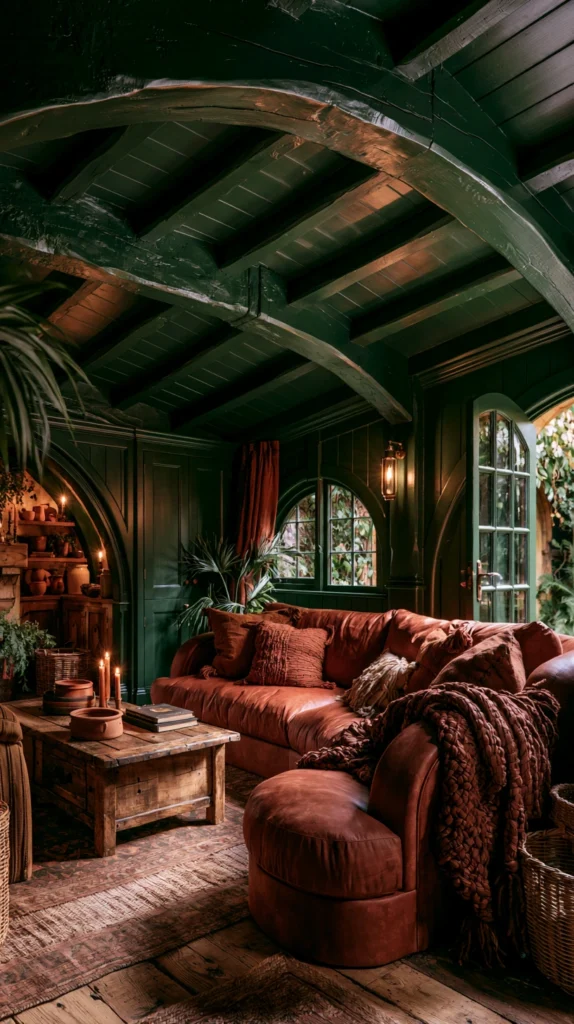
Books, objects, and curiosities filling shelves to the point of organized abundance — rejecting minimalist shelf styling entirely.
My sparse shelf problem:
What I had:
- One bookshelf, mostly empty
- A few decorative objects spaced far apart
- Following typical “minimalist shelf styling” advice
- The opposite of the abundant, collected hobbitcore feeling
Why shelf abundance matters:
The well-lived-in signal:
- A sparse shelf suggests new ownership or minimal interest in books and objects
- A full, slightly overflowing shelf suggests decades of reading and collecting
- This is one of the easiest and most affordable ways to add authenticity
- Books themselves are often inexpensive, making this accessible to any budget
Building the abundant shelf:
The books themselves:
- Mix of hardcover and paperback (uniformity looks purchased, variation looks collected)
- Worn spines and slightly aged covers preferred over pristine new books
- Secondhand bookshops, library sales, and thrift stores are ideal sources
- Cost: $1-5 per book typically at secondhand sources
Arrangement technique:
Avoiding the too-perfect look:
- Some books upright in rows, some stacked horizontally
- Occasional book turned with pages facing out (not just spine)
- Gaps filled with small objects rather than left empty
- Slight irregularity in row height (do not perfectly align every spine)
Objects mixed among the books:
What to include:
- Small plants (per idea 3) tucked between book groupings
- Mushroom figurines and small woodland creatures
- Candle stubs (used-looking, not pristine)
- Small stones, shells, or collected natural objects
- A small lantern or mushroom lamp on one shelf
Color coordination within abundance:
Avoiding visual chaos:
- While abundant, the overall shelf should still relate to the room’s earthy palette
- Book covers in browns, greens, deep reds naturally fit
- Brightly colored modern book covers can be turned spine-in or with dust jackets removed
- This small curation prevents the abundance from feeling random
Shelf material and style:
What kind of shelf to use:
- Wood shelving (natural, slightly irregular if possible)
- Built-in or freestanding both work
- Avoid sleek modern shelving units (glass, chrome, glossy white)
- A slightly aged or secondhand bookshelf itself reinforces the theme
The reading nook connection:
Linking to idea 7:
- Position the main bookshelf near or adjacent to the reading nook
- Creates a natural flow between where books live and where they get read
- Reinforces the room’s central activity and purpose
Cost:
- Secondhand bookshelf (if needed): $40-150
- Books (50-100 volumes from secondhand sources): $50-300
- Small decorative objects (mushrooms, stones, candles): $30-70
- Total: $120-520
My abundant bookshelf result: Filling the previously sparse shelf with secondhand books found over several months of thrifting transformed it into the room’s most interesting visual feature, guests browse the spines and ask about specific titles, it finally looks like someone actually reads here.
Bookshelf Abundance Tips
Quality over speed:
Building the collection slowly:
- Buying 100 books in one trip from one source often looks too uniform
- Collecting gradually from multiple secondhand sources creates natural variation
- This mirrors the same patience principle from mismatched furniture (idea 8)
- A shelf built over six months looks more authentic than one filled in an afternoon
Leave some negative space:
Abundance is not total chaos:
- Even a full shelf benefits from small breathing room around key objects
- Total wall-to-wall density without any pause can tip into visual overwhelm
- Aim for “clearly full and rich” rather than “physically cannot fit another item”
- This balance keeps abundance feeling intentional rather than accidental hoarding
11. Earthy, Saturated Wall Color (Deep Greens, Browns, and Terracotta)
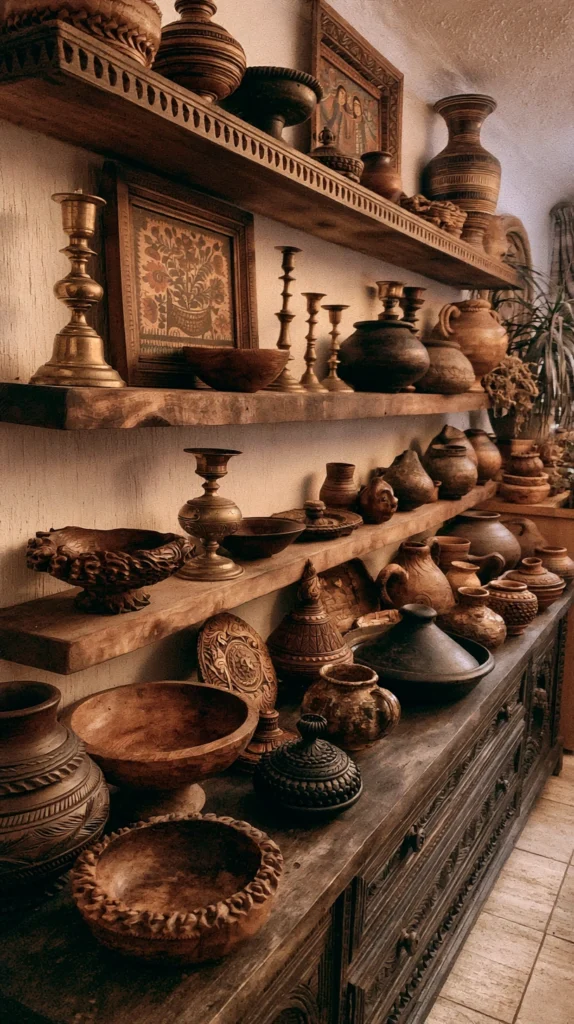
Rich, dark, warm paint colors instead of white or pale neutral walls — setting the foundational color temperature for everything else in the room.
My pale wall starting point:
What I had:
- Standard builder-grade light gray walls
- Bright and cool, reflecting light harshly
- The opposite temperature of an earthen, candlelit burrow
- Fighting against every other hobbitcore element I tried to add
Why wall color is foundational:
Setting the room’s temperature:
- Pale walls reflect and brighten a room (modern, clean)
- Dark, saturated walls absorb light and create intimacy (cottage, burrow-like)
- This single change affects how every other element in the room reads
- Often worth doing before any furniture or decor purchases
Best hobbitcore wall colors:
Deep forest and moss green:
- Sherwin-Williams Rookwood Dark Green
- Farrow and Ball Calke Green
- Benjamin Moore Forest Green
- The most quintessentially woodland and cottage-appropriate color
Warm earthy brown:
- Benjamin Moore Smoky Taupe (deep, warm brown)
- Sherwin-Williams Kona
- Farrow and Ball Mahogany
- References the literal earth and wood construction theme
Terracotta and rust:
- Sherwin-Williams Cavern Clay
- Farrow and Ball Red Earth
- Brings warmth and an immediate cottage feeling
Deep mustard or harvest gold:
- Farrow and Ball Babouche (more muted, golden)
- Benjamin Moore Hawthorne Yellow
- A bolder choice but very period and aesthetic appropriate
Full room versus accent wall:
The case for full commitment:
- A single accent wall in a sea of white still feels modern overall
- Full room color (all four walls, possibly including ceiling) creates the enveloping burrow feeling much more effectively
- This aesthetic specifically rewards full commitment over partial application
Ceiling color consideration:
Painting the ceiling too:
- A matching or complementary dark ceiling dramatically increases the cozy, enclosed feeling
- White ceiling with dark walls can feel like the room has no top (breaks the burrow illusion)
- Painting the ceiling the same color as the walls is a hallmark of this aesthetic done well
Finish selection:
Matte over glossy:
- Matte or eggshell finish absorbs light rather than reflecting it
- Glossy finishes look modern and clinical, working against the aesthetic
- Always choose the flattest finish practical for the room’s use
Combining with limewash texture:
Linking to idea 9:
- Rather than flat paint, consider limewash in the chosen earthy color
- Combines the color change with the textural change in one application
- More labor than flat paint but achieves two goals simultaneously
Trim and door color:
Completing the commitment:
- Painting trim and doors the same dark color as the walls (rather than white) increases the enveloping effect
- Alternatively, a contrasting warm wood tone trim also works
- White trim against very dark walls can look slightly modern and crisp, working against the aged aesthetic
Cost:
- Paint for an average living room (walls only): $80-150
- Paint including ceiling and trim: $120-220
- Limewash alternative: $100-250
- Total: $80-250
My deep green wall transformation: Painting all four walls and the ceiling in Farrow and Ball Calke Green for under $150 in materials changed the entire emotional temperature of the room before a single piece of furniture was adjusted, this was genuinely the highest-impact, lowest-cost change on this entire list.
Wall Color Tips
Paint before buying furniture:
The sequencing matters:
- Choosing wall color first establishes the room’s foundation
- Furniture and textiles chosen against an already-dark wall coordinate more easily
- Buying furniture first and trying to match walls afterward is more difficult
- This is the recommended starting point for the entire hobbitcore transformation
Sample extensively before committing:
Dark colors require more testing:
- Deep, saturated colors look different in every lighting condition
- Paint large sample sections (at least two feet square) and observe at different times of day
- What looks right at noon may feel completely different at night under lamp light
- This extra testing step prevents an expensive repainting mistake
12. Handcrafted and Vintage Decorative Objects (Pottery, Carved Wood, and Folk Art)
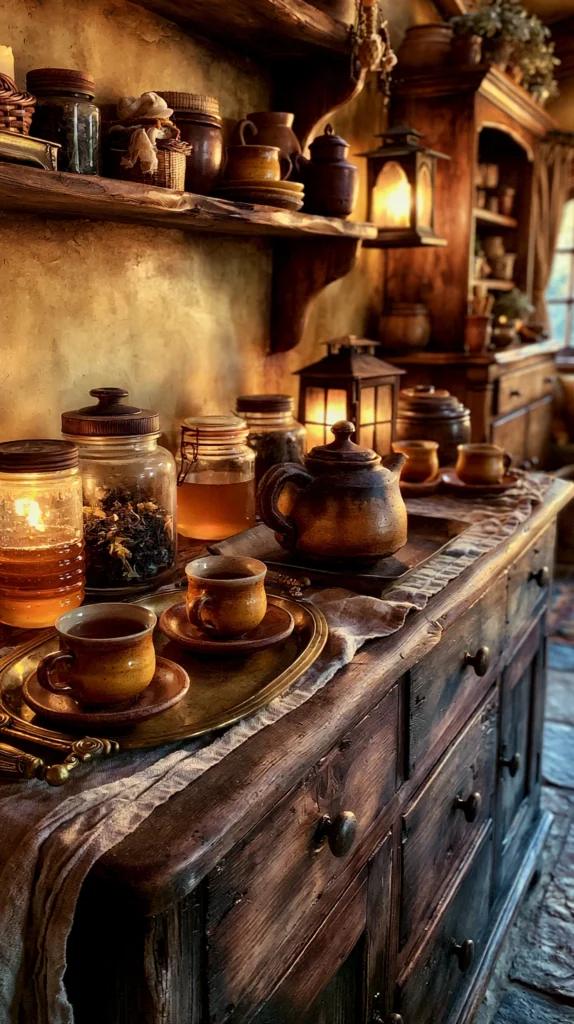
Objects that look made by hand rather than manufactured — the final layer of authentic detail that completes the aesthetic.
My manufactured object problem:
What I had:
- Decorative objects from large home goods retailers
- Mass-produced, identical to thousands of other homes
- Smooth, perfect, characterless
- Working against every handmade quality the rest of the room was building
Why handcrafted objects matter:
The final authenticity layer:
- Even with curves, texture, color, and abundance achieved, manufactured decor objects can undermine the whole effect
- Hand-thrown pottery, carved wood, and folk art objects look like they were made by someone, not a factory
- This detail-level authenticity is what separates a convincing hobbitcore room from a themed one
Pottery and ceramics:
What to look for:
- Hand-thrown pottery with visible throwing lines or slight asymmetry
- Earthy, natural glazes (browns, greens, cream, rust) rather than bright or metallic finishes
- Local pottery markets, craft fairs, and Etsy independent potters are excellent sources
- Cost: $20-80 per piece depending on size and maker
Carved wood objects:
Wooden decorative items:
- Hand-carved wooden bowls, spoons, or figurines
- Visible tool marks or natural wood grain variation (not machine-smooth)
- Mushroom carvings, woodland creature figurines, simple geometric carved bowls
- Cost: $15-60 per piece
Folk art and textile crafts:
Beyond pottery and wood:
- Embroidered samplers or small textile art pieces
- Hand-woven baskets (not machine-manufactured wicker)
- Simple folk-pattern painted objects (boxes, small furniture pieces)
- Sourced from craft fairs, Etsy, or genuinely vintage finds
Candlesticks and metal objects:
Warm metal accents:
- Hand-forged or aged brass and copper candlesticks
- Avoid bright, shiny, obviously new metal finishes
- Slight tarnish and patina are desirable, not flaws to polish away
- Antique shops and estate sales are ideal sources
Where to source handcrafted objects:
Best sources ranked by authenticity:
- Local craft fairs and maker markets (most authentic, supports actual makers)
- Etsy independent sellers (search “handmade,” verify the seller actually makes the item)
- Estate sales and antique shops (genuine vintage handcrafted pieces)
- Avoid: large home goods chains selling “rustic-style” mass-produced items that mimic handcraft without the substance
Identifying genuine handcraft versus mass-produced “rustic style”:
The tells:
- Genuine handcraft: slight asymmetry, visible tool or throwing marks, natural material variation, often more expensive
- Mass-produced “rustic”: perfectly uniform despite trying to look rustic, suspiciously cheap for the claimed material, identical to many other items in stores
- When in doubt, ask the seller about the maker and process
Placement throughout the room:
Where these objects live:
- Mixed among the abundant bookshelf (idea 10)
- On the mantle or hearth area near the reading nook (idea 7)
- Grouped on side tables and the coffee table
- A few pieces should feel personally chosen and meaningful, not purely decorative
Cost:
- Hand-thrown pottery (three to four pieces): $80-250
- Carved wood objects (three to four pieces): $50-180
- Folk art or woven items: $40-150
- Brass or copper candlesticks: $20-80
- Total: $190-660
My handcrafted object collection: Slowly replacing every mass-produced decorative object with something hand-thrown, hand-carved, or genuinely vintage took nearly a year, but the room now contains nothing that looks like it came from a big box store, every object has texture, history, or a maker behind it.
Handcrafted Object Tips
One meaningful object beats five generic ones:
Quality over quantity for this category specifically:
- A single beautiful hand-thrown bowl with history outperforms a shelf full of mass-produced “rustic” trinkets
- This is the one area where genuine restraint and careful selection matters more than abundance
- Save budget for fewer, better pieces rather than many mediocre ones
Supporting actual craftspeople:
The deeper value:
- Buying from craft fairs and independent Etsy makers supports real artisans
- This aligns with the values the aesthetic itself represents (handcraft, community, slow living)
- It is also simply the only reliable way to guarantee genuine handcraft quality
13. A Dedicated Tea or Food Display (The Hospitality Element)
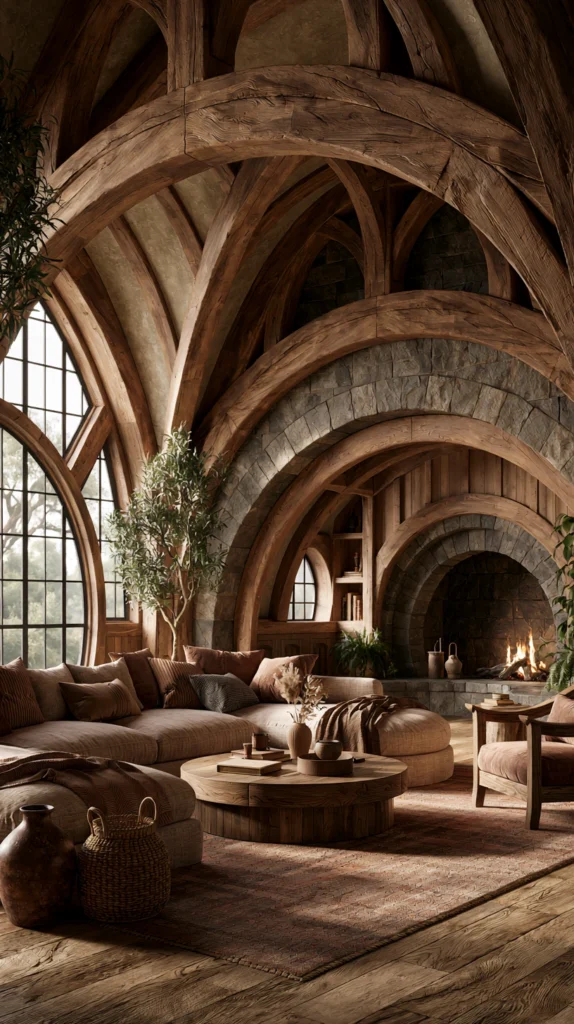
A visible spot for tea, baked goods, or a small pantry-like display — referencing the hospitality and food-centered culture central to hobbit life.
My missing hospitality corner:
What was absent:
- No designated spot related to food or drink in the living room at all
- Snacks and tea always prepared and consumed elsewhere
- Missing the warm, welcoming, “please come in and eat something” quality central to the aesthetic
Why this matters for hobbitcore specifically:
The cultural reference:
- Hospitality, food, and tea are deeply central to the source material’s depiction of cottage life
- A living room without any nod to this feels incomplete for the aesthetic
- This does not require a full kitchen, just a visible, charming display
The tea station:
Building a small tea display:
- A small side table or low shelf dedicated to tea service
- A teapot (ceramic, ideally hand-thrown per idea 12) and matching cups
- Tea tin or jar with visible, fragrant tea leaves
- A small kettle if space and safety allow (electric kettle works fine, does not need to be decorative)
Cost:
- Teapot and cup set (secondhand or handmade): $30-90
- Tea tin and tea: $15-30
- Small side table if needed: $40-120
The bread and pantry shelf:
A small visible food display:
- A small open shelf or basket holding bread, jarred preserves, or dried herbs
- References the abundant pantry quality of cottage life
- Does not need to be functional storage, can be styled with realistic-looking items if not actually used daily
- Real dried herbs hanging in small bundles add fragrance and authenticity
Honey and preserve jars:
Small decorative touches:
- Glass jars of honey, jam, or preserved fruit displayed on a shelf
- Warm amber and deep red tones fit the color palette beautifully
- Can be genuinely used items or styled for appearance, either works
The mushroom and herb basket:
A woodland-foraged feeling:
- A small woven basket with dried mushrooms, herbs, or pinecones
- Reinforces the woodland and foraging culture associated with the aesthetic
- Doubles as decor and a genuinely pleasant-smelling addition to the room
Where this display lives:
Placement:
- Near the reading nook (idea 7) for the full cozy, hospitable corner experience
- On the abundant bookshelf (idea 10) as one section dedicated to food and tea items
- A small dedicated table if space allows
The hospitality mindset:
Beyond decor:
- This element works best if it is genuinely used, not purely staged
- Actually making tea in this space, actually offering guests something from this display
- The aesthetic is ultimately about a feeling and a way of living, and this is the most literal expression of that
Cost:
- Teapot and cup set: $30-90
- Tea and tin: $15-30
- Small shelf or basket display: $20-60
- Jars and preserves: $15-40
- Total: $80-220
My tea display result: A small shelf near my reading nook now holds a hand-thrown teapot, a tin of loose-leaf tea, and a small jar of local honey, I genuinely make tea there several times a week now, it is the one addition that turned the room from a styled space into a lived practice.
Tea and Food Display Tips
Make it functional, not just decorative:
The authenticity test:
- A beautiful tea display that never actually gets used eventually feels hollow
- Commit to actually using it, even occasionally
- This single habit does more for genuine authenticity than any object placement
- The feeling the aesthetic chases is ultimately about lived experience, not appearance alone
Fragrance as an underrated element:
Beyond visual styling:
- Dried herbs, tea, and even bread (if baked occasionally) add scent to the room
- This sensory layer is often overlooked in decor planning
- A room that smells like dried herbs and tea reinforces the cottage feeling even with eyes closed
Choosing Your Hobbitcore Priorities
By budget level:
Under $200 (start here):
- Earthy wall color in one room (idea 11)
- Layered lighting with mushroom lamps (idea 2)
- Tea display corner (idea 13)
- Plant abundance starting with a few key pieces (idea 4)
$200-600:
- All of the above, plus
- Faux arched doorway (idea 1)
- Layered textiles (idea 6)
- Abundant bookshelf (idea 10)
$600-1,500:
- All of the above, plus
- Mismatched secondhand furniture replacement (idea 8)
- Faux wood beams (idea 5)
- Limewash textured wall (idea 9)
$1,500+:
- All of the above, plus
- Real architectural arch (idea 1, structural version)
- Investment curved sofa or chairs (idea 4)
- Stone veneer or real exposed brick (idea 9)
By effort level:
Lowest effort, highest impact:
- Wall color change (idea 11)
- Lighting overhaul (idea 2)
- Mushroom lamps and candles
Moderate effort:
- Plant abundance (idea 3)
- Layered textiles (idea 6)
- Bookshelf curation (idea 10)
- Tea display (idea 13)
Higher effort, ongoing:
- Mismatched furniture sourcing (idea 8, takes months naturally)
- Handcrafted object collection (idea 12, takes time to do authentically)
Major projects:
- Arched doorway (idea 1)
- Exposed beams (idea 5)
- Textured walls (idea 9)
- Reading nook build-out (idea 7)
By room starting point:
Already has good bones (older home, some character):
- Focus on color, lighting, and textiles first
- The architecture may already lean cottage-appropriate
- Furniture and decor layering will complete the look quickly
Modern, boxy room (newer construction):
- Prioritize the architectural changes (arch, beams, texture) more heavily
- These changes do the most work to overcome a modern starting structure
- Color and lighting alone will help but architecture matters more here
Maintenance Reality
Keeping the aesthetic feeling genuine over time:
Weekly:
- Dust handcrafted objects and pottery gently
- Tend to real plants (watering, light rotation)
- Reset the reading nook (return books, refold throws naturally, not too perfectly)
Monthly:
- Refresh dried herbs or botanical elements
- Check candle and lamp bulb supplies
- Rotate or add to the bookshelf collection gradually
Ongoing (the most important maintenance):
- Continue sourcing mismatched and handcrafted pieces slowly over time
- This is not a one-time project but an ongoing collection practice
- The room should continue to evolve and gather new pieces for years, never feeling “finished” in the way a purchased matching set would
My Complete Hobbitcore Transformation
What I built over fourteen months:
Month 1-2 ($230):
- Painted walls and ceiling in deep forest green (idea 11)
- Replaced all bulbs with warm 2700K lighting (idea 2)
- Added three mushroom lamps
- Room’s foundation completely shifted
Month 3-5 ($310):
- Built the reading nook with a secondhand wingback chair (idea 7)
- Added a small electric fireplace
- Started the abundant bookshelf with secondhand book purchases (idea 10)
Month 6-9 ($380):
- Painted faux arched doorway (idea 1)
- Added layered textiles including a vintage quilt from an estate sale (idea 6)
- Began plant abundance with ten new plants and macrame hangers (idea 3)
Month 10-14 ($420):
- Replaced matching furniture set piece by piece with mismatched secondhand finds (idea 8)
- Added faux wood beams to the ceiling (idea 5)
- Built the tea display corner (idea 13)
- Added handcrafted pottery collected from craft fairs (idea 12)
Total investment: $1,340 over fourteen months Approach: Gradual, never rushed, allowing genuine collection to happen Result: A living room that feels grown rather than decorated, that guests describe as “like walking into a storybook” without prompting
Getting Started This Weekend
Begin with the foundation, not the decoration.
This weekend:
Step 1 — Change the wall color:
- Choose one deep, earthy color from the recommendations in idea 11
- Paint sample sections first, observe for a few days
- This single change affects how every future decision feels
Step 2 — Overhaul the lighting:
- Replace every bulb with warm 2700K options
- Turn off the overhead light permanently if possible
- Add one mushroom or low lamp this weekend
Step 3 — Start the plant collection:
- Buy three to five plants this weekend
- Place them in corners and on the windowsill
- This single addition brings immediate life to the room
My recommendation:
Wall color first, always:
- Every other element coordinates more easily against an already-dark, warm wall
- This is the highest-impact, most foundational change on the entire list
- Everything else can be added gradually over months without rushing
Live with these three changes for two weeks, then choose your next priority based on what the room still seems to be missing.
Now go turn your living room into the warm, round, abundant burrow it was always meant to become.
Quick Summary
The 13 hobbitcore elements:
Architectural foundation:
- Curved doorways and arched openings (idea 1): the defining structural signature
- Exposed wood beams (idea 5): the ceiling’s structural character
- Stone, brick, or textured walls (idea 9): bringing the earth indoors
Light and atmosphere:
- Low, warm, layered lighting (idea 2): never an overhead light again
- Earthy, saturated wall color (idea 11): the foundational temperature shift
Life and growth:
- Abundant greenery and trailing plants (idea 3): the burrow grows into landscape
Furniture and form:
- Round and organic-shaped furniture (idea 4): softening every edge
- Mismatched and collected furniture (idea 8): nothing bought as a set
Texture and softness:
- Layered textiles in earthy tones (idea 6): quilts, tapestries, and throws
Functional heart:
- A proper reading nook with fire (idea 7): the emotional center of the room
- A dedicated tea or food display (idea 13): the hospitality element
Detail and authenticity:
- A well-stocked, slightly cluttered bookshelf (idea 10): the sign of a well-lived life
- Handcrafted and vintage decorative objects (idea 12): the final authentic layer
The philosophical core:
Reject:
- Sharp corners and straight lines wherever avoidable
- Bright, even, overhead lighting
- Matching furniture sets
- Sparse, minimal styling
- Mass-produced, perfectly uniform decor objects
Embrace:
- Curves and arches
- Low, warm, scattered light sources
- Mismatched, collected-over-time furniture
- Abundant, layered, filled spaces
- Handcrafted, slightly imperfect, characterful objects
Budget guidance:
Under $200: Wall color, lighting overhaul, tea display, initial plants $200-600: Add faux arch, textiles, bookshelf curation $600-1,500: Add mismatched furniture, faux beams, textured walls $1,500+: Real architectural changes, investment furniture, real stone or brick
Essential rules:
Always:
- Choose warm over cool in every color and light decision
- Vary rather than match across furniture and objects
- Build the collection gradually over months, not all at once
- Prioritize handmade and secondhand over new and mass-produced
Never:
- Use bright white or cool-toned overhead lighting
- Buy a complete matching furniture set
- Rush the entire transformation in a single shopping trip
- Choose sleek, glossy, obviously modern finishes for any element
Common mistakes:
- Adding hobbitcore decor objects to an otherwise unchanged modern room (color and lighting must shift first)
- Buying everything in one trip from one source (looks coordinated, not collected)
- Keeping bright overhead lighting while adding warm decor (the lighting alone can undermine everything else)
- Choosing mass-produced “rustic style” items instead of genuine handcraft
- Over-styling the reading nook until it looks unused rather than lived-in
- Forgetting the architectural elements (arch, beams, texture) and relying on decor alone to carry the entire aesthetic
Remember: Wall color and lighting are the foundation that makes everything else work, curves should repeat throughout the room not just appear once at the doorway, abundance and layering are the goal not minimalism with brown furniture, mismatched and handcrafted pieces collected slowly over time create genuine authenticity that cannot be purchased in a single trip, the reading nook and tea display are not just decor but represent a way of actually living in the space, and the entire aesthetic succeeds or fails based on whether the room feels like it grew there over years or was assembled from a single shopping list.